The right side offers a consistent thread of terrain drama across the whole flight: Istanbul's Bosphorus at departure, Greenland's ice sheet and Canadian Arctic terrain during the long cruise, and the San Gabriel Mountains with the LA skyline on arrival. The left side spends most of its time over open Atlantic water and flat Canadian/American plains, only picking up modest coastal scenery near the very end.
Flight Path
Greenland's southern ice sheet and coastal fjords, the Labrador Sea, and the tundra and lakes of the Canadian Arctic near Hudson Bay along the great-circle route toward North America
Great circle distance and headings ›

_in_Istanbul.jpg?width=600)


.jpg?width=600)
.jpg?width=600)


.jpg?width=600)
Phase by phase
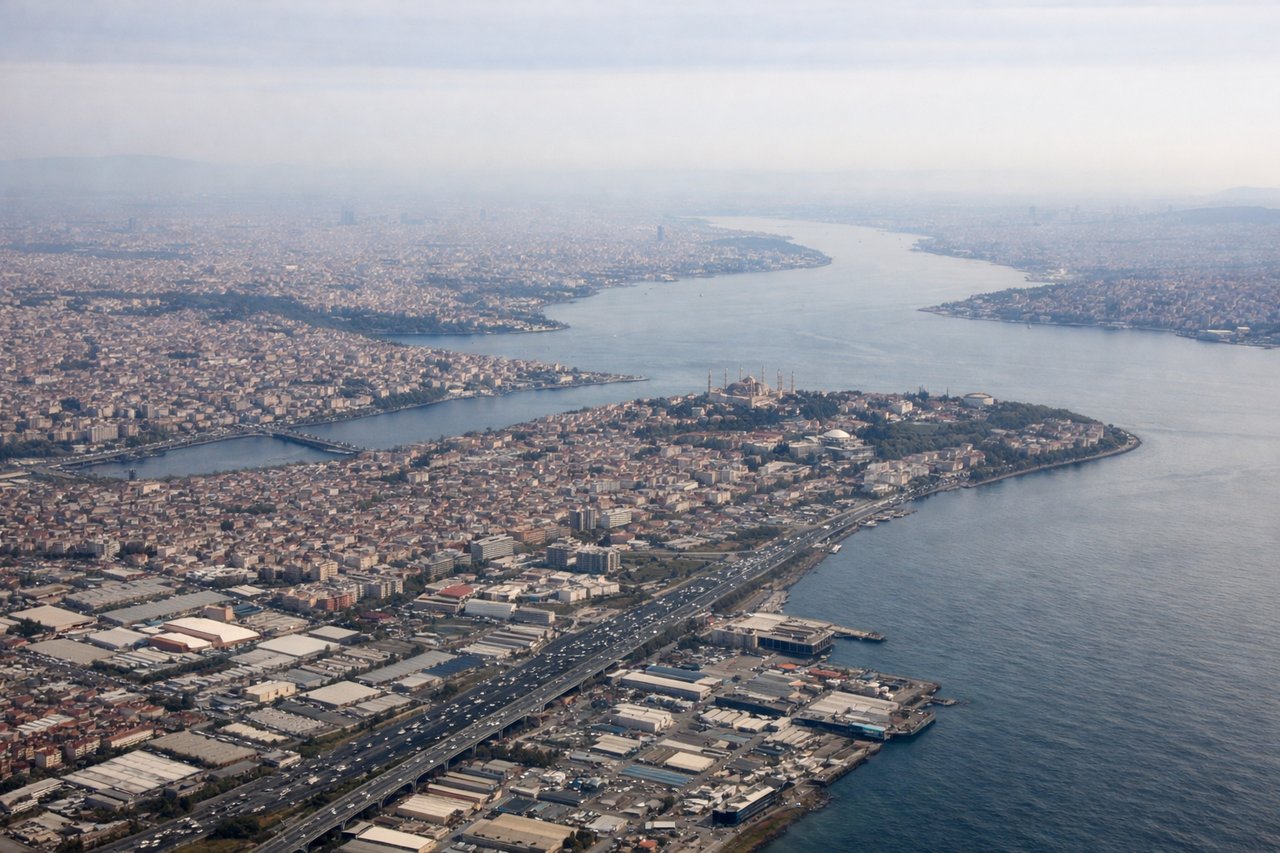
Takeoff from IST
RIGHTDeparting IST, the climb-out and initial turn put Istanbul's iconic waterways on the right side of the aircraft, with the Bosphorus, Golden Horn, and Sea of Marmara unfolding below before the jet settles onto its northwest heading. The left side mainly shows the less distinctive countryside north of the airport toward the Black Sea.
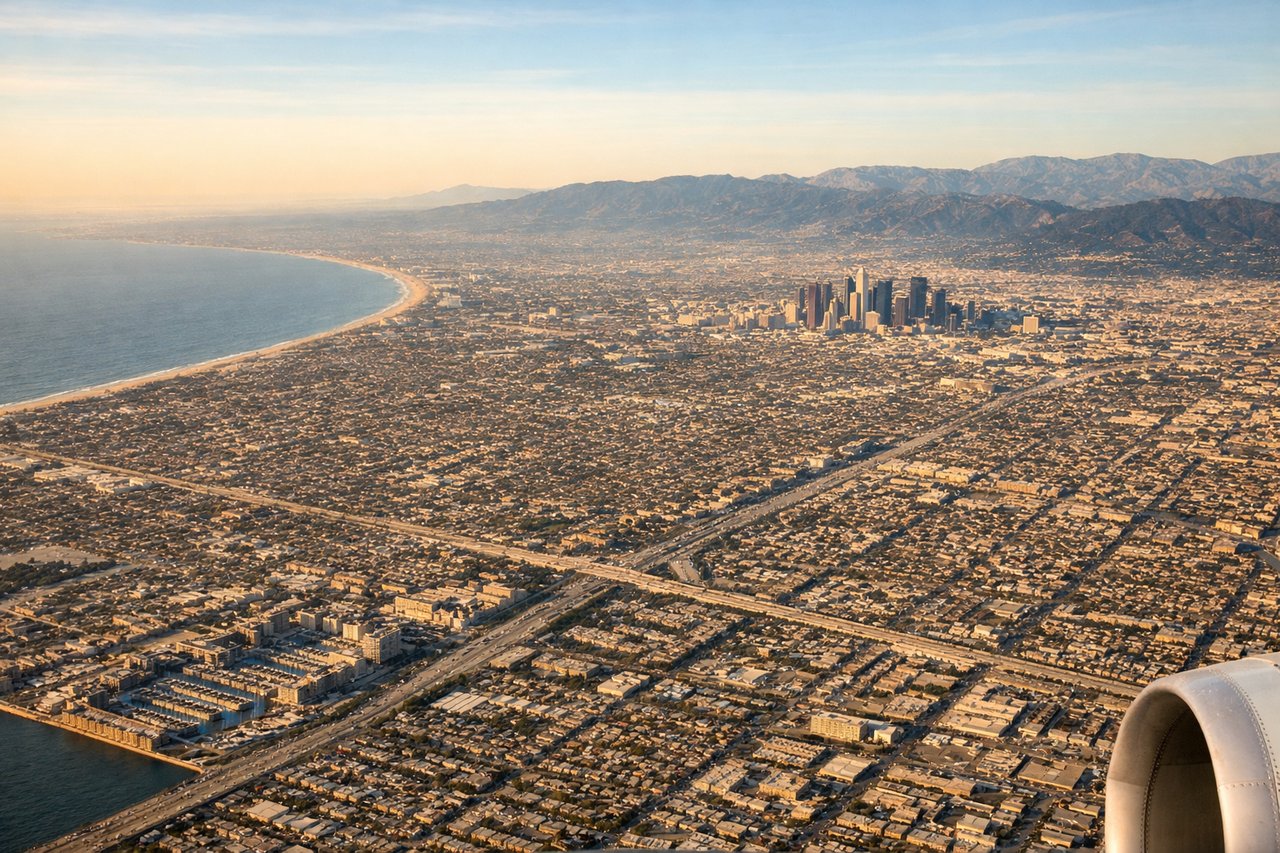
Landing at LAX
RIGHTOn the standard west-flow approach into LAX, the aircraft descends from the northeast across the Los Angeles basin, putting the San Gabriel Mountains and the northern edge of the city on the right side of the plane. This gives a dramatic mountain backdrop plus glimpses of the San Fernando Valley and downtown LA skyline, more striking than the flatter South Bay view on the left.
Landmarks on this routeAll landmarks →
Will your flight be in sunlight?
See exactly which side of the plane gets sun and shade at your departure time.
About This Route
Which side of the plane should I sit on flying from İstanbul Airport (IST) to Los Angeles International (LAX)?
Sit on the Right side of the plane for the best views on flights from Istanbul to Los Angeles. The right side offers a consistent thread of terrain drama across the whole flight: Istanbul's Bosphorus at departure, Greenland's ice sheet and Canadian Arctic terrain during the long cruise, and the San Gabriel Mountains with the LA skyline on arrival. The left side spends most of its time over open Atlantic water and flat Canadian/American plains, only picking up modest coastal scenery near the very end.
What can I see during takeoff from İstanbul Airport in Istanbul?
During takeoff from İstanbul Airport (IST), sit on the Right side for the best views. Departing IST, the climb-out and initial turn put Istanbul's iconic waterways on the right side of the aircraft, with the Bosphorus, Golden Horn, and Sea of Marmara unfolding below before the jet settles onto its northwest heading. The left side mainly shows the less distinctive countryside north of the airport toward the Black Sea. Notable sights include: Bosphorus Strait, historic Istanbul peninsula (Hagia Sophia/Topkapi area), Sea of Marmara, Princes' Islands.
What can I see when landing at Los Angeles International in Los Angeles?
When landing at Los Angeles International (LAX), sit on the Right side for the best views. On the standard west-flow approach into LAX, the aircraft descends from the northeast across the Los Angeles basin, putting the San Gabriel Mountains and the northern edge of the city on the right side of the plane. This gives a dramatic mountain backdrop plus glimpses of the San Fernando Valley and downtown LA skyline, more striking than the flatter South Bay view on the left. Notable sights include: San Gabriel Mountains, San Fernando Valley, Downtown Los Angeles skyline, Griffith Park hills.
How long is the flight from Istanbul to Los Angeles?
The flight from İstanbul Airport (IST) to Los Angeles International (LAX) takes 13h 35m.
What does the Istanbul to Los Angeles flight path pass over?
Greenland's southern ice sheet and coastal fjords, the Labrador Sea, and the tundra and lakes of the Canadian Arctic near Hudson Bay along the great-circle route toward North America