While left offers better Perth departure views, right side dominates the longer Rome approach with the dramatic Apennine Mountains and Tiber valley scenery during descent—the most visually striking portion of this 16+ hour journey.
Flight Path
The flight path typically crosses the Indian Ocean, then over Southeast Asia (Sunda Strait, Java Sea visible on some routes), the Arabian Sea, and the Arabian Peninsula. Over the Middle East, you may see the Persian Gulf, Zagros Mountains, and Mesopotamian plains. Approaching Europe, the Mediterranean coast becomes visible, followed by the Italian peninsula and Apennine spine.
Great circle distance and headings ›
_8.JPG?width=600)


_-_75_(50558355441).jpg?width=600)


Phase by phase
Takeoff from JAD
LEFTLeft side offers views of the Swan River estuary and Perth's city center during the initial climb-out heading northeast. You'll see the distinctive bend of the river and urban sprawl against the Indian Ocean backdrop.
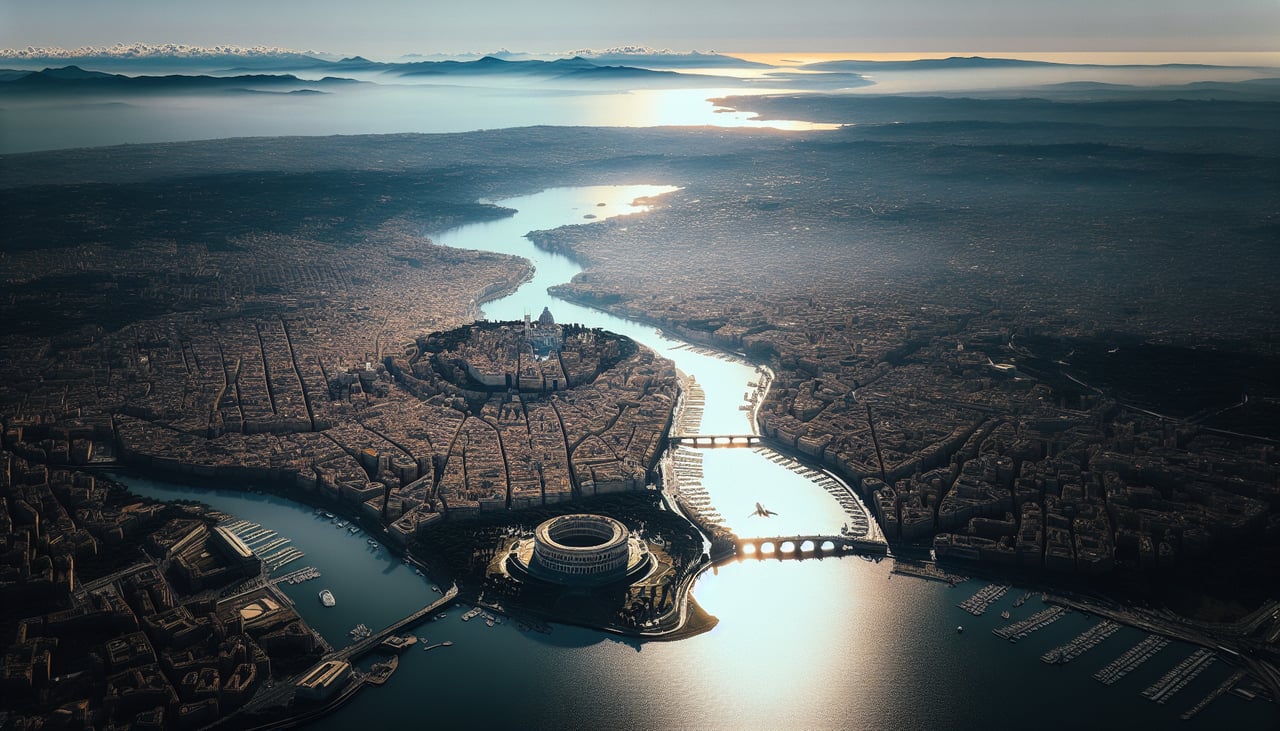
Landing at FCO
RIGHTRight side provides views of the Apennine Mountains as you descend into Rome from the east. The mountain range forms a dramatic backdrop to the Tiber River valley and the city's sprawl, visible during final approach.
Landmarks on this routeAll landmarks →
Will your flight be in sunlight?
See exactly which side of the plane gets sun and shade at your departure time.
About This Route
Which side of the plane should I sit on flying from Perth Jandakot (JAD) to Fiumicino (FCO)?
Sit on the Right side of the plane for the best views on flights from Perth to Rome. While left offers better Perth departure views, right side dominates the longer Rome approach with the dramatic Apennine Mountains and Tiber valley scenery during descent—the most visually striking portion of this 16+ hour journey.
What can I see during takeoff from Perth Jandakot in Perth?
During takeoff from Perth Jandakot (JAD), sit on the Left side for the best views. Left side offers views of the Swan River estuary and Perth's city center during the initial climb-out heading northeast. You'll see the distinctive bend of the river and urban sprawl against the Indian Ocean backdrop. Notable sights include: Swan River estuary, Perth CBD skyline, Rottnest Island (distant), Indian Ocean coastline.
What can I see when landing at Fiumicino in Rome?
When landing at Fiumicino (FCO), sit on the Right side for the best views. Right side provides views of the Apennine Mountains as you descend into Rome from the east. The mountain range forms a dramatic backdrop to the Tiber River valley and the city's sprawl, visible during final approach. Notable sights include: Apennine Mountains, Tiber River valley, Rome urban area, Alban Hills.
How long is the flight from Perth to Rome?
The flight from Perth Jandakot (JAD) to Fiumicino (FCO) takes Approximately 16-17 hours (including typical routing via Middle East or Southeast Asia).
What does the Perth to Rome flight path pass over?
The flight path typically crosses the Indian Ocean, then over Southeast Asia (Sunda Strait, Java Sea visible on some routes), the Arabian Sea, and the Arabian Peninsula. Over the Middle East, you may see the Persian Gulf, Zagros Mountains, and Mesopotamian plains. Approaching Europe, the Mediterranean coast becomes visible, followed by the Italian peninsula and Apennine spine.