Jacksonville to Los Angeles is 2,148 miles (3,457 km), a flight of about 5 hours.
While takeoff offers interesting coastal views on the right, the landing approach into LAX on the left provides more dramatic and visually distinctive scenery—the San Gabriel Mountains and the sprawling LA basin create a more compelling aerial experience than the relatively flat Florida coastline.
Flight Path
The flight path crosses the Gulf of Mexico (relatively featureless open water), then passes over the Florida Panhandle and southern Alabama/Mississippi coastline, followed by the Mississippi River valley, then over Texas (flat terrain with occasional rivers), New Mexico (high desert with sparse features), and Arizona (desert landscape with scattered mountains). The most visually interesting midpoint feature is the Mississippi River delta and lower Mississippi River valley visible roughly 1.5 hours into the flight. The Colorado Plateau and Arizona desert terrain become visible in the final 90 minutes before descent into Los Angeles.
Great circle distance and headings ›
.jpg?width=600)
.jpg?width=600)
Phase by phase
Takeoff from JAX
RIGHTRight-side seats offer views of the Atlantic coastline and the St. Johns River estuary as the aircraft climbs out northeastward from Jacksonville. You'll see the river's distinctive meanders and the coastal barrier islands that define this region.
Landing at LAX
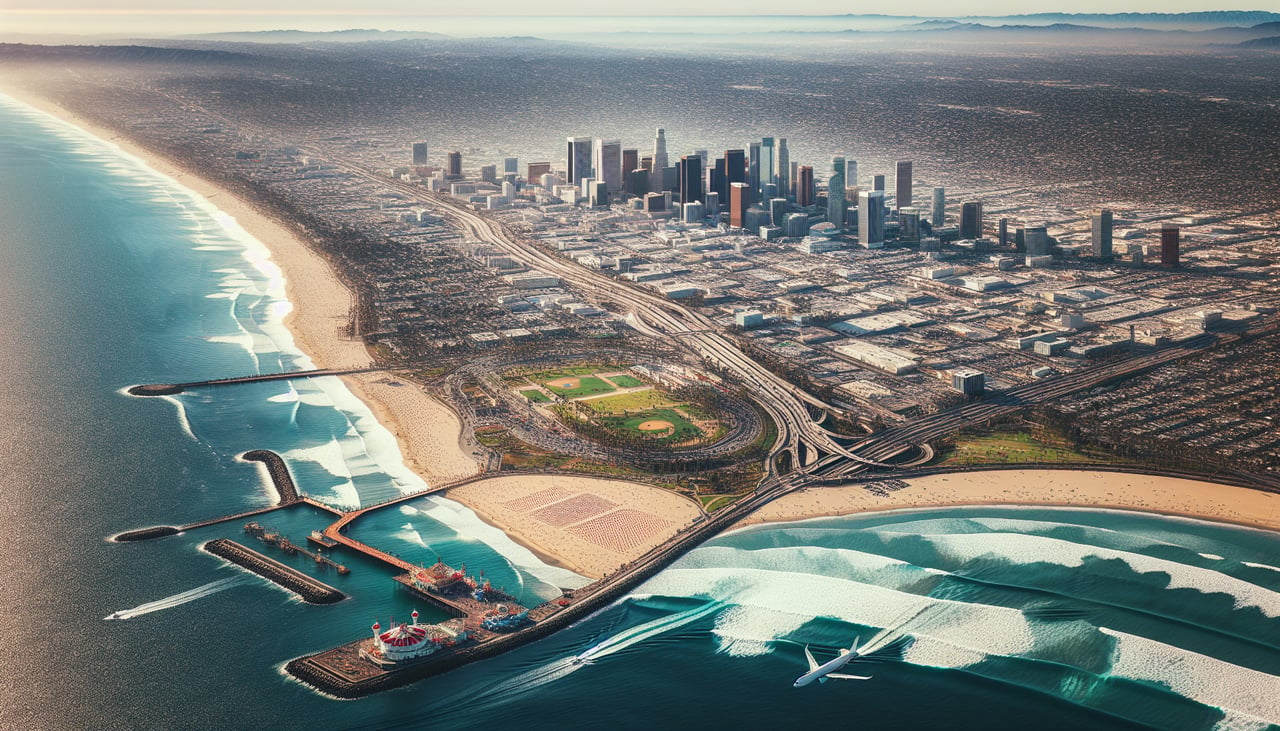
LEFTLeft-side seats provide excellent views during the descent into LAX, particularly of the San Gabriel Mountains to the northeast and the Los Angeles basin sprawl. As you approach from the east, you'll see the mountain range's ridgelines and the urban grid of the LA metropolitan area.
Landmarks on this routeAll landmarks →
Will your flight be in sunlight?
Pick a date and time in the Sun Map to watch the sun move across your whole flight.
About This Route
Which side of the plane should I sit on flying from Jacksonville International (JAX) to Los Angeles International (LAX)?
Sit on the Left side of the plane for the best views on flights from Jacksonville to Los Angeles. While takeoff offers interesting coastal views on the right, the landing approach into LAX on the left provides more dramatic and visually distinctive scenery—the San Gabriel Mountains and the sprawling LA basin create a more compelling aerial experience than the relatively flat Florida coastline.
What can I see during takeoff from Jacksonville International in Jacksonville?
During takeoff from Jacksonville International (JAX), sit on the Right side for the best views. Right-side seats offer views of the Atlantic coastline and the St. Johns River estuary as the aircraft climbs out northeastward from Jacksonville. You'll see the river's distinctive meanders and the coastal barrier islands that define this region. Notable sights include: St. Johns River (winding inland waterway), Atlantic Ocean coastline, Intracoastal Waterway, Jacksonville urban sprawl along the river.
What can I see when landing at Los Angeles International in Los Angeles?
When landing at Los Angeles International (LAX), sit on the Left side for the best views. Left-side seats provide excellent views during the descent into LAX, particularly of the San Gabriel Mountains to the northeast and the Los Angeles basin sprawl. As you approach from the east, you'll see the mountain range's ridgelines and the urban grid of the LA metropolitan area. Notable sights include: San Gabriel Mountains (snow-capped peaks visible in winter/spring), Los Angeles basin urban development, San Pedro Bay and Long Beach harbor, Pacific coastline.
How long is the flight from Jacksonville to Los Angeles?
The flight from Jacksonville International (JAX) to Los Angeles International (LAX) takes about 5 hours. The shortest flight path between them is 2,148 miles (3,457 km); winds and air traffic control usually add a few percent.
What does the Jacksonville to Los Angeles flight path pass over?
The flight path crosses the Gulf of Mexico (relatively featureless open water), then passes over the Florida Panhandle and southern Alabama/Mississippi coastline, followed by the Mississippi River valley, then over Texas (flat terrain with occasional rivers), New Mexico (high desert with sparse features), and Arizona (desert landscape with scattered mountains). The most visually interesting midpoint feature is the Mississippi River delta and lower Mississippi River valley visible roughly 1.5 hours into the flight. The Colorado Plateau and Arizona desert terrain become visible in the final 90 minutes before descent into Los Angeles.