Right-side seats capture the most dramatic scenery: the Red Sea departure and the Atlantic approach. The Red Sea climb-out is particularly striking, and right-side seats maintain good views through much of the Mediterranean crossing.
Flight Path
The flight path crosses the Mediterranean Sea for roughly 3.5 hours. Notable features include the Strait of Sicily (between Sicily and Tunisia), the North African coast near Tunisia and Algeria, the Atlas Mountains (visible as a distant ridge during the approach to Morocco), and the transition from deep Mediterranean blue to shallower coastal waters as the aircraft descends toward the Moroccan coast.
Great circle distance and headings ›.jpg?width=600)

Phase by phase
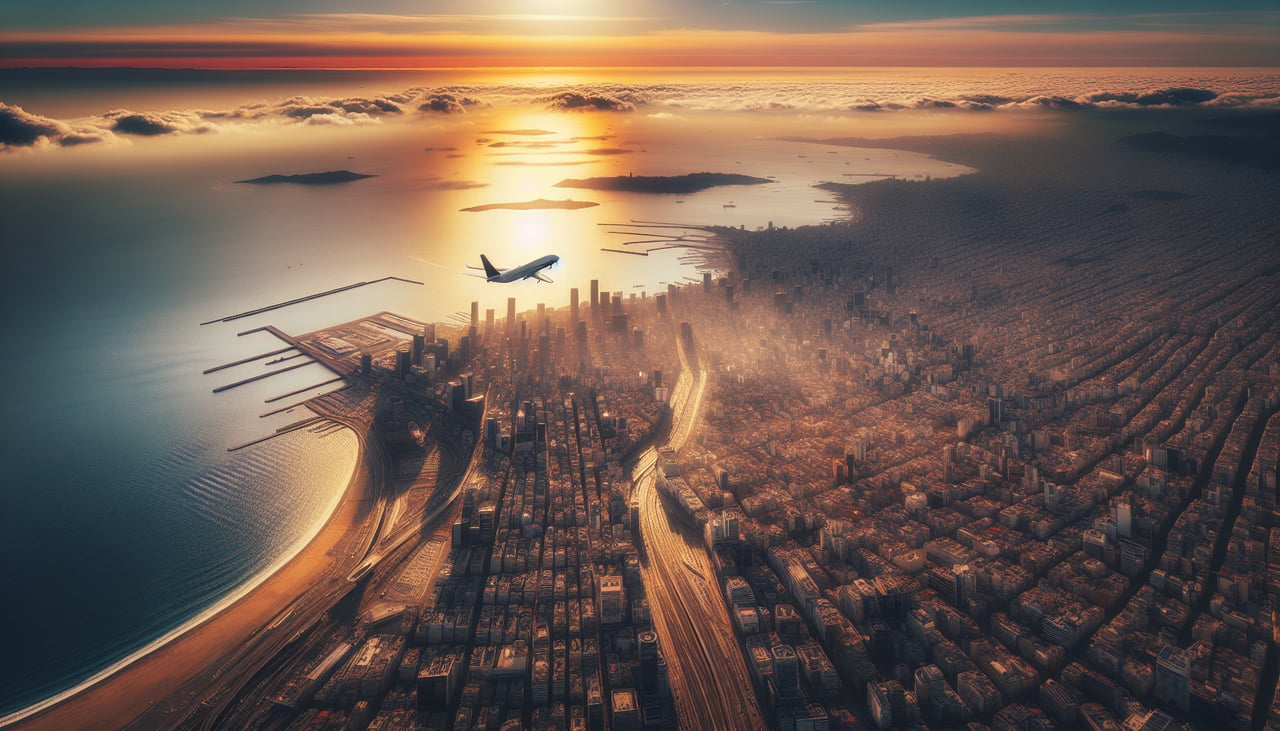
Takeoff from JED
RIGHTRight-side seats offer views of the Red Sea coastline and the Jeddah waterfront as the aircraft climbs northwestward. The sea's deep blue contrasts sharply against the arid Saudi terrain, and you'll see the city's harbor and coastal development receding below.
Landing at CMN
LEFTLeft-side seats provide excellent views during descent into Casablanca. You'll see the Atlantic coastline, the city's sprawling layout, and the Hassan II Mosque area as the aircraft approaches from the southeast. The coastal geography and urban landmarks are most prominent on the left side during the standard approach.
Landmarks on this routeAll landmarks →
Will your flight be in sunlight?
See exactly which side of the plane gets sun and shade at your departure time.
About This Route
Which side of the plane should I sit on flying from King Abdulaziz International (JED) to Mohammed V (CMN)?
Sit on the Right side of the plane for the best views on flights from Jeddah to Casablanca. Right-side seats capture the most dramatic scenery: the Red Sea departure and the Atlantic approach. The Red Sea climb-out is particularly striking, and right-side seats maintain good views through much of the Mediterranean crossing.
What can I see during takeoff from King Abdulaziz International in Jeddah?
During takeoff from King Abdulaziz International (JED), sit on the Right side for the best views. Right-side seats offer views of the Red Sea coastline and the Jeddah waterfront as the aircraft climbs northwestward. The sea's deep blue contrasts sharply against the arid Saudi terrain, and you'll see the city's harbor and coastal development receding below. Notable sights include: Red Sea coastline, Jeddah harbor and waterfront, Saudi Arabian desert plateau, Asir Mountains (distant, southern horizon).
What can I see when landing at Mohammed V in Casablanca?
When landing at Mohammed V (CMN), sit on the Left side for the best views. Left-side seats provide excellent views during descent into Casablanca. You'll see the Atlantic coastline, the city's sprawling layout, and the Hassan II Mosque area as the aircraft approaches from the southeast. The coastal geography and urban landmarks are most prominent on the left side during the standard approach. Notable sights include: Atlantic Ocean coastline, Casablanca city grid and harbor, Hassan II Mosque (white structure near coast), Anfa district and coastal cliffs.
How long is the flight from Jeddah to Casablanca?
The flight from King Abdulaziz International (JED) to Mohammed V (CMN) takes Approximately 5 hours 15 minutes.
What does the Jeddah to Casablanca flight path pass over?
The flight path crosses the Mediterranean Sea for roughly 3.5 hours. Notable features include the Strait of Sicily (between Sicily and Tunisia), the North African coast near Tunisia and Algeria, the Atlas Mountains (visible as a distant ridge during the approach to Morocco), and the transition from deep Mediterranean blue to shallower coastal waters as the aircraft descends toward the Moroccan coast.