The left side delivers the spectacular Manhattan and New York Harbor departure, which is one of the great urban aerial views in aviation. The landing advantage on the right is real but less dramatic. For the overall experience, left wins on the strength of the departure alone, and the left side also tracks closer to the European coastline during the mid-flight portion over the Mediterranean.
Flight Path
The route tracks northeast over the North Atlantic, crossing southern Ireland and England, then over France and the Alps, continuing southeast over the Adriatic Sea and Greece, across the eastern Mediterranean, over Cyprus, then into the Arabian Peninsula via Saudi Arabia. The Alps are visible as a broad white mountain mass if flying in daylight. The Greek island chains of the Aegean are distinctive from altitude. The Nile Delta is sometimes visible depending on exact routing. The Saudi Arabian interior is a vast tan and orange sand sea with occasional dark volcanic lava fields known as harrat visible as dark irregular patches.
Great circle distance and headings ›.jpg?width=600)


Phase by phase
Takeoff from JFK
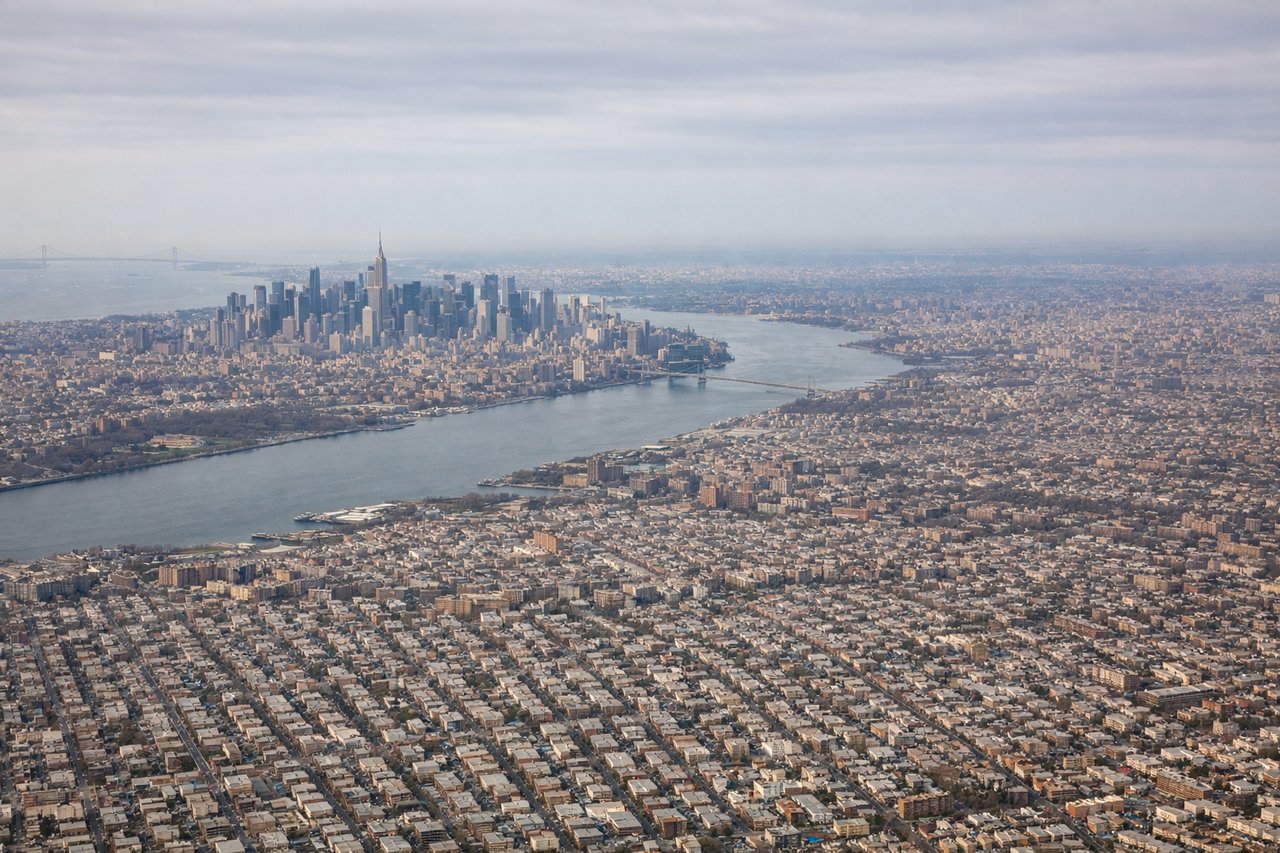
LEFTJFK typically departs eastward on runway 31L/R or 22L/R depending on wind. On a northeast departure toward Europe, the left side gives you Manhattan's skyline, the East River, and the full sweep of New York Harbor. The right side faces Jamaica Bay and the Atlantic Ocean with little of interest.
Landing at AUH
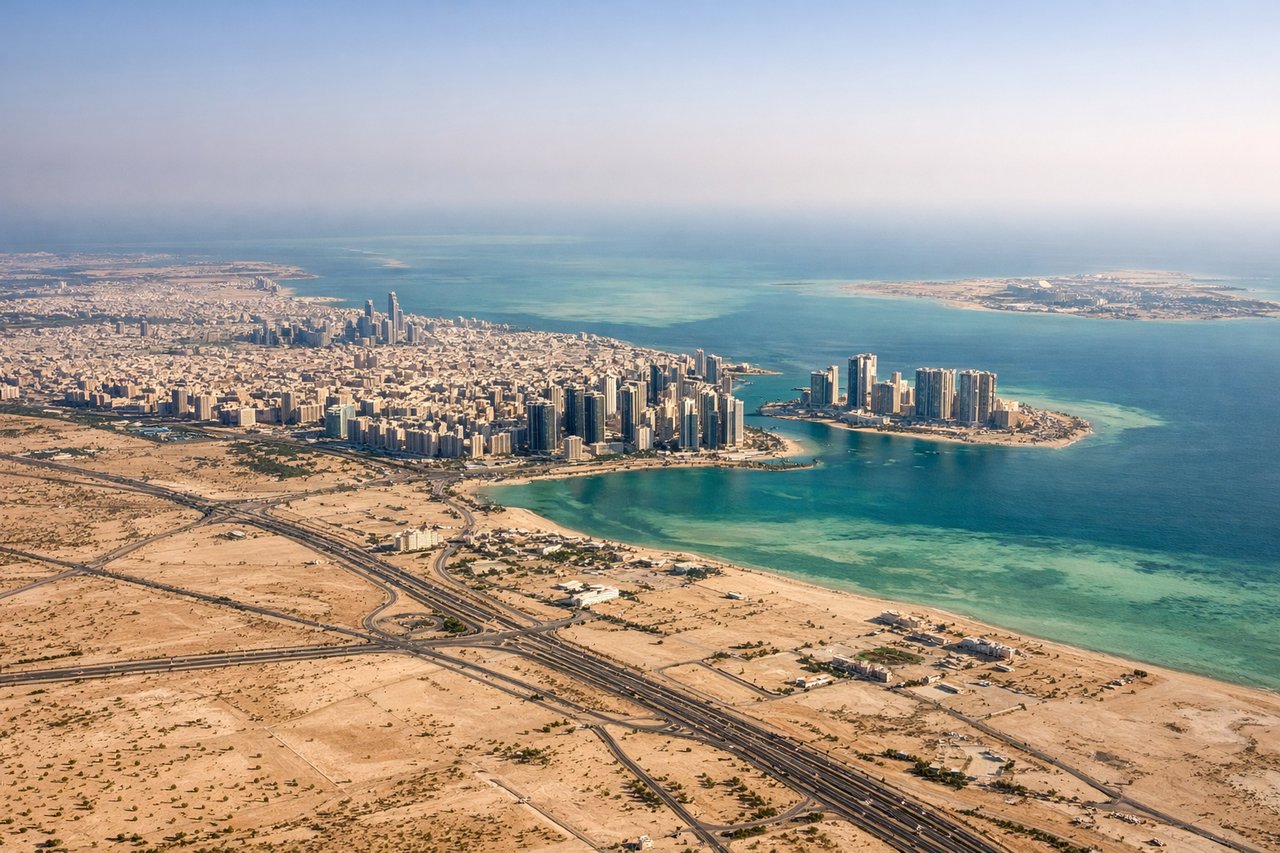
RIGHTAbu Dhabi International typically uses runways oriented roughly east-west (31L/13R). On approach from the northwest, the right side faces south over Abu Dhabi city, the Persian Gulf coastline, and the distinctive island geography of the emirate. The left side faces inland desert with little visual interest.
Landmarks on this routeAll landmarks →
Will your flight be in sunlight?
See exactly which side of the plane gets sun and shade at your departure time.
About This Route
Which side of the plane should I sit on flying from John F Kennedy International (JFK) to Abu Dhabi International (AUH)?
Sit on the Left side of the plane for the best views on flights from New York to Abu Dhabi. The left side delivers the spectacular Manhattan and New York Harbor departure, which is one of the great urban aerial views in aviation. The landing advantage on the right is real but less dramatic. For the overall experience, left wins on the strength of the departure alone, and the left side also tracks closer to the European coastline during the mid-flight portion over the Mediterranean.
What can I see during takeoff from John F Kennedy International in New York?
During takeoff from John F Kennedy International (JFK), sit on the Left side for the best views. JFK typically departs eastward on runway 31L/R or 22L/R depending on wind. On a northeast departure toward Europe, the left side gives you Manhattan's skyline, the East River, and the full sweep of New York Harbor. The right side faces Jamaica Bay and the Atlantic Ocean with little of interest. Notable sights include: Manhattan skyline and Central Park, Verrazano-Narrows Bridge, New York Harbor, Brooklyn and Queens urban grid.
What can I see when landing at Abu Dhabi International in Abu Dhabi?
When landing at Abu Dhabi International (AUH), sit on the Right side for the best views. Abu Dhabi International typically uses runways oriented roughly east-west (31L/13R). On approach from the northwest, the right side faces south over Abu Dhabi city, the Persian Gulf coastline, and the distinctive island geography of the emirate. The left side faces inland desert with little visual interest. Notable sights include: Abu Dhabi city island and corniche, Persian Gulf shallow turquoise waters, Yas Island and Formula 1 circuit, artificial island developments along the coast.
How long is the flight from New York to Abu Dhabi?
The flight from John F Kennedy International (JFK) to Abu Dhabi International (AUH) takes Approximately 12 to 13 hours.
What does the New York to Abu Dhabi flight path pass over?
The route tracks northeast over the North Atlantic, crossing southern Ireland and England, then over France and the Alps, continuing southeast over the Adriatic Sea and Greece, across the eastern Mediterranean, over Cyprus, then into the Arabian Peninsula via Saudi Arabia. The Alps are visible as a broad white mountain mass if flying in daylight. The Greek island chains of the Aegean are distinctive from altitude. The Nile Delta is sometimes visible depending on exact routing. The Saudi Arabian interior is a vast tan and orange sand sea with occasional dark volcanic lava fields known as harrat visible as dark irregular patches.