The right side captures the two most visually distinctive moments of the flight: the Manhattan skyline during departure and the Texas Hill Country with Lake Travis during arrival into Austin. The left side offers mostly flat, unremarkable terrain during both phases.
Flight Path
The route crosses the ridge-and-valley Appalachians of Pennsylvania, the rolling hills of the Ohio Valley, and the flat agricultural plains of Arkansas and East Texas before descending into the Hill Country near Austin.
Great circle distance and headings ›.jpg?width=600)
.jpeg?width=600)

Phase by phase

Takeoff from JFK
RIGHTDepartures off JFK heading toward Texas typically bank south then west, putting Manhattan's skyline and the East River on the right side of the aircraft during the climb. The left side mostly shows the flat expanse of Jamaica Bay and the Rockaways.
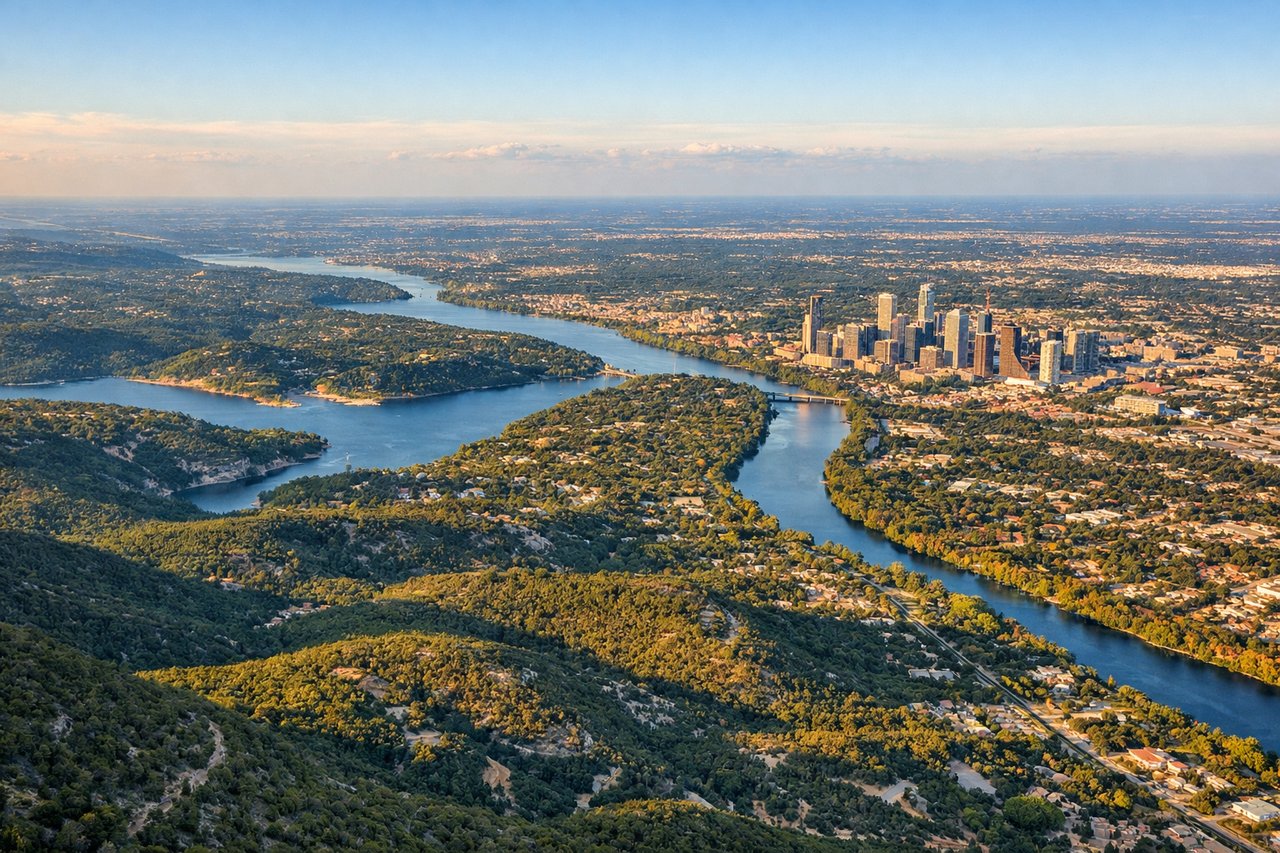
Landing at AUS
RIGHTWith Austin's typical southerly wind flow, arrivals descend from the north and fly a downwind leg that curves west of the city before turning onto final for runway 18. This puts the Texas Hill Country and Lake Travis on the right side, while the left shows flatter suburban sprawl.
Landmarks on this routeAll landmarks →
Will your flight be in sunlight?
See exactly which side of the plane gets sun and shade at your departure time.
About This Route
Which side of the plane should I sit on flying from John F Kennedy International (JFK) to Austin Bergstrom International (AUS)?
Sit on the Right side of the plane for the best views on flights from New York to Austin. The right side captures the two most visually distinctive moments of the flight: the Manhattan skyline during departure and the Texas Hill Country with Lake Travis during arrival into Austin. The left side offers mostly flat, unremarkable terrain during both phases.
What can I see during takeoff from John F Kennedy International in New York?
During takeoff from John F Kennedy International (JFK), sit on the Right side for the best views. Departures off JFK heading toward Texas typically bank south then west, putting Manhattan's skyline and the East River on the right side of the aircraft during the climb. The left side mostly shows the flat expanse of Jamaica Bay and the Rockaways. Notable sights include: Manhattan skyline, East River, Verrazzano-Narrows Bridge, Jamaica Bay.
What can I see when landing at Austin Bergstrom International in Austin?
When landing at Austin Bergstrom International (AUS), sit on the Right side for the best views. With Austin's typical southerly wind flow, arrivals descend from the north and fly a downwind leg that curves west of the city before turning onto final for runway 18. This puts the Texas Hill Country and Lake Travis on the right side, while the left shows flatter suburban sprawl. Notable sights include: Lake Travis, Texas Hill Country ridgelines, downtown Austin skyline, Colorado River.
How long is the flight from New York to Austin?
The flight from John F Kennedy International (JFK) to Austin Bergstrom International (AUS) takes 3h 40m.
What does the New York to Austin flight path pass over?
The route crosses the ridge-and-valley Appalachians of Pennsylvania, the rolling hills of the Ohio Valley, and the flat agricultural plains of Arkansas and East Texas before descending into the Hill Country near Austin.