New York to Columbus is 482 miles (776 km), a flight of about 1 hour 45 minutes.
The right side captures the only two genuinely scenic moments of this short flight: the Manhattan skyline glimpse on departure and the transition from Appalachian foothills to the Columbus skyline on arrival. The left side offers flat, unremarkable terrain for nearly the entire route.
Flight Path
Central Pennsylvania's Allegheny Plateau ridgelines and the Ohio border farmland as the terrain flattens westward
Great circle distance and headings ›.jpg?width=600)
.jpeg?width=600)
Phase by phase
Takeoff from JFK
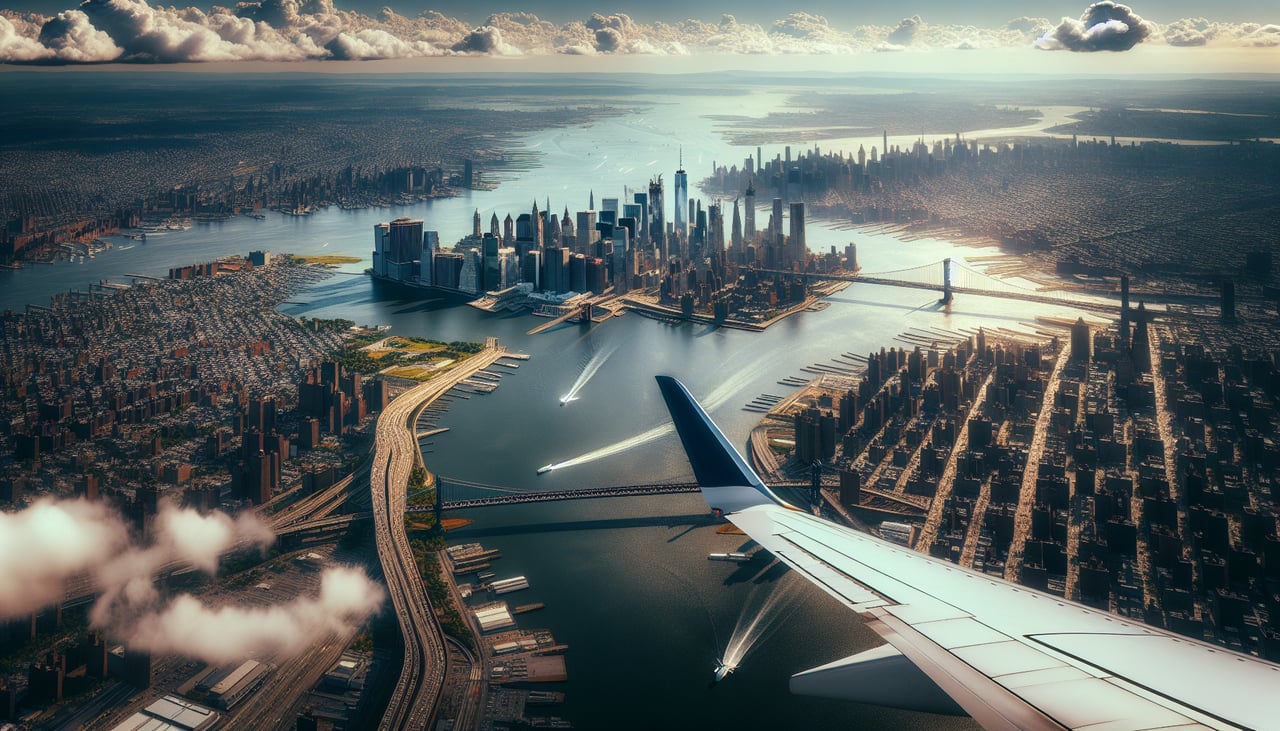
RIGHTDepartures off JFK's southerly runways typically bank toward the west, putting the Manhattan skyline and Jamaica Bay shoreline on the right side briefly before the turn onto course. The left side mostly shows flat Long Island and Queens rooftops with no real landmarks.
Landing at CMH
RIGHTOn approach to CMH's westerly runways, the final turn typically comes from the northeast, giving right-side passengers a last look at the rolling hills of the Allegheny Plateau before the terrain flattens into Ohio farmland. The left side sees mostly featureless cropland during descent.
Landmarks on this routeAll landmarks →
Will your flight be in sunlight?
Pick a date and time in the Sun Map to watch the sun move across your whole flight.
About This Route
Which side of the plane should I sit on flying from John F Kennedy International (JFK) to Port Columbus International (CMH)?
Sit on the Right side of the plane for the best views on flights from New York to Columbus. The right side captures the only two genuinely scenic moments of this short flight: the Manhattan skyline glimpse on departure and the transition from Appalachian foothills to the Columbus skyline on arrival. The left side offers flat, unremarkable terrain for nearly the entire route.
What can I see during takeoff from John F Kennedy International in New York?
During takeoff from John F Kennedy International (JFK), sit on the Right side for the best views. Departures off JFK's southerly runways typically bank toward the west, putting the Manhattan skyline and Jamaica Bay shoreline on the right side briefly before the turn onto course. The left side mostly shows flat Long Island and Queens rooftops with no real landmarks. Notable sights include: Manhattan skyline, Jamaica Bay, Verrazzano-Narrows Bridge.
What can I see when landing at Port Columbus International in Columbus?
When landing at Port Columbus International (CMH), sit on the Right side for the best views. On approach to CMH's westerly runways, the final turn typically comes from the northeast, giving right-side passengers a last look at the rolling hills of the Allegheny Plateau before the terrain flattens into Ohio farmland. The left side sees mostly featureless cropland during descent. Notable sights include: Allegheny Plateau foothills, Scioto River, downtown Columbus skyline.
How long is the flight from New York to Columbus?
The flight from John F Kennedy International (JFK) to Port Columbus International (CMH) takes about 1 hour 45 minutes. The shortest flight path between them is 482 miles (776 km); winds and air traffic control usually add a few percent.
What does the New York to Columbus flight path pass over?
Central Pennsylvania's Allegheny Plateau ridgelines and the Ohio border farmland as the terrain flattens westward