New York to Detroit is 493 miles (793 km), a flight of about 1 hour 15 minutes.
While the left offers better takeoff scenery, the right side's landing views of the Detroit River, Belle Isle, and Lake St. Clair are more visually distinctive. The flight path itself is relatively short with limited mid-route landmarks, making the landing approach the highlight.
Flight Path
The flight crosses central New York and Pennsylvania at cruise altitude. Notable features include the Hudson River valley (visible during initial climb), the Appalachian ridge system appearing as subtle elevation changes in the terrain below, and scattered lakes throughout upstate New York and Pennsylvania. The landscape transitions from dense northeastern urban corridors to more rural, forested terrain with agricultural areas. Lake Erie becomes visible as you approach Michigan, appearing as a large blue expanse on the horizon during descent.
Great circle distance and headings ›.jpg?width=600)
.jpeg?width=600)
Phase by phase
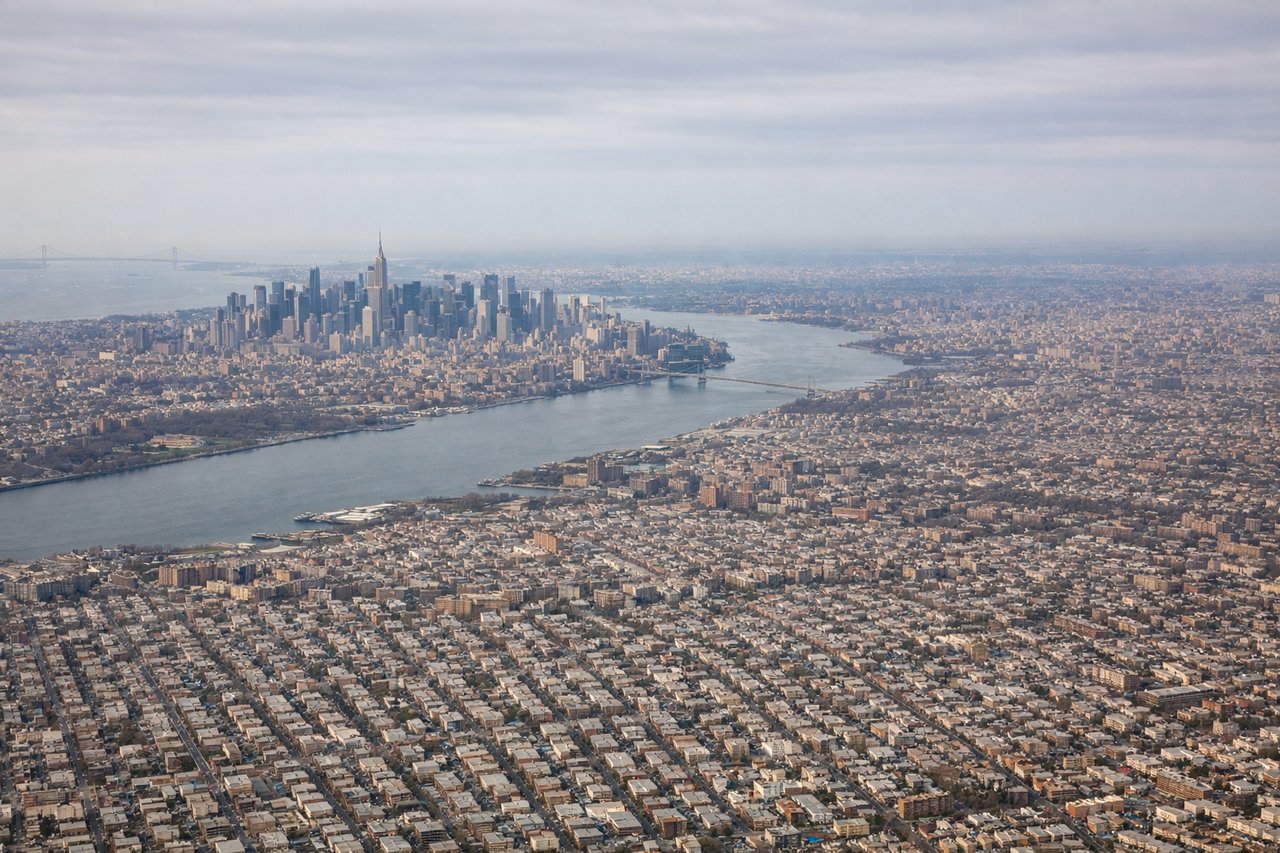
Takeoff from JFK
LEFTLeft side offers views of the Atlantic coastline, Jamaica Bay, and the Rockaways as you climb out westbound. Right side faces inland toward Queens and Long Island with less distinctive scenery.
Landing at DET
RIGHTRight side provides views of the Detroit River, Windsor Ontario across the border, and Lake St. Clair as you descend eastbound into Coleman Young International. Left side faces inland toward suburban Michigan with fewer distinctive features.
Landmarks on this routeAll landmarks →
Will your flight be in sunlight?
Pick a date and time in the Sun Map to watch the sun move across your whole flight.
About This Route
Which side of the plane should I sit on flying from John F Kennedy International (JFK) to Detroit City (DET)?
Sit on the Right side of the plane for the best views on flights from New York to Detroit. While the left offers better takeoff scenery, the right side's landing views of the Detroit River, Belle Isle, and Lake St. Clair are more visually distinctive. The flight path itself is relatively short with limited mid-route landmarks, making the landing approach the highlight.
What can I see during takeoff from John F Kennedy International in New York?
During takeoff from John F Kennedy International (JFK), sit on the Left side for the best views. Left side offers views of the Atlantic coastline, Jamaica Bay, and the Rockaways as you climb out westbound. Right side faces inland toward Queens and Long Island with less distinctive scenery. Notable sights include: Jamaica Bay wetlands and barrier islands, Atlantic Ocean coastline, Rockaway Peninsula, Jamaica Bay Wildlife Refuge.
What can I see when landing at Detroit City in Detroit?
When landing at Detroit City (DET), sit on the Right side for the best views. Right side provides views of the Detroit River, Windsor Ontario across the border, and Lake St. Clair as you descend eastbound into Coleman Young International. Left side faces inland toward suburban Michigan with fewer distinctive features. Notable sights include: Detroit River, Lake St. Clair, Windsor Ontario skyline, Belle Isle island.
How long is the flight from New York to Detroit?
The flight from John F Kennedy International (JFK) to Detroit City (DET) takes about 1 hour 15 minutes. The shortest flight path between them is 493 miles (793 km); winds and air traffic control usually add a few percent.
What does the New York to Detroit flight path pass over?
The flight crosses central New York and Pennsylvania at cruise altitude. Notable features include the Hudson River valley (visible during initial climb), the Appalachian ridge system appearing as subtle elevation changes in the terrain below, and scattered lakes throughout upstate New York and Pennsylvania. The landscape transitions from dense northeastern urban corridors to more rural, forested terrain with agricultural areas. Lake Erie becomes visible as you approach Michigan, appearing as a large blue expanse on the horizon during descent.