While the New York takeoff offers a strong but brief skyline moment, the Hong Kong approach is more sustained and dramatic, combining mountainous Lantau terrain with the harbor skyline. Over the long Arctic and Siberian cruise, the two sides are roughly balanced, so the more spectacular arrival tips the overall score to the right.
Flight Path
The great-circle route crosses the Canadian Arctic Archipelago near Baffin Island, passes over polar sea ice north of Siberia, and continues south over the Verkhoyansk mountain range and Yakutia's taiga before descending through Mongolia and the Gobi Desert into southern China.
Great circle distance and headings ›.jpg?width=600)
.jpeg?width=600)


Phase by phase
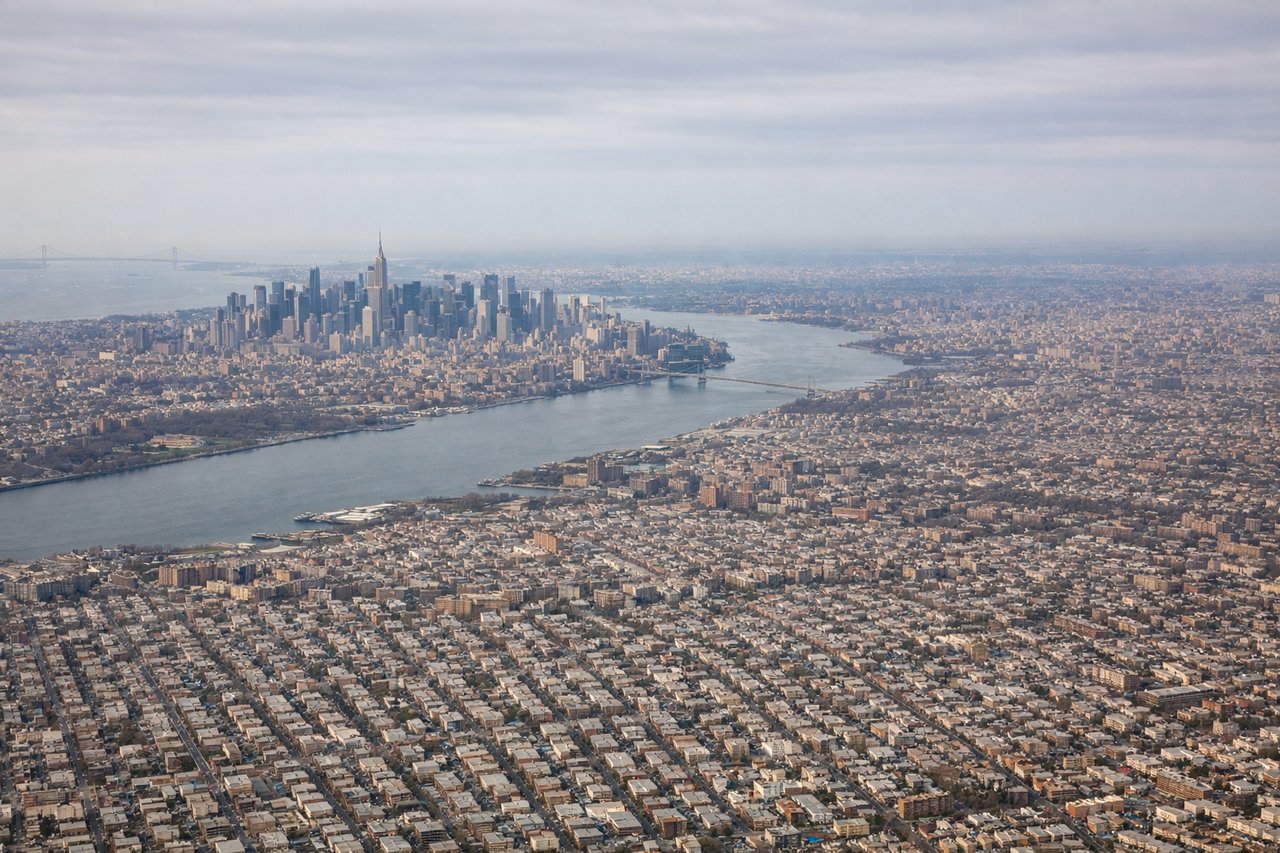
Takeoff from JFK
LEFTJFK departures toward the Canadian Arctic climb out heading roughly north, putting Manhattan and the Hudson River on the left side of the aircraft while Long Island and open Atlantic dominate the right. The brief but iconic skyline view gives the left side a clear edge in the first few minutes.

Landing at HKG
RIGHTOn the descent into Hong Kong from the north, the flight path curves past the New Territories and Lantau Island before final approach, placing Hong Kong Island's skyline, Victoria Harbour, and Lantau's mountains on the right side of the cabin. This approach is one of the most visually striking landings in Asia, with green peaks dropping straight into the harbor.
Landmarks on this routeAll landmarks →
Will your flight be in sunlight?
See exactly which side of the plane gets sun and shade at your departure time.
About This Route
Which side of the plane should I sit on flying from John F Kennedy International (JFK) to Hong Kong International (HKG)?
Sit on the Right side of the plane for the best views on flights from New York to Hong Kong. While the New York takeoff offers a strong but brief skyline moment, the Hong Kong approach is more sustained and dramatic, combining mountainous Lantau terrain with the harbor skyline. Over the long Arctic and Siberian cruise, the two sides are roughly balanced, so the more spectacular arrival tips the overall score to the right.
What can I see during takeoff from John F Kennedy International in New York?
During takeoff from John F Kennedy International (JFK), sit on the Left side for the best views. JFK departures toward the Canadian Arctic climb out heading roughly north, putting Manhattan and the Hudson River on the left side of the aircraft while Long Island and open Atlantic dominate the right. The brief but iconic skyline view gives the left side a clear edge in the first few minutes. Notable sights include: Manhattan skyline (Empire State Building, One World Trade Center), Hudson River, Long Island Sound, Throgs Neck/Whitestone Bridges.
What can I see when landing at Hong Kong International in Hong Kong?
When landing at Hong Kong International (HKG), sit on the Right side for the best views. On the descent into Hong Kong from the north, the flight path curves past the New Territories and Lantau Island before final approach, placing Hong Kong Island's skyline, Victoria Harbour, and Lantau's mountains on the right side of the cabin. This approach is one of the most visually striking landings in Asia, with green peaks dropping straight into the harbor. Notable sights include: Lantau Peak and Sunset Peak, Victoria Harbour and Hong Kong Island skyline, Kowloon high-rises, Pearl River Delta islands.
How long is the flight from New York to Hong Kong?
The flight from John F Kennedy International (JFK) to Hong Kong International (HKG) takes 15h 55m.
What does the New York to Hong Kong flight path pass over?
The great-circle route crosses the Canadian Arctic Archipelago near Baffin Island, passes over polar sea ice north of Siberia, and continues south over the Verkhoyansk mountain range and Yakutia's taiga before descending through Mongolia and the Gobi Desert into southern China.