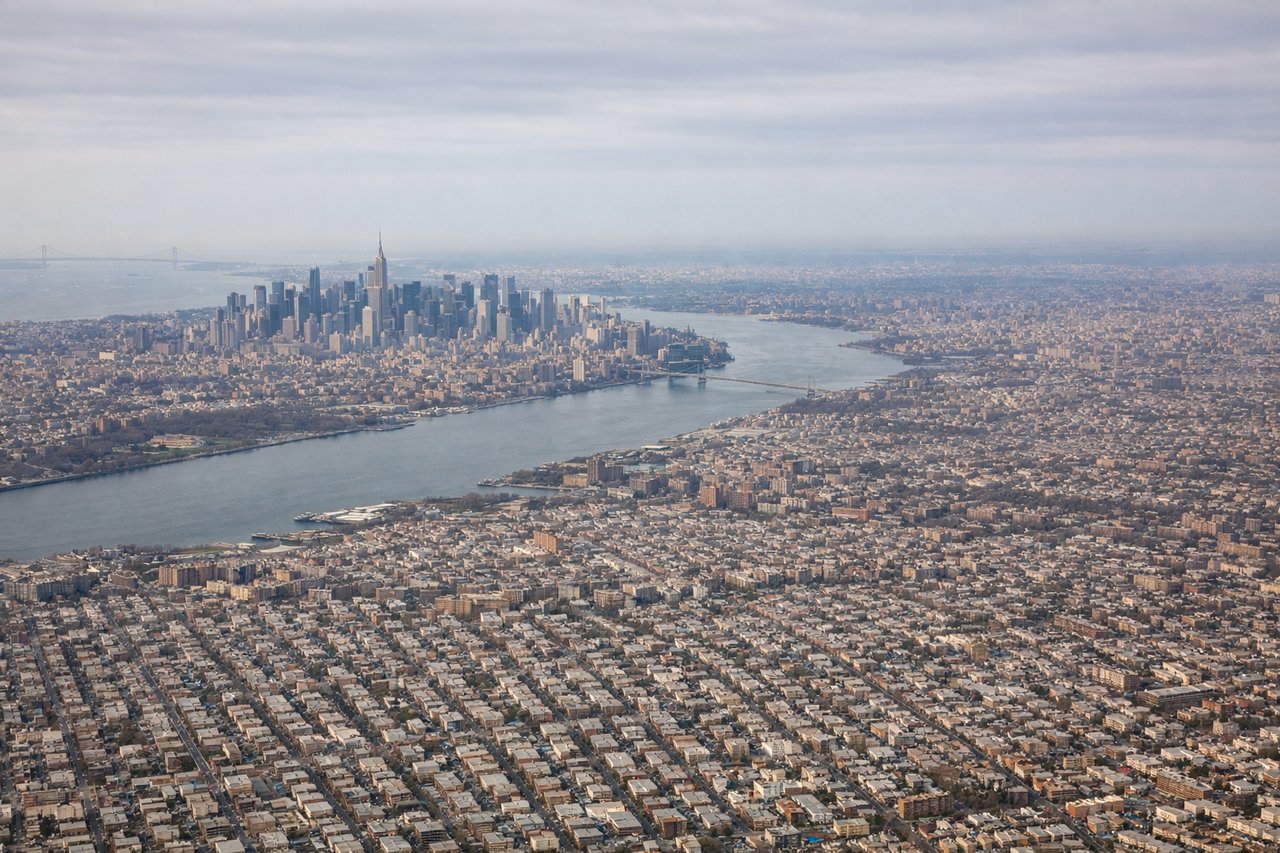
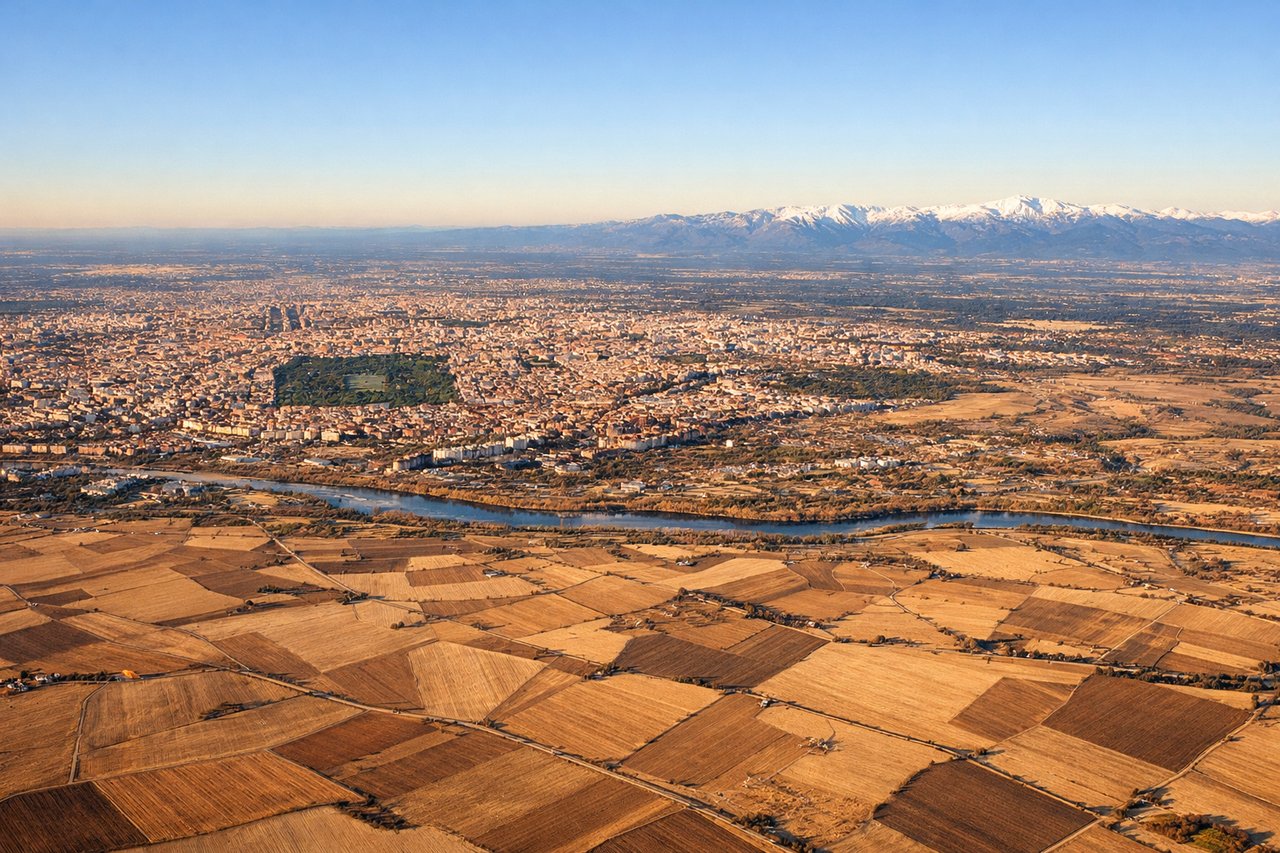
The left side captures the two most scenic moments of the flight: the Manhattan skyline during departure and the Madrid cityscape with the Guadarrama foothills during arrival, while the right side offers only ocean and flat terrain throughout.
Flight Path
The flight path lies close to the 40th parallel across the open North Atlantic, passing well north of the Azores with no land visible for several hours before the route crosses into Spanish airspace near the Bay of Biscay.
Great circle distance and headings ›.jpeg?width=600)
.jpg?width=600)
Phase by phase
Takeoff from JFK
LEFTJFK departures toward Europe typically launch on runway 31L and then bank right onto an eastbound heading, which swings the Manhattan skyline into view on the left side just after liftoff. The right side only shows the flat, unremarkable south shore of Long Island and open water.
Landing at MAD
LEFTIn Madrid's normal north configuration, aircraft approach from the south and turn onto a north-northwest final, which places the city center and the low ridges of the Sierra de Guadarrama off to the left. The right side mostly faces the flat, featureless Castilian plain east of the airport.
Landmarks on this routeAll landmarks →
Will your flight be in sunlight?
See exactly which side of the plane gets sun and shade at your departure time.
About This Route
Which side of the plane should I sit on flying from John F Kennedy International (JFK) to Barajas (MAD)?
Sit on the Left side of the plane for the best views on flights from New York to Madrid. The left side captures the two most scenic moments of the flight: the Manhattan skyline during departure and the Madrid cityscape with the Guadarrama foothills during arrival, while the right side offers only ocean and flat terrain throughout.
What can I see during takeoff from John F Kennedy International in New York?
During takeoff from John F Kennedy International (JFK), sit on the Left side for the best views. JFK departures toward Europe typically launch on runway 31L and then bank right onto an eastbound heading, which swings the Manhattan skyline into view on the left side just after liftoff. The right side only shows the flat, unremarkable south shore of Long Island and open water. Notable sights include: Manhattan skyline, Long Island Sound, Jamaica Bay, Rockaway Peninsula.
What can I see when landing at Barajas in Madrid?
When landing at Barajas (MAD), sit on the Left side for the best views. In Madrid's normal north configuration, aircraft approach from the south and turn onto a north-northwest final, which places the city center and the low ridges of the Sierra de Guadarrama off to the left. The right side mostly faces the flat, featureless Castilian plain east of the airport. Notable sights include: Madrid city skyline, Sierra de Guadarrama foothills, Jarama river valley, Barajas terminal complex.
How long is the flight from New York to Madrid?
The flight from John F Kennedy International (JFK) to Barajas (MAD) takes 6h 40m.
What does the New York to Madrid flight path pass over?
The flight path lies close to the 40th parallel across the open North Atlantic, passing well north of the Azores with no land visible for several hours before the route crosses into Spanish airspace near the Bay of Biscay.