For most of the cruise phase the flight path tracks close to the Atlantic seaboard, giving the left side recurring views of barrier islands, river mouths, and coastal towns from Delaware down through the Carolinas and Georgia, plus a scenic Biscayne Bay arrival into Miami. The right side stays mostly over flat inland terrain with less variety.
Flight Path
Delaware Bay, Chesapeake Bay mouth, Outer Banks of North Carolina, Georgia and northeast Florida coastline
Great circle distance and headings ›.jpg?width=600)


Phase by phase
Takeoff from JFK
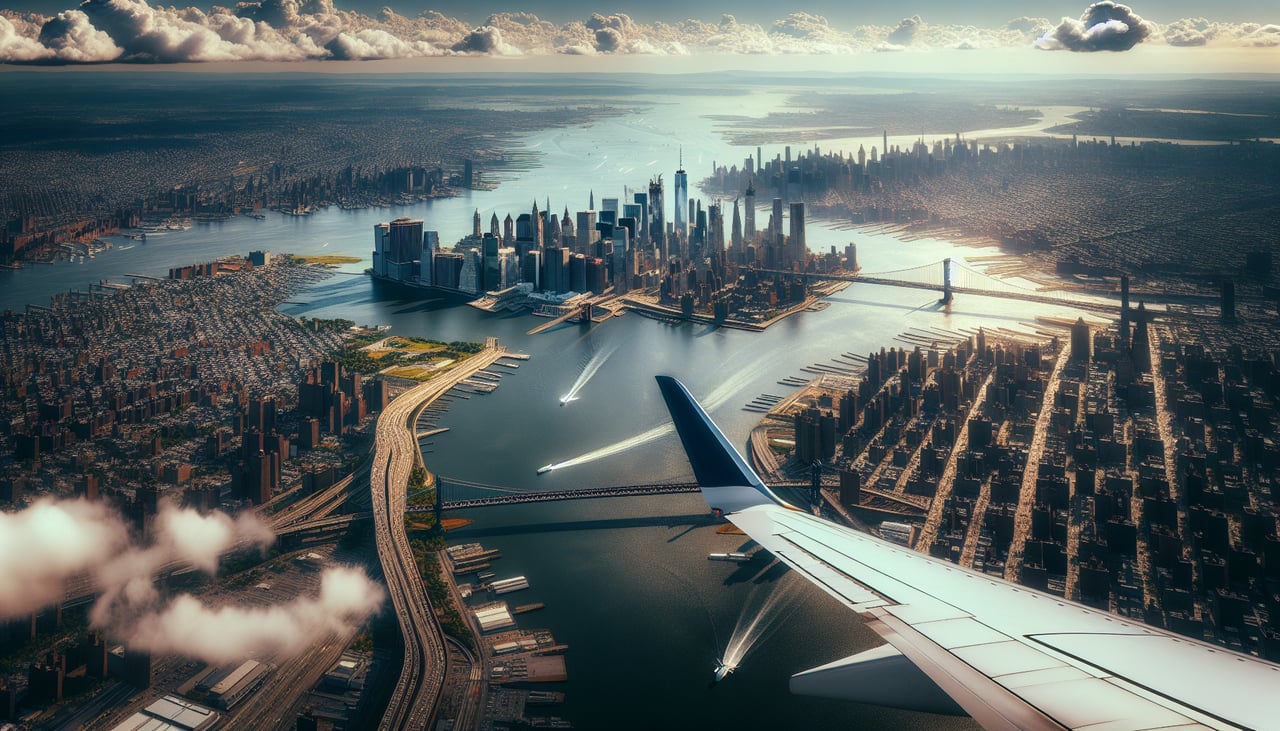
RIGHTSouthbound departures out of JFK typically climb out over Jamaica Bay and the Rockaways before turning south, and during that turn the Manhattan skyline and Verrazzano-Narrows Bridge come into view to the right (west) side of the aircraft. The left side mostly shows open Atlantic water at this stage.
Landing at MIA
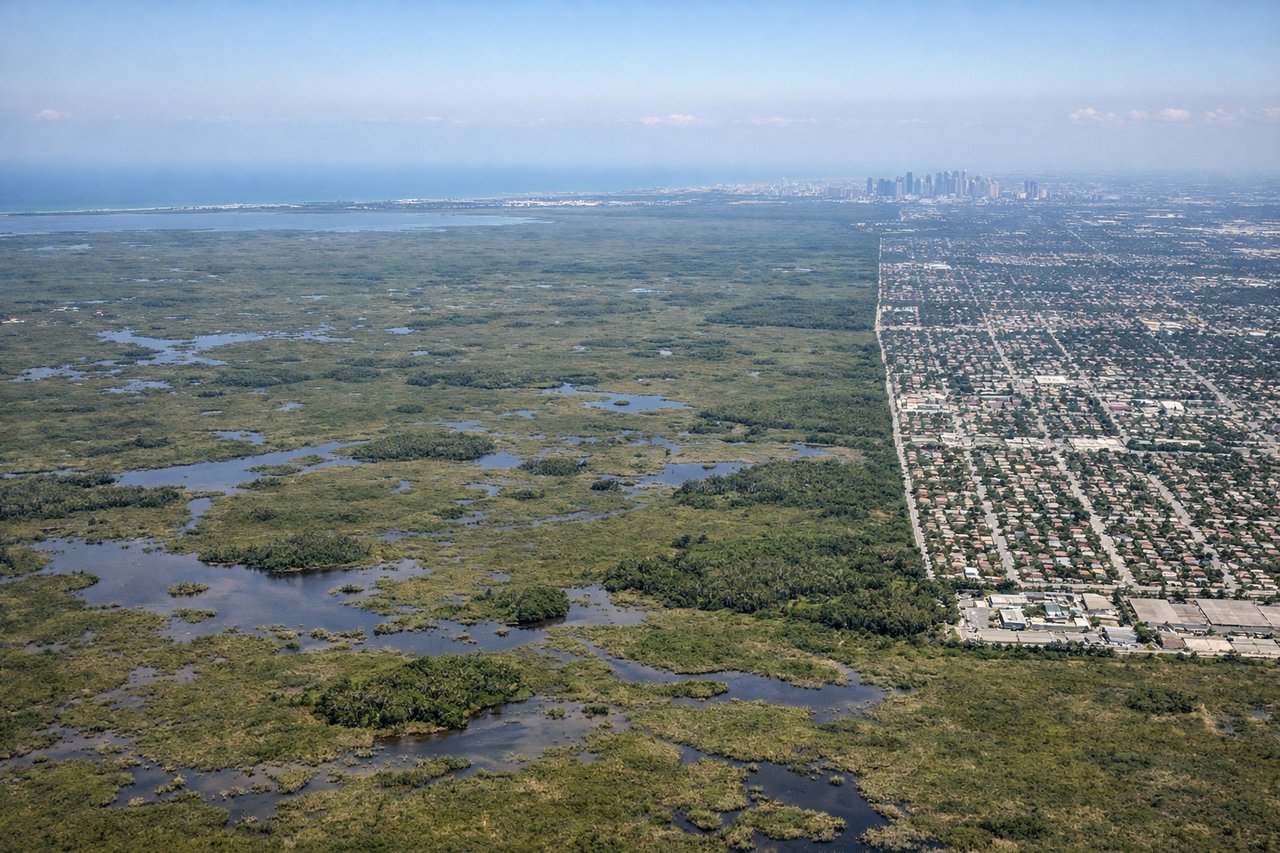
LEFTArrivals into MIA from the north commonly swing over Biscayne Bay before turning onto final approach, putting Miami Beach's barrier island and the downtown Miami skyline on the left side of the aircraft. The Everglades stretch out on the right, but the bay and skyline offer far more visual interest.
Landmarks on this routeAll landmarks →
Will your flight be in sunlight?
See exactly which side of the plane gets sun and shade at your departure time.
About This Route
Which side of the plane should I sit on flying from John F Kennedy International (JFK) to Miami International (MIA)?
Sit on the Left side of the plane for the best views on flights from New York to Miami. For most of the cruise phase the flight path tracks close to the Atlantic seaboard, giving the left side recurring views of barrier islands, river mouths, and coastal towns from Delaware down through the Carolinas and Georgia, plus a scenic Biscayne Bay arrival into Miami. The right side stays mostly over flat inland terrain with less variety.
What can I see during takeoff from John F Kennedy International in New York?
During takeoff from John F Kennedy International (JFK), sit on the Right side for the best views. Southbound departures out of JFK typically climb out over Jamaica Bay and the Rockaways before turning south, and during that turn the Manhattan skyline and Verrazzano-Narrows Bridge come into view to the right (west) side of the aircraft. The left side mostly shows open Atlantic water at this stage. Notable sights include: Jamaica Bay, Rockaway Peninsula, Manhattan skyline, Verrazzano-Narrows Bridge.
What can I see when landing at Miami International in Miami?
When landing at Miami International (MIA), sit on the Left side for the best views. Arrivals into MIA from the north commonly swing over Biscayne Bay before turning onto final approach, putting Miami Beach's barrier island and the downtown Miami skyline on the left side of the aircraft. The Everglades stretch out on the right, but the bay and skyline offer far more visual interest. Notable sights include: Biscayne Bay, Miami Beach, Downtown Miami skyline, Everglades in the distance.
How long is the flight from New York to Miami?
The flight from John F Kennedy International (JFK) to Miami International (MIA) takes 3h 10m.
What does the New York to Miami flight path pass over?
Delaware Bay, Chesapeake Bay mouth, Outer Banks of North Carolina, Georgia and northeast Florida coastline