New York to Norfolk is 289 miles (466 km), a flight of about 1 hour 10 minutes.
The left side wins overall because the JFK departure delivers the most dramatic scenery of the flight — Jamaica Bay, the Rockaway Peninsula, and the Manhattan skyline — which outweighs the right-side advantage on the relatively short approach into Norfolk. For the cruise portion heading southwest, the left side also tracks closer to the Delaware and Maryland coastlines.
Flight Path
The flight tracks southwest over the New Jersey Pine Barrens, crosses Delaware Bay near its mouth, passes over the Delmarva Peninsula's flat agricultural interior, and descends over the southern Chesapeake Bay toward Hampton Roads. The broad Delaware Bay crossing and the patchwork of Delmarva farmland are the most visually notable mid-flight features.
Great circle distance and headings ›.jpg?width=600)

Phase by phase
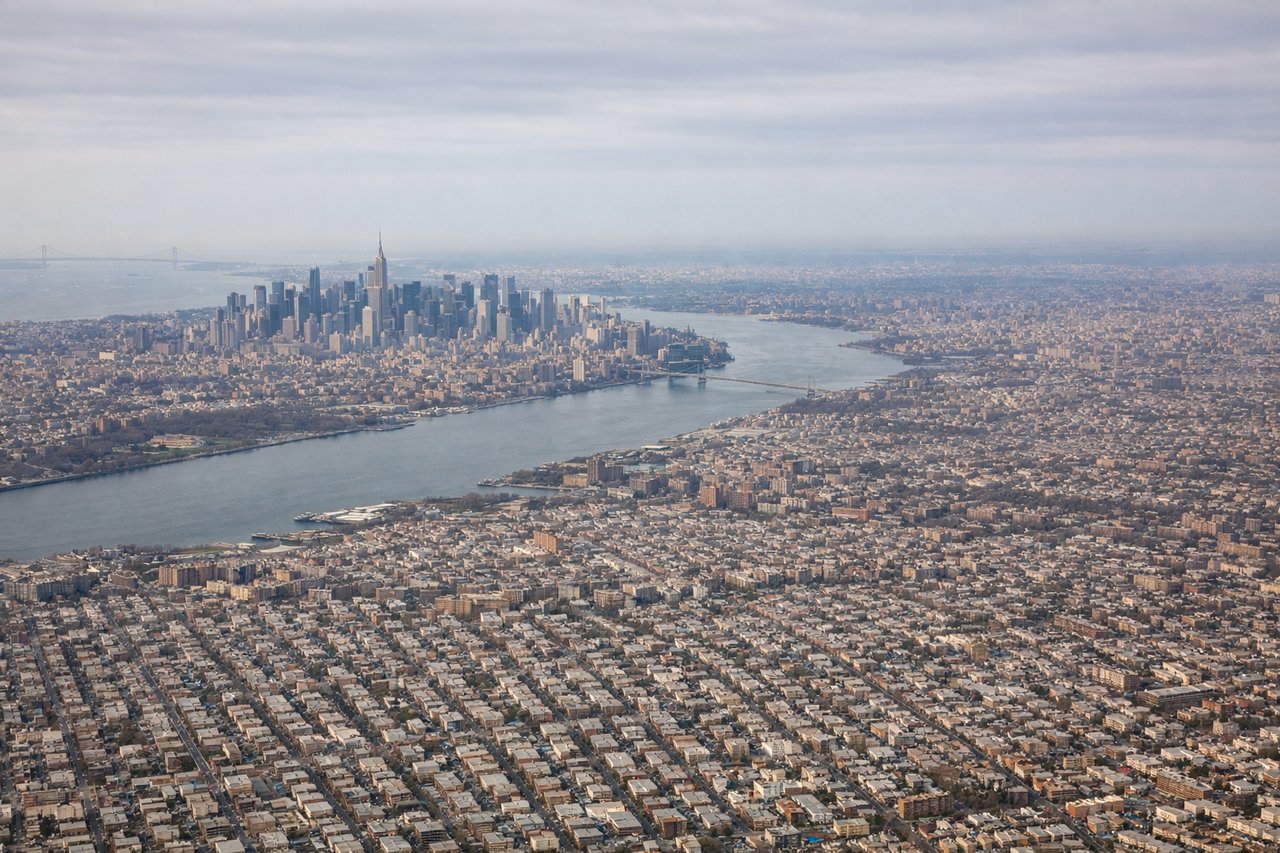
Takeoff from JFK
LEFTJFK primarily departs eastward over Jamaica Bay on runways 22L/22R or southward on 13L/13R. A left-side seat gives you Jamaica Bay's tidal marshes and the Rockaway Peninsula as the plane climbs, then a sweeping view back over Lower Manhattan and the Verrazano-Narrows Bridge as the aircraft turns southwest toward Norfolk.
Landing at NGU
RIGHTNGU (Naval Station Norfolk) sits on the western shore of the Chesapeake Bay mouth, and aircraft typically approach from the northeast on runway 05/23. A right-side seat on approach gives you the broad view of Hampton Roads — the confluence of the James, Elizabeth, and Nansemond Rivers — plus the naval station's massive pier complex packed with warships.
Landmarks on this routeAll landmarks →
Will your flight be in sunlight?
Pick a date and time in the Sun Map to watch the sun move across your whole flight.
About This Route
Which side of the plane should I sit on flying from John F Kennedy International (JFK) to Norfolk Ns (NGU)?
Sit on the Left side of the plane for the best views on flights from New York to Norfolk. The left side wins overall because the JFK departure delivers the most dramatic scenery of the flight — Jamaica Bay, the Rockaway Peninsula, and the Manhattan skyline — which outweighs the right-side advantage on the relatively short approach into Norfolk. For the cruise portion heading southwest, the left side also tracks closer to the Delaware and Maryland coastlines.
What can I see during takeoff from John F Kennedy International in New York?
During takeoff from John F Kennedy International (JFK), sit on the Left side for the best views. JFK primarily departs eastward over Jamaica Bay on runways 22L/22R or southward on 13L/13R. A left-side seat gives you Jamaica Bay's tidal marshes and the Rockaway Peninsula as the plane climbs, then a sweeping view back over Lower Manhattan and the Verrazano-Narrows Bridge as the aircraft turns southwest toward Norfolk. Notable sights include: Jamaica Bay Wildlife Refuge, Rockaway Peninsula barrier beach, Verrazano-Narrows Bridge, Lower Manhattan skyline.
What can I see when landing at Norfolk Ns in Norfolk?
When landing at Norfolk Ns (NGU), sit on the Right side for the best views. NGU (Naval Station Norfolk) sits on the western shore of the Chesapeake Bay mouth, and aircraft typically approach from the northeast on runway 05/23. A right-side seat on approach gives you the broad view of Hampton Roads — the confluence of the James, Elizabeth, and Nansemond Rivers — plus the naval station's massive pier complex packed with warships. Notable sights include: Hampton Roads harbor, Naval Station Norfolk pier complex, Chesapeake Bay mouth, Norfolk-Portsmouth waterfront.
How long is the flight from New York to Norfolk?
The flight from John F Kennedy International (JFK) to Norfolk Ns (NGU) takes about 1 hour 10 minutes. The shortest flight path between them is 289 miles (466 km); winds and air traffic control usually add a few percent.
What does the New York to Norfolk flight path pass over?
The flight tracks southwest over the New Jersey Pine Barrens, crosses Delaware Bay near its mouth, passes over the Delmarva Peninsula's flat agricultural interior, and descends over the southern Chesapeake Bay toward Hampton Roads. The broad Delaware Bay crossing and the patchwork of Delmarva farmland are the most visually notable mid-flight features.