New York to Panama City is 2,208 miles (3,554 km), a flight of about 4 hours 55 minutes.
The right side wins on both ends of the flight — the New York skyline at takeoff and the Panama City skyline with Pacific coastline at landing — while the left side spends most of the flight over featureless ocean.
Flight Path
Flight path passes over the Bahamas island chain, the Straits of Florida, and the northern coast of Cuba before crossing the Caribbean Sea toward Panama.
Great circle distance and headings ›.jpg?width=600)

Phase by phase
Takeoff from JFK
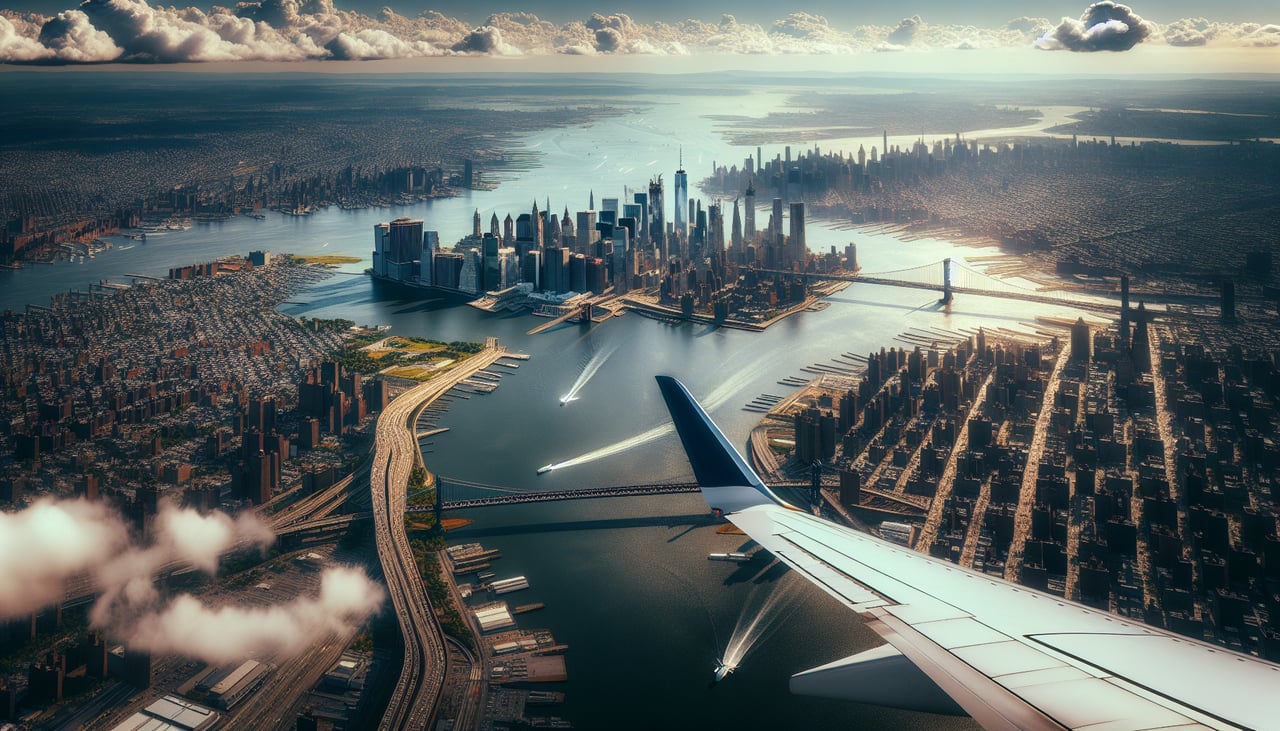
RIGHTDeparting JFK to the southwest, the right side offers a last look at the Manhattan skyline, Verrazano-Narrows Bridge, and Staten Island before the climb turns the aircraft south over the Jersey Shore. The left side mostly shows Long Island and open Atlantic.
Landing at PTY
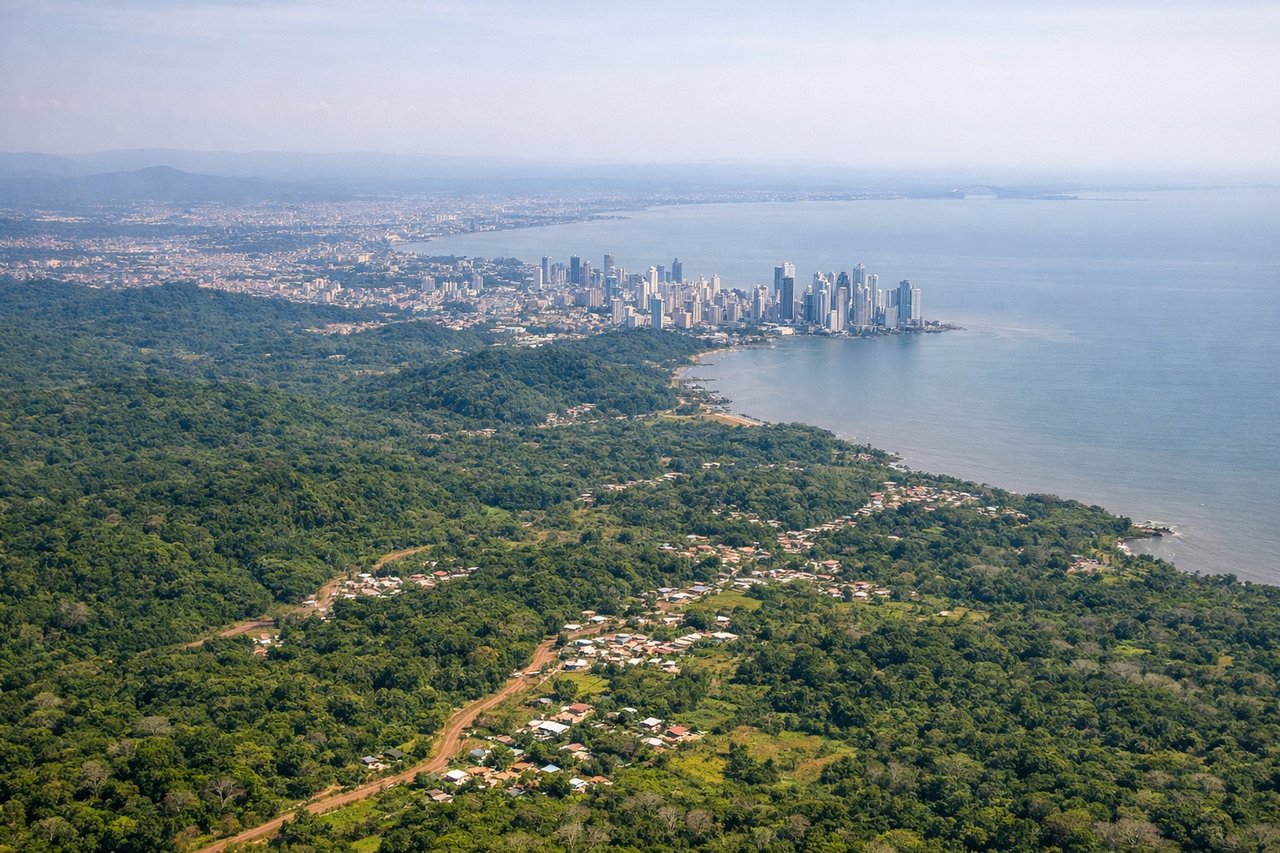
RIGHTOn approach into PTY from the north over the Caribbean, the right side gives a clear view of the Panama City skyline, the Bay of Panama, and the Pacific coastline before the turn onto final. The left side mostly faces inland lowlands and jungle with fewer distinct landmarks.
Landmarks on this routeAll landmarks →
Will your flight be in sunlight?
Pick a date and time in the Sun Map to watch the sun move across your whole flight.
About This Route
Which side of the plane should I sit on flying from John F Kennedy International (JFK) to Tocumen International (PTY)?
Sit on the Right side of the plane for the best views on flights from New York to Panama City. The right side wins on both ends of the flight — the New York skyline at takeoff and the Panama City skyline with Pacific coastline at landing — while the left side spends most of the flight over featureless ocean.
What can I see during takeoff from John F Kennedy International in New York?
During takeoff from John F Kennedy International (JFK), sit on the Right side for the best views. Departing JFK to the southwest, the right side offers a last look at the Manhattan skyline, Verrazano-Narrows Bridge, and Staten Island before the climb turns the aircraft south over the Jersey Shore. The left side mostly shows Long Island and open Atlantic. Notable sights include: Manhattan skyline, Verrazano-Narrows Bridge, Staten Island, Jersey Shore coastline.
What can I see when landing at Tocumen International in Panama City?
When landing at Tocumen International (PTY), sit on the Right side for the best views. On approach into PTY from the north over the Caribbean, the right side gives a clear view of the Panama City skyline, the Bay of Panama, and the Pacific coastline before the turn onto final. The left side mostly faces inland lowlands and jungle with fewer distinct landmarks. Notable sights include: Panama City skyline, Bay of Panama, Pacific coastline, Bridge of the Americas.
How long is the flight from New York to Panama City?
The flight from John F Kennedy International (JFK) to Tocumen International (PTY) takes about 4 hours 55 minutes. The shortest flight path between them is 2,208 miles (3,554 km); winds and air traffic control usually add a few percent.
What does the New York to Panama City flight path pass over?
Flight path passes over the Bahamas island chain, the Straits of Florida, and the northern coast of Cuba before crossing the Caribbean Sea toward Panama.