While the takeoff offers good coastal views, the landing descent provides more sustained and visually distinctive scenery. The Edwards Plateau, Balcones Escarpment, and Hill Country terrain offer more dramatic topography than the relatively flat Midwest corridor. Right side captures the geological transition zone that makes the San Antonio approach scenically superior.
Flight Path
The flight path crosses the Appalachian Mountains (visible around 1.5 hours out, particularly the ridges of West Virginia and eastern Kentucky), then transitions over the relatively flat Ohio Valley and Mississippi River basin. The Mississippi River itself is visible as a major linear feature around the 2-hour mark. Beyond that, the terrain gradually transitions to the Great Plains of Oklahoma and northern Texas, with the Canadian River and Brazos River visible as linear features. The landscape becomes increasingly arid and open as you approach Texas, with sparse vegetation and fewer urban centers until reaching the Hill Country near San Antonio.
Great circle distance and headings ›.jpg?width=600)
.jpeg?width=600)

Phase by phase
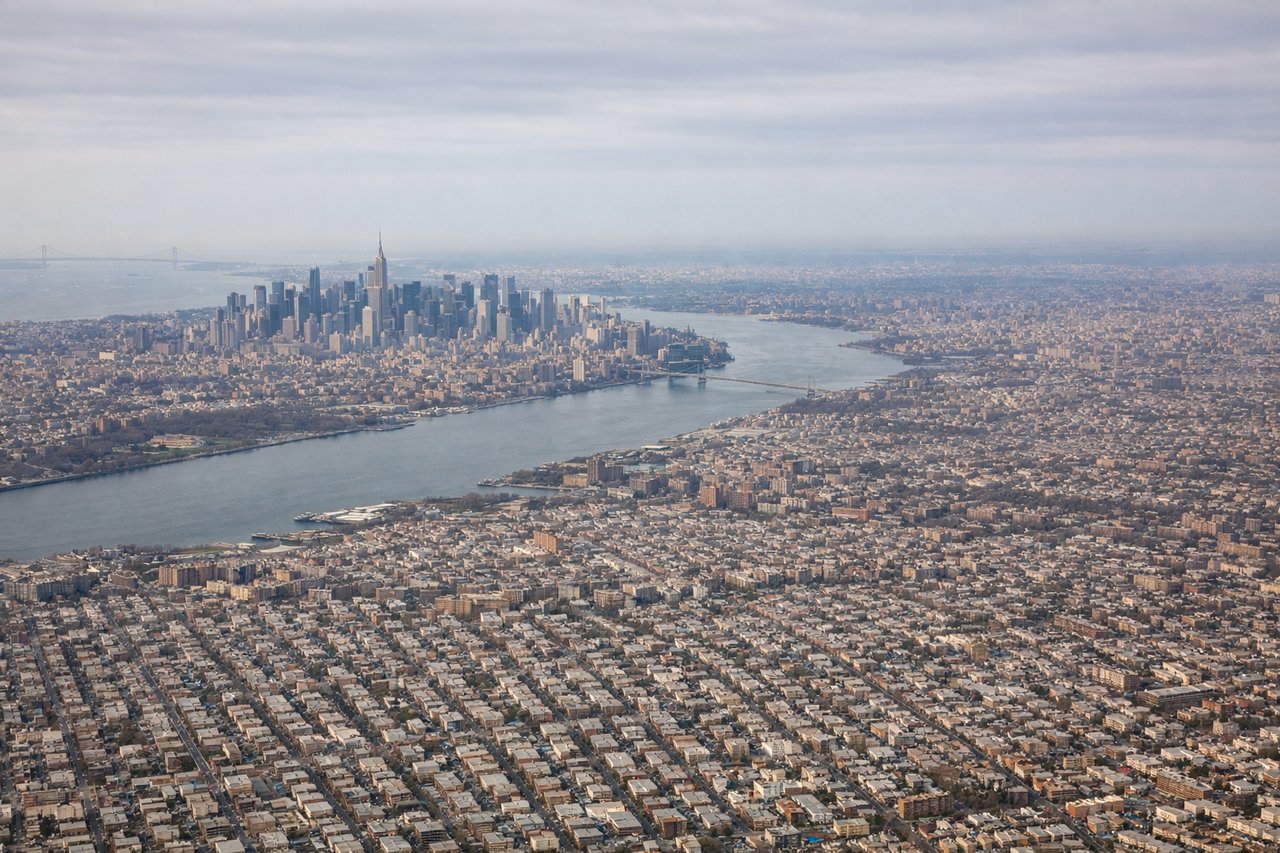
Takeoff from JFK
LEFTLeft side offers views of the Atlantic coastline, Jamaica Bay, and the Rockaways as the aircraft climbs westward out of JFK. You'll see the barrier islands and water bodies that define the New York City perimeter before heading inland.
Landing at SAT
RIGHTRight side provides views of the Texas Hill Country and the Edwards Plateau as you descend toward San Antonio from the northeast. You'll see the rolling terrain and the Balcones Escarpment that defines the landscape around the city.
Landmarks on this routeAll landmarks →
Will your flight be in sunlight?
See exactly which side of the plane gets sun and shade at your departure time.
About This Route
Which side of the plane should I sit on flying from John F Kennedy International (JFK) to San Antonio International (SAT)?
Sit on the Right side of the plane for the best views on flights from New York to San Antonio. While the takeoff offers good coastal views, the landing descent provides more sustained and visually distinctive scenery. The Edwards Plateau, Balcones Escarpment, and Hill Country terrain offer more dramatic topography than the relatively flat Midwest corridor. Right side captures the geological transition zone that makes the San Antonio approach scenically superior.
What can I see during takeoff from John F Kennedy International in New York?
During takeoff from John F Kennedy International (JFK), sit on the Left side for the best views. Left side offers views of the Atlantic coastline, Jamaica Bay, and the Rockaways as the aircraft climbs westward out of JFK. You'll see the barrier islands and water bodies that define the New York City perimeter before heading inland. Notable sights include: Jamaica Bay, The Rockaways (barrier islands), Atlantic Ocean coastline, Upper New York Bay.
What can I see when landing at San Antonio International in San Antonio?
When landing at San Antonio International (SAT), sit on the Right side for the best views. Right side provides views of the Texas Hill Country and the Edwards Plateau as you descend toward San Antonio from the northeast. You'll see the rolling terrain and the Balcones Escarpment that defines the landscape around the city. Notable sights include: Edwards Plateau, Balcones Escarpment, San Antonio city sprawl, Hill Country terrain.
How long is the flight from New York to San Antonio?
The flight from John F Kennedy International (JFK) to San Antonio International (SAT) takes Approximately 4 hours 15 minutes.
What does the New York to San Antonio flight path pass over?
The flight path crosses the Appalachian Mountains (visible around 1.5 hours out, particularly the ridges of West Virginia and eastern Kentucky), then transitions over the relatively flat Ohio Valley and Mississippi River basin. The Mississippi River itself is visible as a major linear feature around the 2-hour mark. Beyond that, the terrain gradually transitions to the Great Plains of Oklahoma and northern Texas, with the Canadian River and Brazos River visible as linear features. The landscape becomes increasingly arid and open as you approach Texas, with sparse vegetation and fewer urban centers until reaching the Hill Country near San Antonio.