While the left seat wins at takeoff, the right seat delivers the more spectacular arrival into Rio with Sugarloaf and Guanabara Bay. Over the open Atlantic for most of the flight there is little difference, but the right seat arrival payoff is the highlight of the journey. Switching seats for takeoff is easy; the SDU arrival view is unmissable.
Flight Path
The flight tracks southeast over the western Atlantic, passing east of the Caribbean island chain. Around the midpoint the aircraft crosses near the equator over open ocean with no land visible. Further south it passes over the Brazilian coastline near Recife or Natal, where the distinctive eastward bulge of South America may be visible, then follows the coast southward past Salvador and the state of Bahia before descending toward Rio de Janeiro.
Great circle distance and headings ›.jpg?width=600)

Phase by phase
Takeoff from JFK
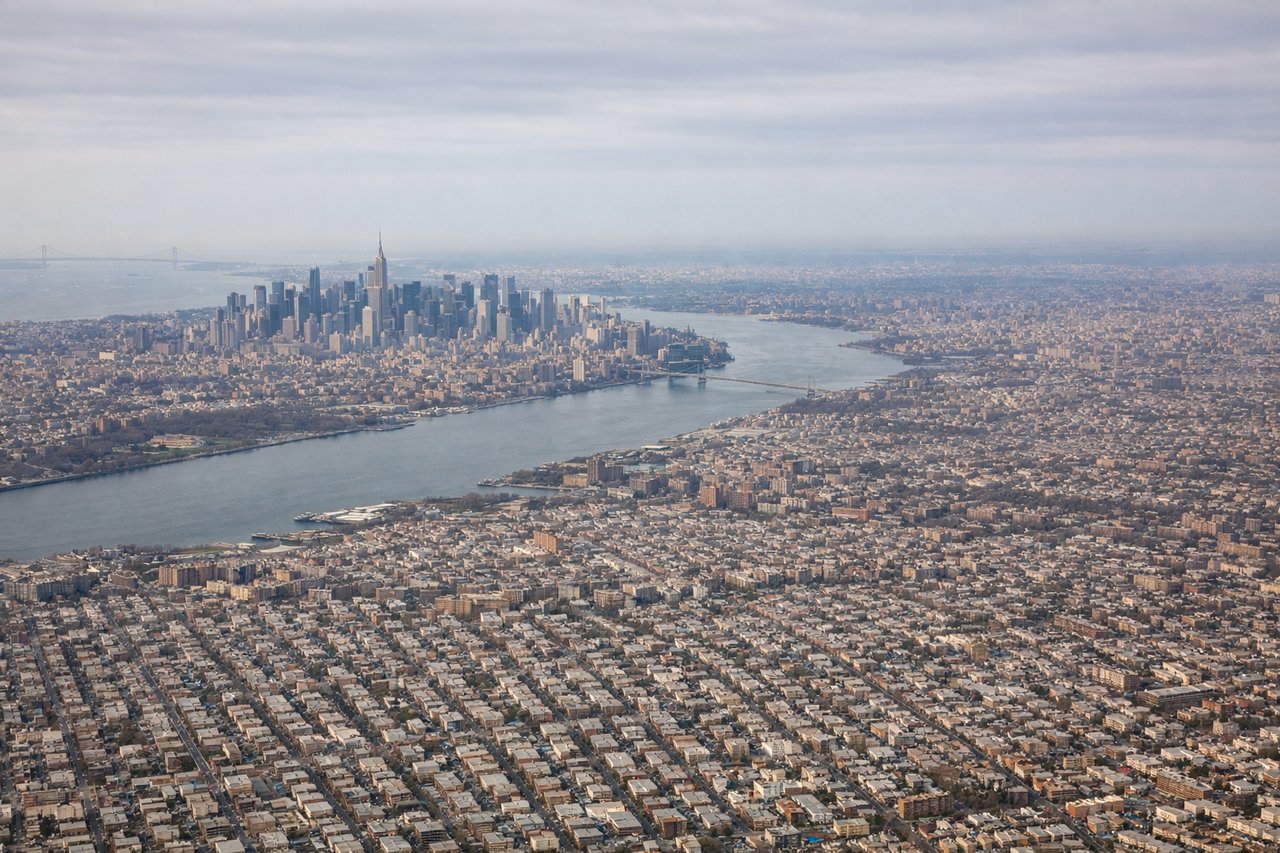
LEFTJFK's primary departure runways (31L/31R) head northwest, then aircraft typically turn south over the Atlantic. A left/east-facing seat captures Jamaica Bay, the Rockaway Peninsula, and the New York Harbor skyline receding to the north. Right seats face inland over suburban Queens and Long Island with less dramatic scenery.
Landing at SDU
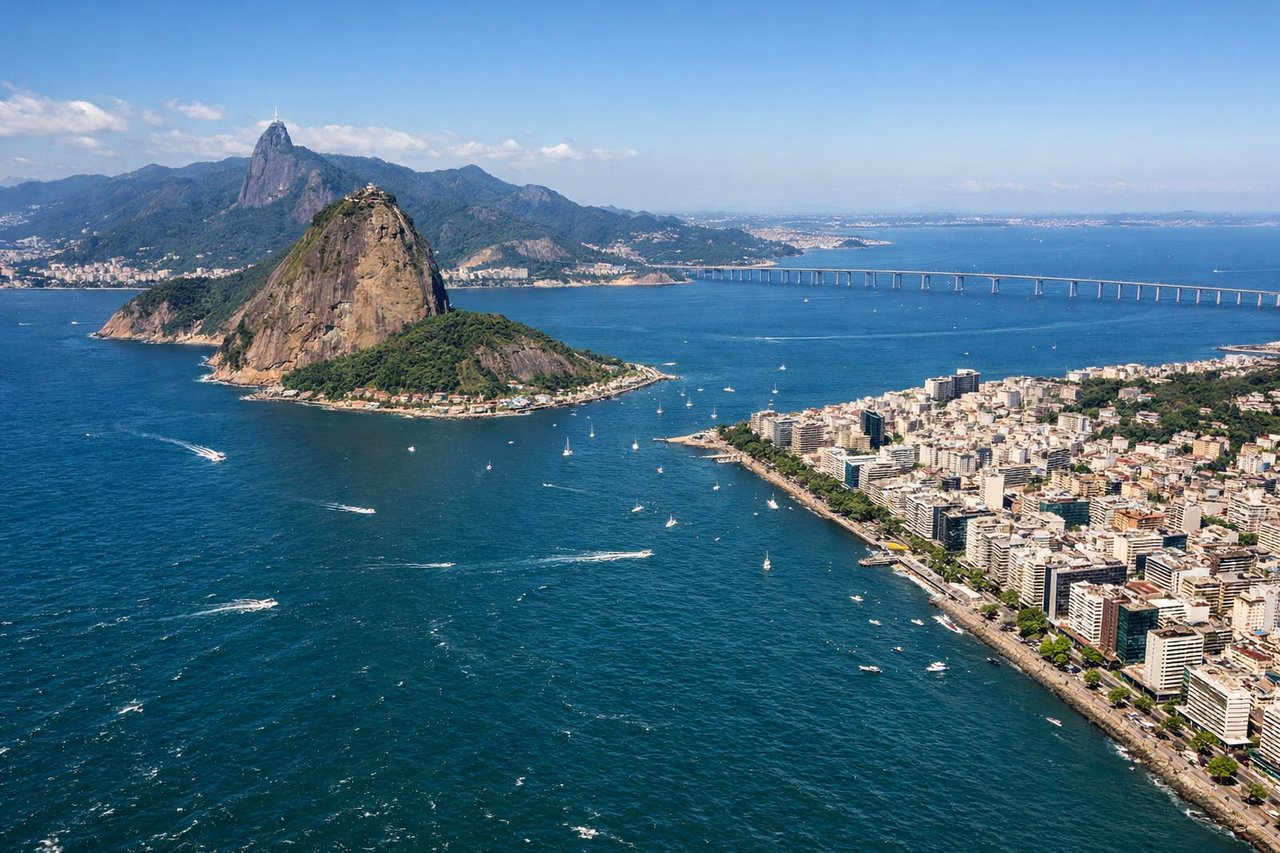
RIGHTSantos Dumont sits on Guanabara Bay, and aircraft typically approach from the east or northeast over the bay on runway 20R/02L. A right seat gives you Sugarloaf Mountain (Pão de Açúcar), the bay itself, and the Niterói bridge. Left seats face inland toward the hills behind the city.
Landmarks on this routeAll landmarks →
Will your flight be in sunlight?
See exactly which side of the plane gets sun and shade at your departure time.
About This Route
Which side of the plane should I sit on flying from John F Kennedy International (JFK) to Santos Dumont (SDU)?
Sit on the Right side of the plane for the best views on flights from New York to Rio De Janeiro. While the left seat wins at takeoff, the right seat delivers the more spectacular arrival into Rio with Sugarloaf and Guanabara Bay. Over the open Atlantic for most of the flight there is little difference, but the right seat arrival payoff is the highlight of the journey. Switching seats for takeoff is easy; the SDU arrival view is unmissable.
What can I see during takeoff from John F Kennedy International in New York?
During takeoff from John F Kennedy International (JFK), sit on the Left side for the best views. JFK's primary departure runways (31L/31R) head northwest, then aircraft typically turn south over the Atlantic. A left/east-facing seat captures Jamaica Bay, the Rockaway Peninsula, and the New York Harbor skyline receding to the north. Right seats face inland over suburban Queens and Long Island with less dramatic scenery. Notable sights include: Jamaica Bay and its barrier islands, Rockaway Peninsula, Lower Manhattan skyline to the north, Coney Island beachfront.
What can I see when landing at Santos Dumont in Rio De Janeiro?
When landing at Santos Dumont (SDU), sit on the Right side for the best views. Santos Dumont sits on Guanabara Bay, and aircraft typically approach from the east or northeast over the bay on runway 20R/02L. A right seat gives you Sugarloaf Mountain (Pão de Açúcar), the bay itself, and the Niterói bridge. Left seats face inland toward the hills behind the city. Notable sights include: Sugarloaf Mountain (Pão de Açúcar), Guanabara Bay, Rio-Niterói Bridge, Niterói city across the bay.
How long is the flight from New York to Rio De Janeiro?
The flight from John F Kennedy International (JFK) to Santos Dumont (SDU) takes Approximately 9 to 10 hours.
What does the New York to Rio De Janeiro flight path pass over?
The flight tracks southeast over the western Atlantic, passing east of the Caribbean island chain. Around the midpoint the aircraft crosses near the equator over open ocean with no land visible. Further south it passes over the Brazilian coastline near Recife or Natal, where the distinctive eastward bulge of South America may be visible, then follows the coast southward past Salvador and the state of Bahia before descending toward Rio de Janeiro.