The right side wins on both ends of the flight: a rare Manhattan skyline view during the JFK departure turn and a sustained view of the Wasatch Range during the Salt Lake approach, while the left side sees mostly open water at takeoff and the flatter valley floor at landing.
Flight Path
Appalachian ridgelines over Pennsylvania, the flat expanse of the Great Plains across Nebraska, and the Rocky Mountains along the Wyoming-Colorado border before descending toward the Wasatch Range and Salt Lake Valley.
Great circle distance and headings ›.jpg?width=600)
.jpeg?width=600)


.jpg?width=600)

Phase by phase
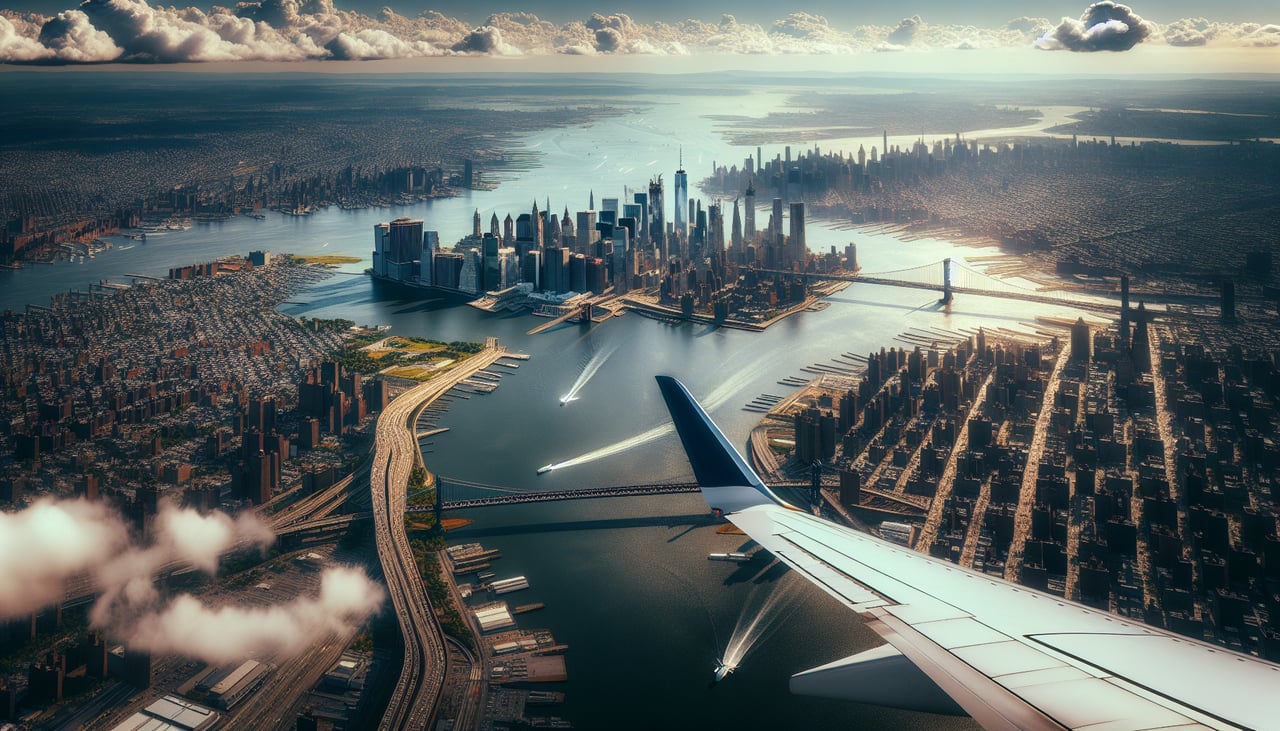
Takeoff from JFK
RIGHTWestbound departures from JFK typically climb out and bank so that Manhattan sits to the north of the flight path, putting the skyline, the East River, and Jamaica Bay in view on the right side of the cabin. The left side mostly shows the flatter South Shore of Long Island and open water.
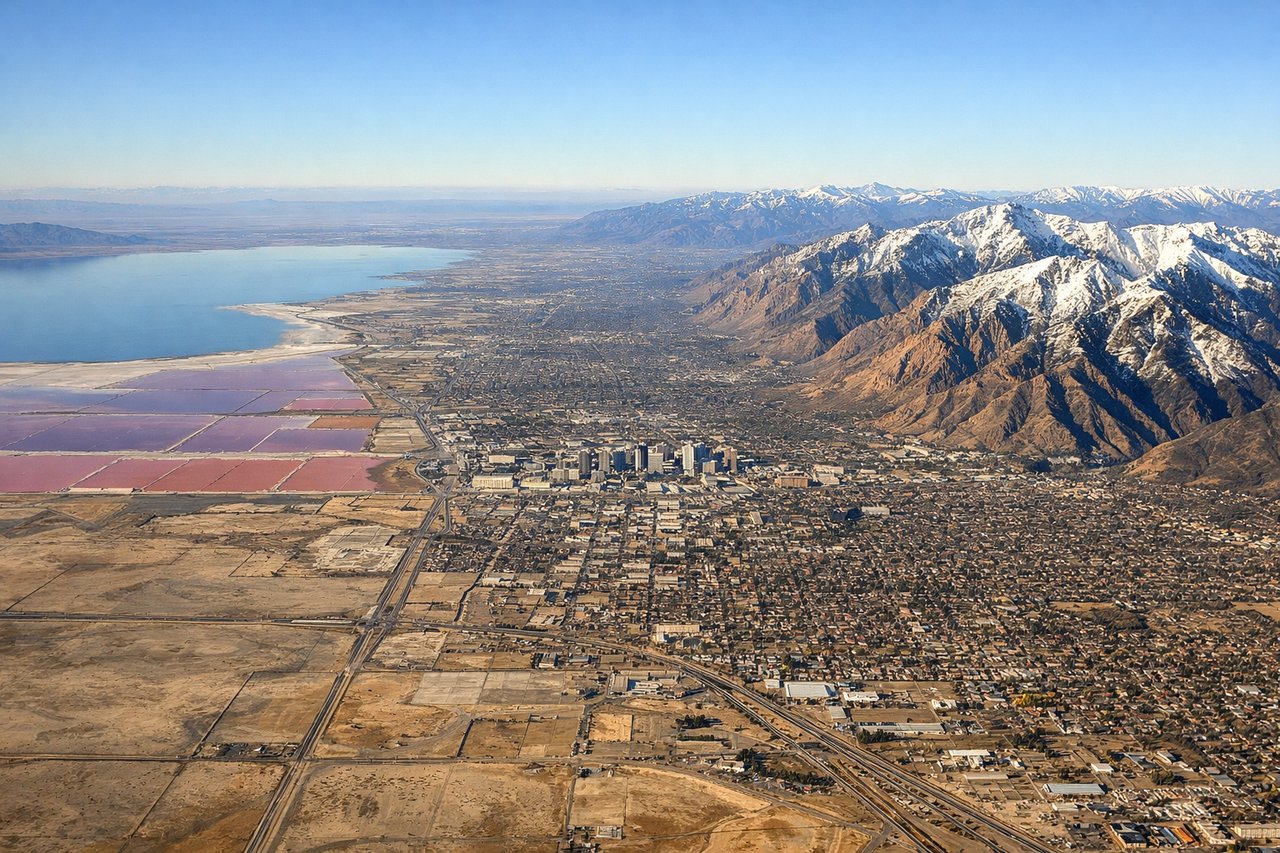
Landing at SLC
RIGHTArrivals from the east commonly track north of Salt Lake City before turning onto final for the north-south runways, keeping the Wasatch Range and its steep canyons on the right side of the aircraft through most of the descent and turn. The left side mainly faces the flatter Salt Lake Valley and the Great Salt Lake basin further west.
Landmarks on this routeAll landmarks →
Will your flight be in sunlight?
See exactly which side of the plane gets sun and shade at your departure time.
About This Route
Which side of the plane should I sit on flying from John F Kennedy International (JFK) to Salt Lake City International (SLC)?
Sit on the Right side of the plane for the best views on flights from New York to Salt Lake City. The right side wins on both ends of the flight: a rare Manhattan skyline view during the JFK departure turn and a sustained view of the Wasatch Range during the Salt Lake approach, while the left side sees mostly open water at takeoff and the flatter valley floor at landing.
What can I see during takeoff from John F Kennedy International in New York?
During takeoff from John F Kennedy International (JFK), sit on the Right side for the best views. Westbound departures from JFK typically climb out and bank so that Manhattan sits to the north of the flight path, putting the skyline, the East River, and Jamaica Bay in view on the right side of the cabin. The left side mostly shows the flatter South Shore of Long Island and open water. Notable sights include: Manhattan skyline, Jamaica Bay, East River, Long Island Sound shoreline.
What can I see when landing at Salt Lake City International in Salt Lake City?
When landing at Salt Lake City International (SLC), sit on the Right side for the best views. Arrivals from the east commonly track north of Salt Lake City before turning onto final for the north-south runways, keeping the Wasatch Range and its steep canyons on the right side of the aircraft through most of the descent and turn. The left side mainly faces the flatter Salt Lake Valley and the Great Salt Lake basin further west. Notable sights include: Wasatch Range, Salt Lake Valley grid, Great Salt Lake in the distance, Wasatch canyon mouths.
How long is the flight from New York to Salt Lake City?
The flight from John F Kennedy International (JFK) to Salt Lake City International (SLC) takes 4h 55m.
What does the New York to Salt Lake City flight path pass over?
Appalachian ridgelines over Pennsylvania, the flat expanse of the Great Plains across Nebraska, and the Rocky Mountains along the Wyoming-Colorado border before descending toward the Wasatch Range and Salt Lake Valley.