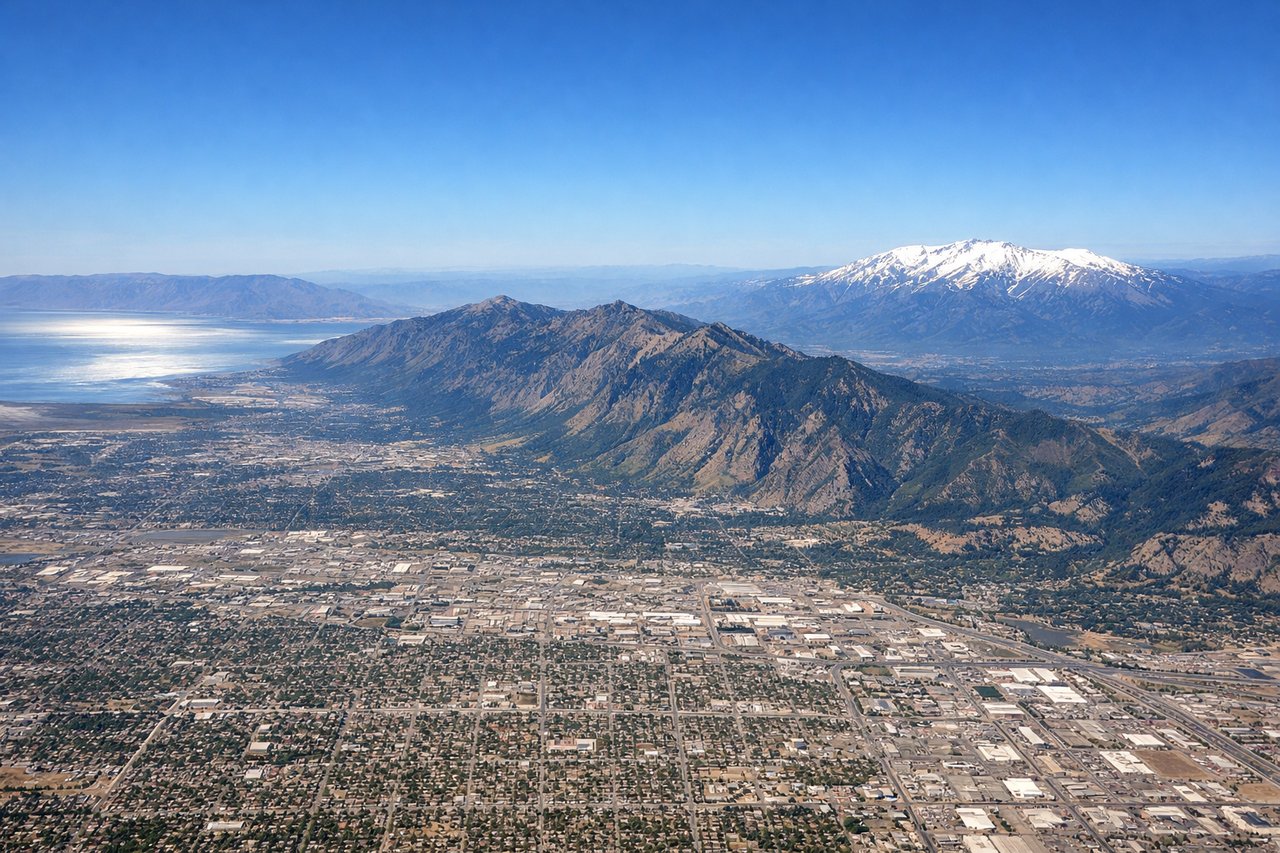
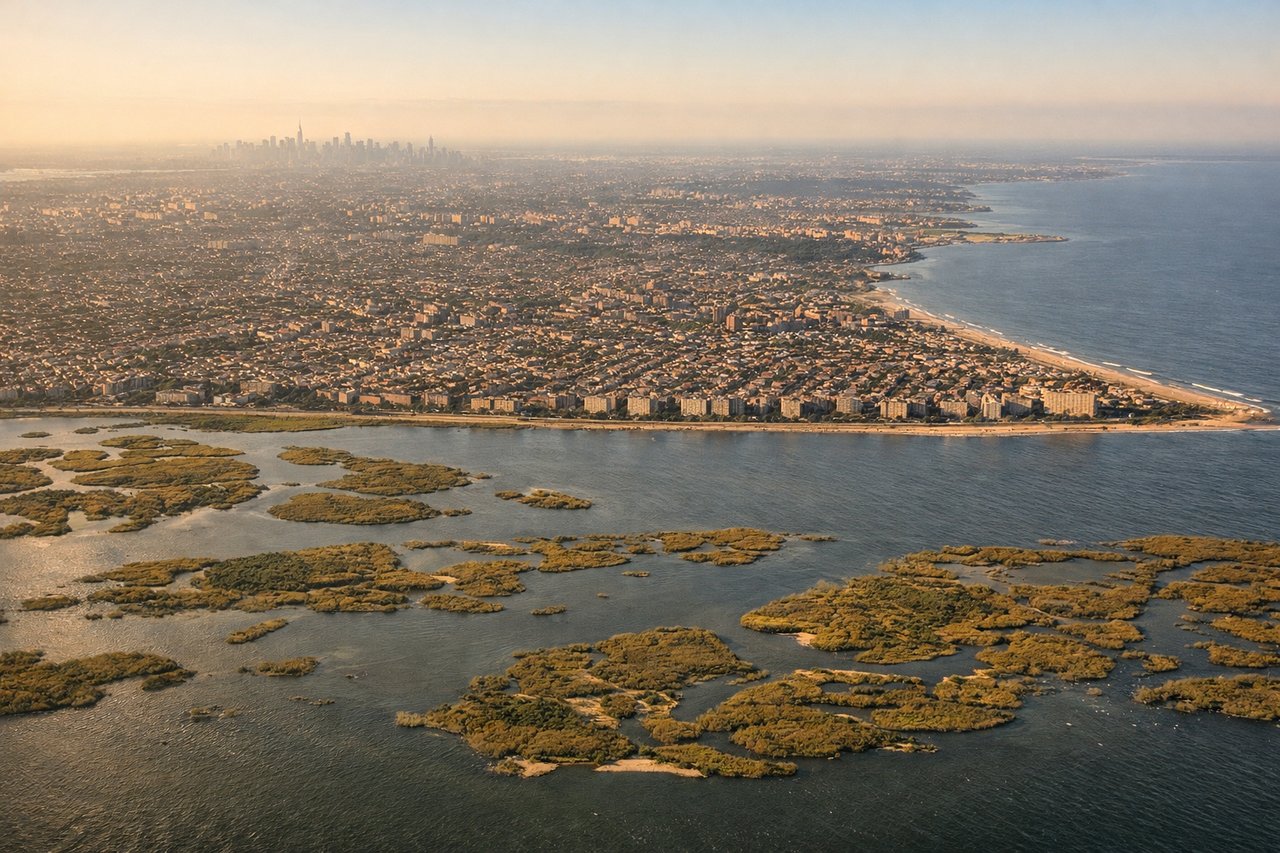
The left side wins on both ends of the flight: a dramatic close-up of the Wasatch Range during departure from SLC and a classic Manhattan skyline view during the JFK arrival turn, while the right side offers comparatively flat, less distinctive scenery at both airports.
Flight Path
Southern Wyoming's high plains and the Green River basin near the Uinta Mountains, the rolling Nebraska Sandhills and Great Plains farmland, the Mississippi River valley over Iowa/Illinois, and the ridge-and-valley Appalachian terrain of central Pennsylvania before descent into the New York metro area.
Great circle distance and headings ›
.jpg?width=600)


.jpeg?width=600)
.jpg?width=600)
Phase by phase
Takeoff from SLC
LEFTSLC's prevailing southerly wind flow typically sends departures off to the south before turning east toward JFK, putting the steep front of the Wasatch Range directly on the left side as the aircraft climbs out of the Salt Lake Valley. The right side instead trails off toward the flatter Great Salt Lake basin and the Oquirrh Mountains, which are less dramatic in comparison.
Landing at JFK
LEFTArrivals into JFK from the west are commonly vectored north over Long Island Sound before turning south to line up on 22L/22R, and during that turn the Manhattan skyline and the East River corridor sit prominently on the left side of the aircraft. The right side mainly faces the flatter, less distinctive terrain of southern Queens and Jamaica Bay.
Landmarks on this routeAll landmarks →
Will your flight be in sunlight?
See exactly which side of the plane gets sun and shade at your departure time.
About This Route
Which side of the plane should I sit on flying from Salt Lake City International (SLC) to John F Kennedy International (JFK)?
Sit on the Left side of the plane for the best views on flights from Salt Lake City to New York. The left side wins on both ends of the flight: a dramatic close-up of the Wasatch Range during departure from SLC and a classic Manhattan skyline view during the JFK arrival turn, while the right side offers comparatively flat, less distinctive scenery at both airports.
What can I see during takeoff from Salt Lake City International in Salt Lake City?
During takeoff from Salt Lake City International (SLC), sit on the Left side for the best views. SLC's prevailing southerly wind flow typically sends departures off to the south before turning east toward JFK, putting the steep front of the Wasatch Range directly on the left side as the aircraft climbs out of the Salt Lake Valley. The right side instead trails off toward the flatter Great Salt Lake basin and the Oquirrh Mountains, which are less dramatic in comparison. Notable sights include: Wasatch Range front (Twin Peaks, Lone Peak, Mount Olympus), Salt Lake Valley grid, Point of the Mountain gap, Utah Lake basin to the south.
What can I see when landing at John F Kennedy International in New York?
When landing at John F Kennedy International (JFK), sit on the Left side for the best views. Arrivals into JFK from the west are commonly vectored north over Long Island Sound before turning south to line up on 22L/22R, and during that turn the Manhattan skyline and the East River corridor sit prominently on the left side of the aircraft. The right side mainly faces the flatter, less distinctive terrain of southern Queens and Jamaica Bay. Notable sights include: Manhattan skyline, East River, Throgs Neck and Whitestone Bridges, Long Island Sound shoreline.
How long is the flight from Salt Lake City to New York?
The flight from Salt Lake City International (SLC) to John F Kennedy International (JFK) takes 4h 10m.
What does the Salt Lake City to New York flight path pass over?
Southern Wyoming's high plains and the Green River basin near the Uinta Mountains, the rolling Nebraska Sandhills and Great Plains farmland, the Mississippi River valley over Iowa/Illinois, and the ridge-and-valley Appalachian terrain of central Pennsylvania before descent into the New York metro area.