While the takeoff side offers a brief but strong NYC skyline view, the right side's approach into STI delivers sustained, dramatic mountain and valley scenery that outweighs the largely ocean-dominated cruise phase shared by both sides.
Flown JFK to STI? Did we get it right?
Flight Path
New York to Santiago is 1,479 miles (2,381 km), a flight of about 3 hours 35 minutes.
Atlantic Ocean crossing with the Bahamian archipelago (Eleuthera, Great Abaco) visible to the west, and the Turks and Caicos Islands passing near the flight path before the Dominican Republic's north coast comes into view.
Great circle distance and headings ›Phase by phase
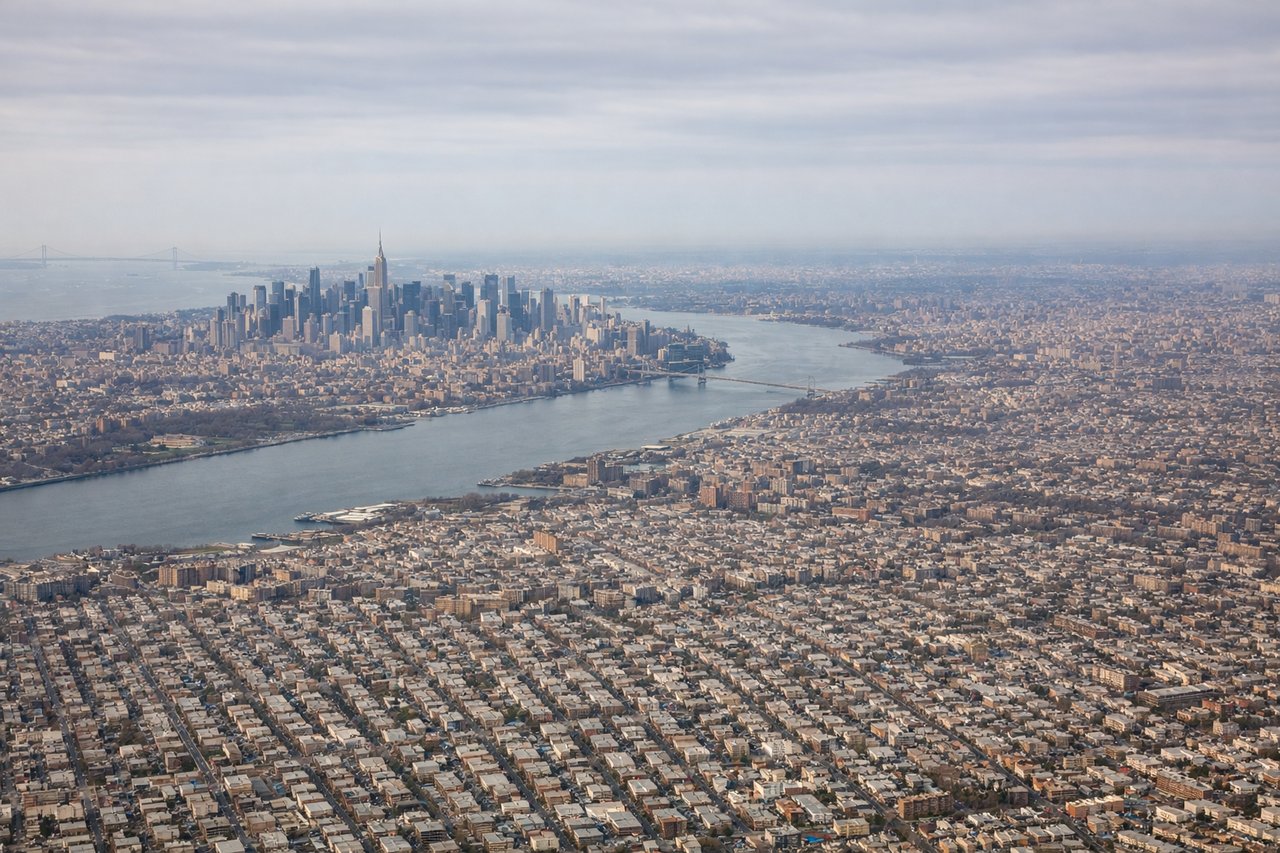
Takeoff from JFK
LEFTDeparting JFK on a southeast-bound track toward the Caribbean, the initial climb and left turn out over Jamaica Bay put Manhattan's skyline, the Rockaway Peninsula, and the Atlantic shoreline of Long Island in view on the left side before the aircraft settles onto its southbound track over open water.
Landing at STI
RIGHTSTI's runway 11 approach has aircraft flying east over the Cibao Valley, putting the dramatic Cordillera Central range, home to the Caribbean's highest peaks, on the right side, while Santiago's cityscape and farmland fill the valley floor below.
Will your flight be in sunlight?
Pick a date and time in the Sun Map to watch the sun move across your whole flight.
About This Route
Which side of the plane should I sit on flying from John F Kennedy International (JFK) to Cibao International (STI)?
Sit on the Right side of the plane for the best views on flights from New York to Santiago. While the takeoff side offers a brief but strong NYC skyline view, the right side's approach into STI delivers sustained, dramatic mountain and valley scenery that outweighs the largely ocean-dominated cruise phase shared by both sides.
What can I see during takeoff from John F Kennedy International in New York?
During takeoff from John F Kennedy International (JFK), sit on the Left side for the best views. Departing JFK on a southeast-bound track toward the Caribbean, the initial climb and left turn out over Jamaica Bay put Manhattan's skyline, the Rockaway Peninsula, and the Atlantic shoreline of Long Island in view on the left side before the aircraft settles onto its southbound track over open water. Notable sights include: Manhattan skyline, Jamaica Bay, Rockaway Peninsula, Coney Island.
What can I see when landing at Cibao International in Santiago?
When landing at Cibao International (STI), sit on the Right side for the best views. STI's runway 11 approach has aircraft flying east over the Cibao Valley, putting the dramatic Cordillera Central range, home to the Caribbean's highest peaks, on the right side, while Santiago's cityscape and farmland fill the valley floor below. Notable sights include: Cordillera Central range, Pico Duarte foothills, Santiago city, Cibao Valley farmland.
How long is the flight from New York to Santiago?
The flight from John F Kennedy International (JFK) to Cibao International (STI) takes about 3 hours 35 minutes. The shortest flight path between them is 1,479 miles (2,381 km); winds and air traffic control usually add a few percent.
What does the New York to Santiago flight path pass over?
Atlantic Ocean crossing with the Bahamian archipelago (Eleuthera, Great Abaco) visible to the west, and the Turks and Caicos Islands passing near the flight path before the Dominican Republic's north coast comes into view.