New York to Kingstown is 2,047 miles (3,294 km), a flight of about 4 hours 45 minutes.
Left side wins at both ends of the flight. Departing JFK you get Manhattan and the harbor; arriving at SVD you get La Soufrière and St. Vincent's volcanic landscape. The cruise portion over the open Atlantic and Caribbean offers little differentiation between sides, so the bookend views at departure and arrival make left the clear choice for the full journey.
Flight Path
The flight tracks southeast over the open Atlantic, passing east of Bermuda roughly 90 minutes after departure. Around the halfway point the aircraft crosses the Tropic of Cancer. As you approach the Caribbean, the northern Lesser Antilles appear — Antigua and Barbuda, then Guadeloupe and Dominica become visible as green volcanic islands rising from the blue sea, followed by Martinique and St. Lucia before the final descent to St. Vincent.
Great circle distance and headings ›.jpg?width=600)

Phase by phase
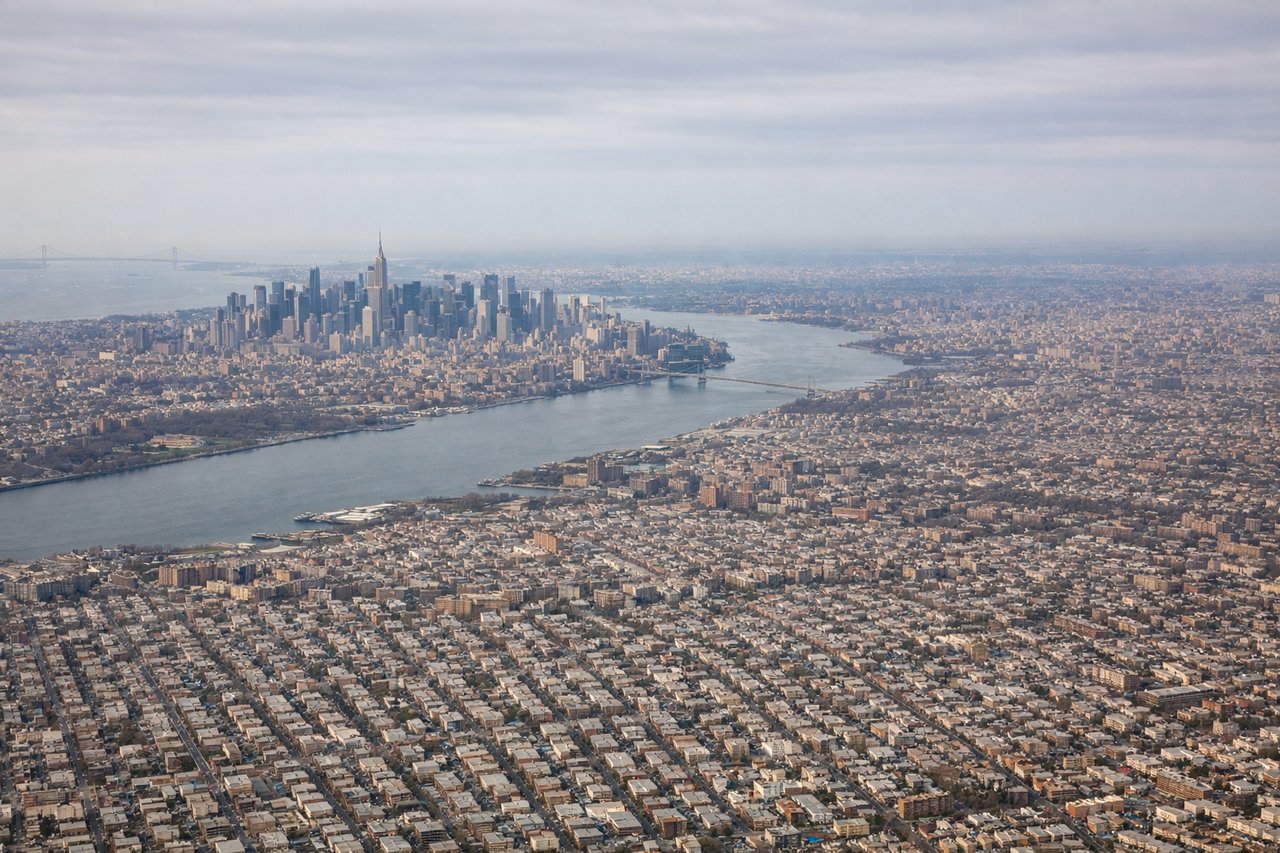
Takeoff from JFK
LEFTJFK's primary departure runways 22L/22R send aircraft southwest over Jamaica Bay and then curving south over the Atlantic. The left side gets a clear view back over Brooklyn, Lower Manhattan's skyline, and the Verrazano-Narrows Bridge as the aircraft climbs and turns. Right side faces open ocean and the Rockaways barrier beach with less urban drama.
Landing at SVD
LEFTE.T. Joshua Airport sits on the southwestern tip of St. Vincent, with the runway oriented roughly east-west. Aircraft typically approach from the east or southeast over the Caribbean. On left side, passengers get views of St. Vincent's rugged volcanic interior including La Soufrière volcano and the lush windward coast, while the right side faces open sea.
Landmarks on this routeAll landmarks →
Will your flight be in sunlight?
Pick a date and time in the Sun Map to watch the sun move across your whole flight.
About This Route
Which side of the plane should I sit on flying from John F Kennedy International (JFK) to Argyle International Airport (SVD)?
Sit on the Left side of the plane for the best views on flights from New York to Kingstown. Left side wins at both ends of the flight. Departing JFK you get Manhattan and the harbor; arriving at SVD you get La Soufrière and St. Vincent's volcanic landscape. The cruise portion over the open Atlantic and Caribbean offers little differentiation between sides, so the bookend views at departure and arrival make left the clear choice for the full journey.
What can I see during takeoff from John F Kennedy International in New York?
During takeoff from John F Kennedy International (JFK), sit on the Left side for the best views. JFK's primary departure runways 22L/22R send aircraft southwest over Jamaica Bay and then curving south over the Atlantic. The left side gets a clear view back over Brooklyn, Lower Manhattan's skyline, and the Verrazano-Narrows Bridge as the aircraft climbs and turns. Right side faces open ocean and the Rockaways barrier beach with less urban drama. Notable sights include: Lower Manhattan skyline, Verrazano-Narrows Bridge, Jamaica Bay wetlands, Brooklyn waterfront.
What can I see when landing at Argyle International Airport in Kingstown?
When landing at Argyle International Airport (SVD), sit on the Left side for the best views. E.T. Joshua Airport sits on the southwestern tip of St. Vincent, with the runway oriented roughly east-west. Aircraft typically approach from the east or southeast over the Caribbean. On left side, passengers get views of St. Vincent's rugged volcanic interior including La Soufrière volcano and the lush windward coast, while the right side faces open sea. Notable sights include: La Soufrière volcano, St. Vincent's windward coastline, Young Island, the Grenadines chain to the south.
How long is the flight from New York to Kingstown?
The flight from John F Kennedy International (JFK) to Argyle International Airport (SVD) takes about 4 hours 45 minutes. The shortest flight path between them is 2,047 miles (3,294 km); winds and air traffic control usually add a few percent.
What does the New York to Kingstown flight path pass over?
The flight tracks southeast over the open Atlantic, passing east of Bermuda roughly 90 minutes after departure. Around the halfway point the aircraft crosses the Tropic of Cancer. As you approach the Caribbean, the northern Lesser Antilles appear — Antigua and Barbuda, then Guadeloupe and Dominica become visible as green volcanic islands rising from the blue sea, followed by Martinique and St. Lucia before the final descent to St. Vincent.