While left offers the JFK departure advantage, right seats provide the superior arrival experience over Sydney Harbour and the Blue Mountains—the most visually distinctive part of this ultra-long flight. The approach into Sydney is more scenic than the departure from New York.
Flown JFK to SYD? Did we get it right?
Flight Path
New York to Sydney is 9,950 miles (16,014 km), a flight of about 19 hours 30 minutes.
The flight path crosses the Pacific Ocean for roughly 7,000+ nautical miles. Notable features include: the Hawaiian Islands (Big Island's volcanic peaks visible on clear days if routed via Hawaii), the International Date Line crossing, vast open Pacific with occasional weather systems, and the approach to Australia over the Tasman Sea. Most of the mid-Pacific crossing offers open ocean with minimal landmarks—window views are primarily sky and sea. The most dramatic scenery occurs during the final 2-3 hours approaching Sydney, when the Australian coastline, Blue Mountains, and Sydney Harbour become visible.
Great circle distance and headings ›


Phase by phase
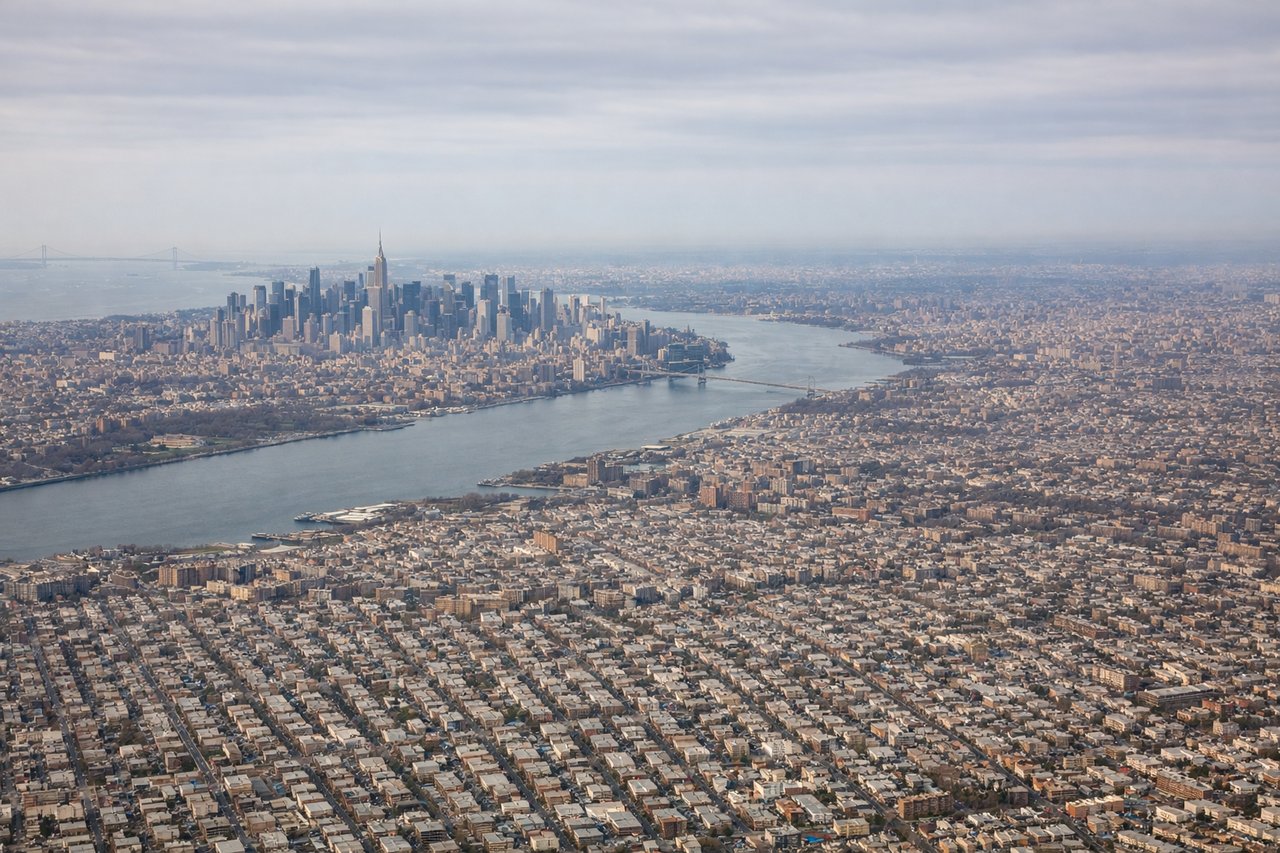
Takeoff from JFK
LEFTJFK typically departs eastbound over the Atlantic. Left seats face north toward Long Island Sound and the Connecticut coastline, offering views of the sound's geography and coastal towns. Right seats face south over the Atlantic with less distinctive early-climb scenery.
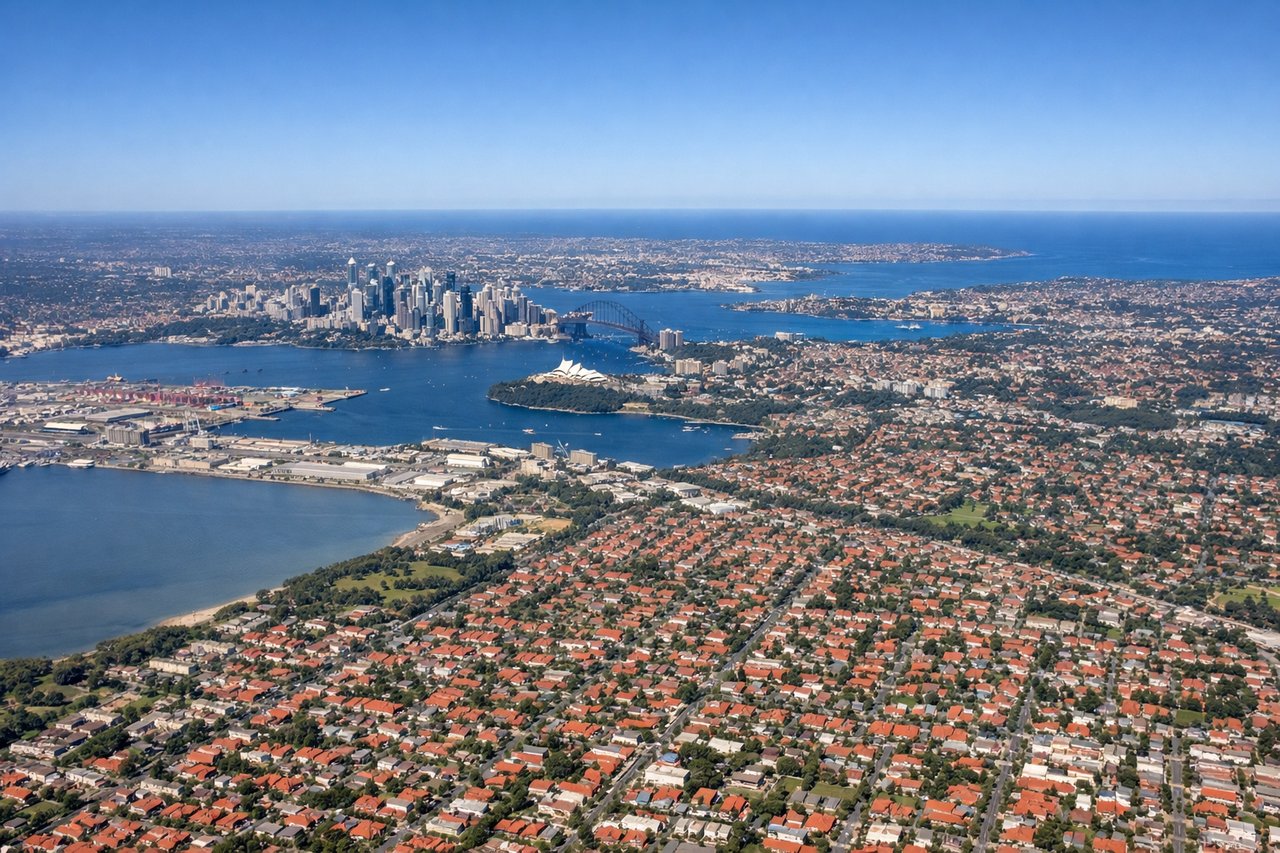
Landing at SYD
RIGHTSydney typically lands from the east over the Tasman Sea, approaching from the Pacific. Right seats face north toward the Blue Mountains and inland terrain. Left seats face south over open ocean. Right offers the dramatic approach over Sydney Harbour, the city itself, and the Blue Mountains rising inland.
Will your flight be in sunlight?
Pick a date and time in the Sun Map to watch the sun move across your whole flight.
About This Route
Which side of the plane should I sit on flying from John F Kennedy International (JFK) to Kingsford Smith International Airport (SYD)?
Sit on the Right side of the plane for the best views on flights from New York to Sydney. While left offers the JFK departure advantage, right seats provide the superior arrival experience over Sydney Harbour and the Blue Mountains—the most visually distinctive part of this ultra-long flight. The approach into Sydney is more scenic than the departure from New York.
What can I see during takeoff from John F Kennedy International in New York?
During takeoff from John F Kennedy International (JFK), sit on the Left side for the best views. JFK typically departs eastbound over the Atlantic. Left seats face north toward Long Island Sound and the Connecticut coastline, offering views of the sound's geography and coastal towns. Right seats face south over the Atlantic with less distinctive early-climb scenery. Notable sights include: Long Island Sound, Connecticut coastline, Manhattan skyline (receding behind), Jamaica Bay marshlands.
What can I see when landing at Kingsford Smith International Airport in Sydney?
When landing at Kingsford Smith International Airport (SYD), sit on the Right side for the best views. Sydney typically lands from the east over the Tasman Sea, approaching from the Pacific. Right seats face north toward the Blue Mountains and inland terrain. Left seats face south over open ocean. Right offers the dramatic approach over Sydney Harbour, the city itself, and the Blue Mountains rising inland. Notable sights include: Sydney Harbour and Opera House, Blue Mountains (distant inland), Tasman Sea coastline, Sydney CBD skyline.
How long is the flight from New York to Sydney?
The flight from John F Kennedy International (JFK) to Kingsford Smith International Airport (SYD) takes about 19 hours 30 minutes. The shortest flight path between them is 9,950 miles (16,014 km); winds and air traffic control usually add a few percent.
What does the New York to Sydney flight path pass over?
The flight path crosses the Pacific Ocean for roughly 7,000+ nautical miles. Notable features include: the Hawaiian Islands (Big Island's volcanic peaks visible on clear days if routed via Hawaii), the International Date Line crossing, vast open Pacific with occasional weather systems, and the approach to Australia over the Tasman Sea. Most of the mid-Pacific crossing offers open ocean with minimal landmarks—window views are primarily sky and sea. The most dramatic scenery occurs during the final 2-3 hours approaching Sydney, when the Australian coastline, Blue Mountains, and Sydney Harbour become visible.