While left offers better takeoff scenery, right provides superior views during the longer cruise phase over the Canadian Shield and prairies, plus the distinctive North Saskatchewan River approach into Edmonton. The midpoint scenery favors the right side.
Flown JFK to YEG? Did we get it right?
Flight Path
New York to Edmonton is 2,036 miles (3,277 km), a flight of about 4 hours 15 minutes.
The flight path crosses the Appalachian Mountains (visible as a ridge system during early climb), then transitions over the Great Lakes region. The most notable midpoint feature is the transition from the Canadian Shield's rocky, forested terrain with numerous lakes around the Ontario-Manitoba border, then into the flatter prairie landscape of Manitoba and Saskatchewan. The Canadian Shield's characteristic lake-dotted landscape is particularly visible from the right side during cruise altitude around 2-3 hours into the flight. As the aircraft approaches Edmonton, the North Saskatchewan River valley becomes the dominant geographic feature.
Great circle distance and headings ›


Phase by phase
Takeoff from JFK
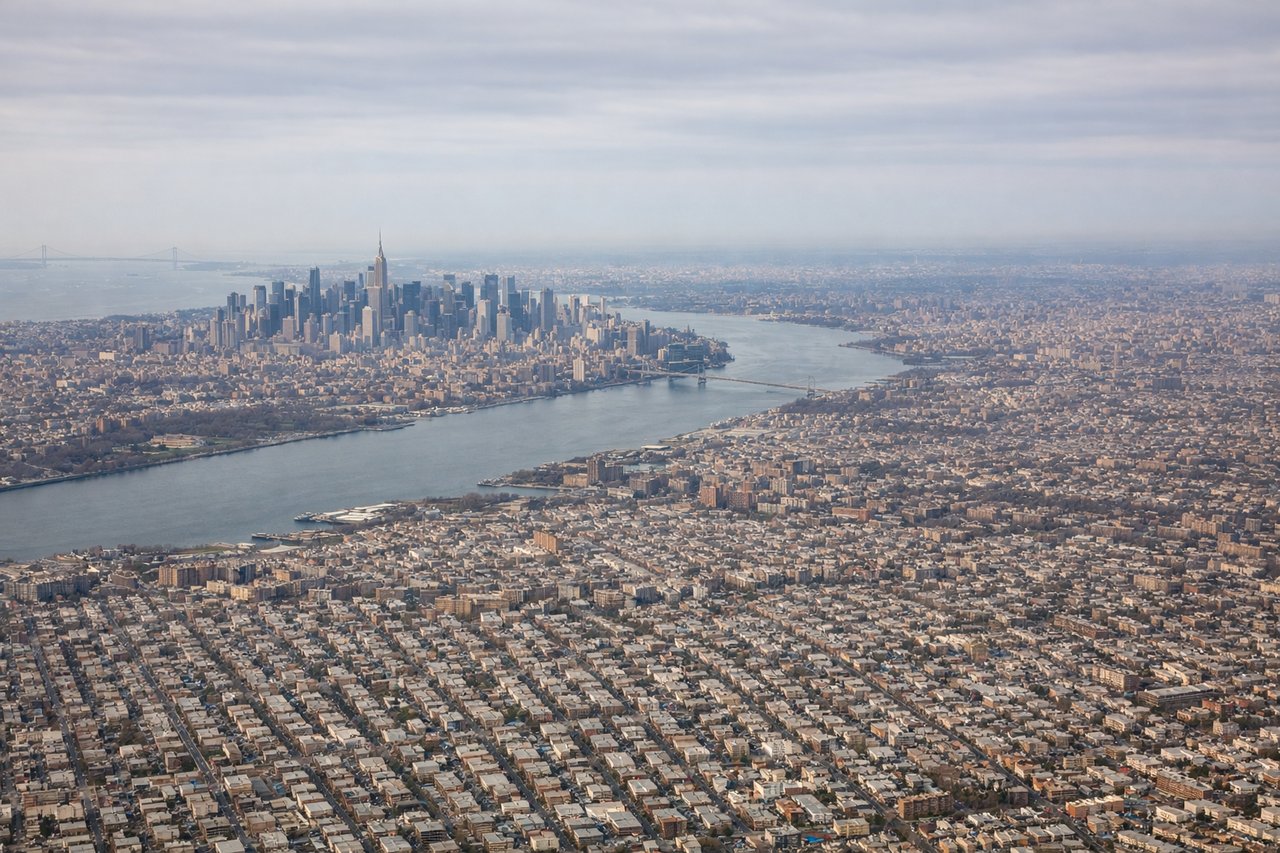
LEFTLeft side offers views of the Atlantic coastline and Long Island Sound as the aircraft climbs northwest out of JFK. You'll see the intricate pattern of Long Island's bays and inlets, plus the Manhattan skyline receding behind.
Landing at YEG
RIGHTRight side provides views of the North Saskatchewan River valley and the approach into Edmonton from the southeast. You'll see the river's distinctive meanders cutting through the prairie landscape and the city's urban grid appearing on the horizon.
Will your flight be in sunlight?
Pick a date and time in the Sun Map to watch the sun move across your whole flight.
About This Route
Which side of the plane should I sit on flying from John F Kennedy International (JFK) to Edmonton International (YEG)?
Sit on the Right side of the plane for the best views on flights from New York to Edmonton. While left offers better takeoff scenery, right provides superior views during the longer cruise phase over the Canadian Shield and prairies, plus the distinctive North Saskatchewan River approach into Edmonton. The midpoint scenery favors the right side.
What can I see during takeoff from John F Kennedy International in New York?
During takeoff from John F Kennedy International (JFK), sit on the Left side for the best views. Left side offers views of the Atlantic coastline and Long Island Sound as the aircraft climbs northwest out of JFK. You'll see the intricate pattern of Long Island's bays and inlets, plus the Manhattan skyline receding behind. Notable sights include: Long Island Sound, Manhattan skyline, Atlantic Ocean coastline, Westchester County terrain.
What can I see when landing at Edmonton International in Edmonton?
When landing at Edmonton International (YEG), sit on the Right side for the best views. Right side provides views of the North Saskatchewan River valley and the approach into Edmonton from the southeast. You'll see the river's distinctive meanders cutting through the prairie landscape and the city's urban grid appearing on the horizon. Notable sights include: North Saskatchewan River valley, Canadian Shield transition zone, Edmonton urban area, prairie grasslands.
How long is the flight from New York to Edmonton?
The flight from John F Kennedy International (JFK) to Edmonton International (YEG) takes about 4 hours 15 minutes. The shortest flight path between them is 2,036 miles (3,277 km); winds and air traffic control usually add a few percent.
What does the New York to Edmonton flight path pass over?
The flight path crosses the Appalachian Mountains (visible as a ridge system during early climb), then transitions over the Great Lakes region. The most notable midpoint feature is the transition from the Canadian Shield's rocky, forested terrain with numerous lakes around the Ontario-Manitoba border, then into the flatter prairie landscape of Manitoba and Saskatchewan. The Canadian Shield's characteristic lake-dotted landscape is particularly visible from the right side during cruise altitude around 2-3 hours into the flight. As the aircraft approaches Edmonton, the North Saskatchewan River valley becomes the dominant geographic feature.