Takeoff views from JNB are more dramatic and geographically distinctive (Witwatersrand mining landscape and ridge), while landing views at ACC are somewhat obscured by coastal haze. Right-side seats capture the more memorable departure scenery.
Flown JNB to ACC? Did we get it right?
Flight Path
Johannesburg to Accra is 2,904 miles (4,674 km), a flight of about 5 hours.
The flight path crosses central Africa northwestward. Notable features include the Kalahari Basin (semi-arid, sparse vegetation), the Zambezi River valley near the Zimbabwe-Botswana border (visible as a green ribbon in the landscape around 3-4 hours into flight), and the transition into the Miombo woodland zone of central Africa. The Congo Basin's edge becomes visible as vegetation density increases significantly in the final 90 minutes before descent into Ghana. Lake Kariba may be visible as a large water body if the flight passes near the Zimbabwe-Zambia border.
Great circle distance and headings ›Phase by phase
Takeoff from JNB
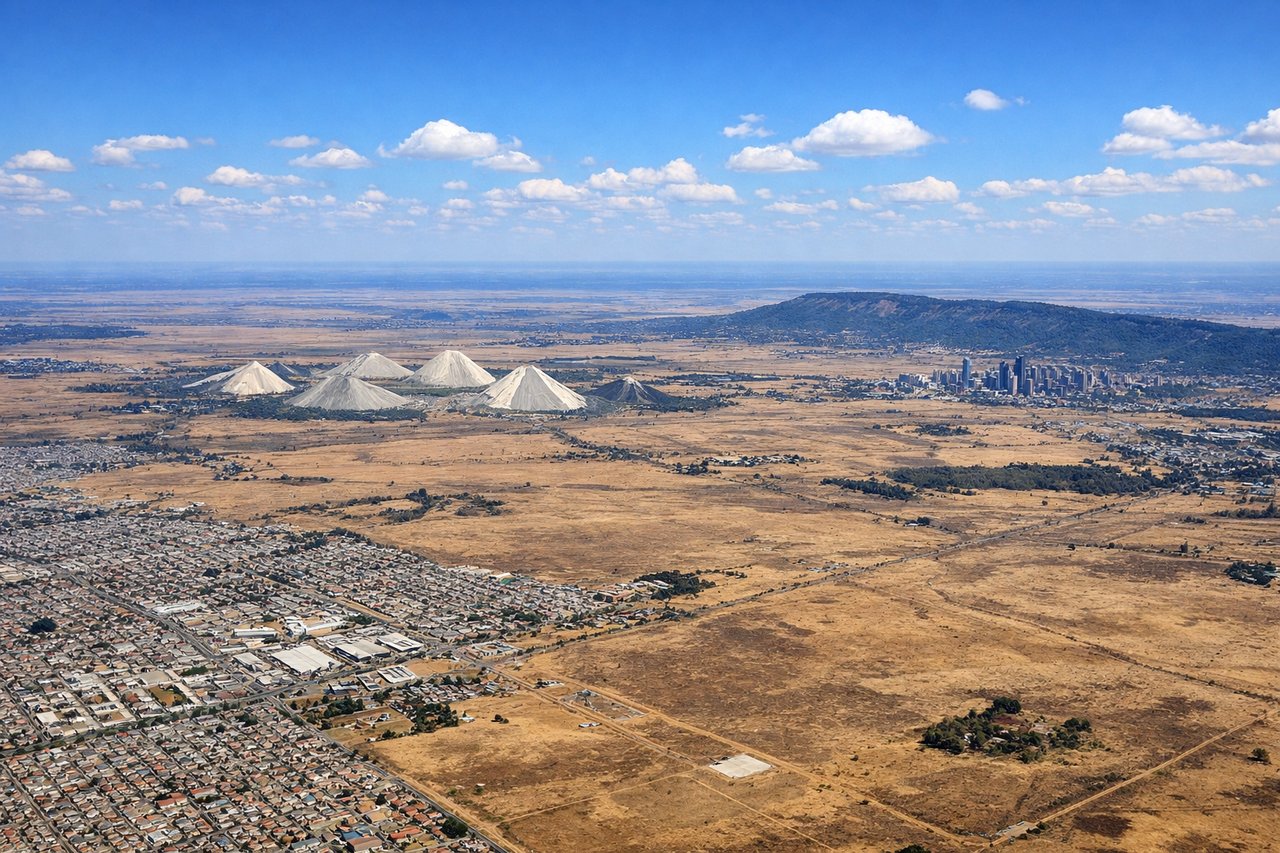
RIGHTJNB typically departs northbound (runways 03L/03R or 21L/21R depending on wind). Right-side seats offer views of the Witwatersrand ridge and Johannesburg's northern suburbs as you climb. The city sprawl and mining-scarred landscape are distinctive from altitude.
Landing at ACC
LEFTACC typically lands on runway 03 (northbound approach). Left-side seats provide views of the Accra coastline, Tema port, and the Atlantic Ocean during descent. The contrast between urban development and the coast is striking from 8,000-12,000 feet.
Will your flight be in sunlight?
Pick a date and time in the Sun Map to watch the sun move across your whole flight.
About This Route
Which side of the plane should I sit on flying from O.R. Tambo International Airport (JNB) to Kotoka International (ACC)?
Sit on the Right side of the plane for the best views on flights from Johannesburg to Accra. Takeoff views from JNB are more dramatic and geographically distinctive (Witwatersrand mining landscape and ridge), while landing views at ACC are somewhat obscured by coastal haze. Right-side seats capture the more memorable departure scenery.
What can I see during takeoff from O.R. Tambo International Airport in Johannesburg?
During takeoff from O.R. Tambo International Airport (JNB), sit on the Right side for the best views. JNB typically departs northbound (runways 03L/03R or 21L/21R depending on wind). Right-side seats offer views of the Witwatersrand ridge and Johannesburg's northern suburbs as you climb. The city sprawl and mining-scarred landscape are distinctive from altitude. Notable sights include: Witwatersrand ridge (gold-bearing escarpment running east-west), Johannesburg city center and northern sprawl, mining dumps and tailings visible as geometric patterns, Magaliesburg Mountains to the northwest on the horizon.
What can I see when landing at Kotoka International in Accra?
When landing at Kotoka International (ACC), sit on the Left side for the best views. ACC typically lands on runway 03 (northbound approach). Left-side seats provide views of the Accra coastline, Tema port, and the Atlantic Ocean during descent. The contrast between urban development and the coast is striking from 8,000-12,000 feet. Notable sights include: Atlantic Ocean and Accra coastline, Tema port and harbor with container ships visible, Accra city sprawl extending inland, Volta River delta region to the east.
How long is the flight from Johannesburg to Accra?
The flight from O.R. Tambo International Airport (JNB) to Kotoka International (ACC) takes about 5 hours. The shortest flight path between them is 2,904 miles (4,674 km); winds and air traffic control usually add a few percent.
What does the Johannesburg to Accra flight path pass over?
The flight path crosses central Africa northwestward. Notable features include the Kalahari Basin (semi-arid, sparse vegetation), the Zambezi River valley near the Zimbabwe-Botswana border (visible as a green ribbon in the landscape around 3-4 hours into flight), and the transition into the Miombo woodland zone of central Africa. The Congo Basin's edge becomes visible as vegetation density increases significantly in the final 90 minutes before descent into Ghana. Lake Kariba may be visible as a large water body if the flight passes near the Zimbabwe-Zambia border.