Right-side seats capture the most dramatic scenery: Kilimanjaro's snow-capped peak during departure is the flight's visual highlight. While left seats offer good landing views, the takeoff experience over East Africa's most iconic mountain outweighs the landing approach.
Flown JRO to MXP? Did we get it right?
Flight Path
Kilimanjaro to Milano is 3,810 miles (6,131 km), a flight of about 7 hours 15 minutes.
The flight path crosses the East African plateau, then transitions over the Red Sea and Suez Canal region, continues across the Mediterranean Sea, and approaches the Alps. Notable midpoint features include: the Red Sea (visible as deep blue water with Egyptian and Saudi Arabian coastlines), the Suez Canal (thin linear feature), the Mediterranean coastline of Libya and Tunisia, and the snow-capped Alps appearing on the horizon during final descent into northern Italy.
Great circle distance and headings ›


Phase by phase
Takeoff from JRO
RIGHTRight-side seats offer immediate views of Mount Kilimanjaro's snow-capped peak during climb-out, visible to the west-northwest. The mountain dominates the landscape around JRO and remains visible for 10-15 minutes of ascent before the aircraft turns north toward the Mediterranean corridor.
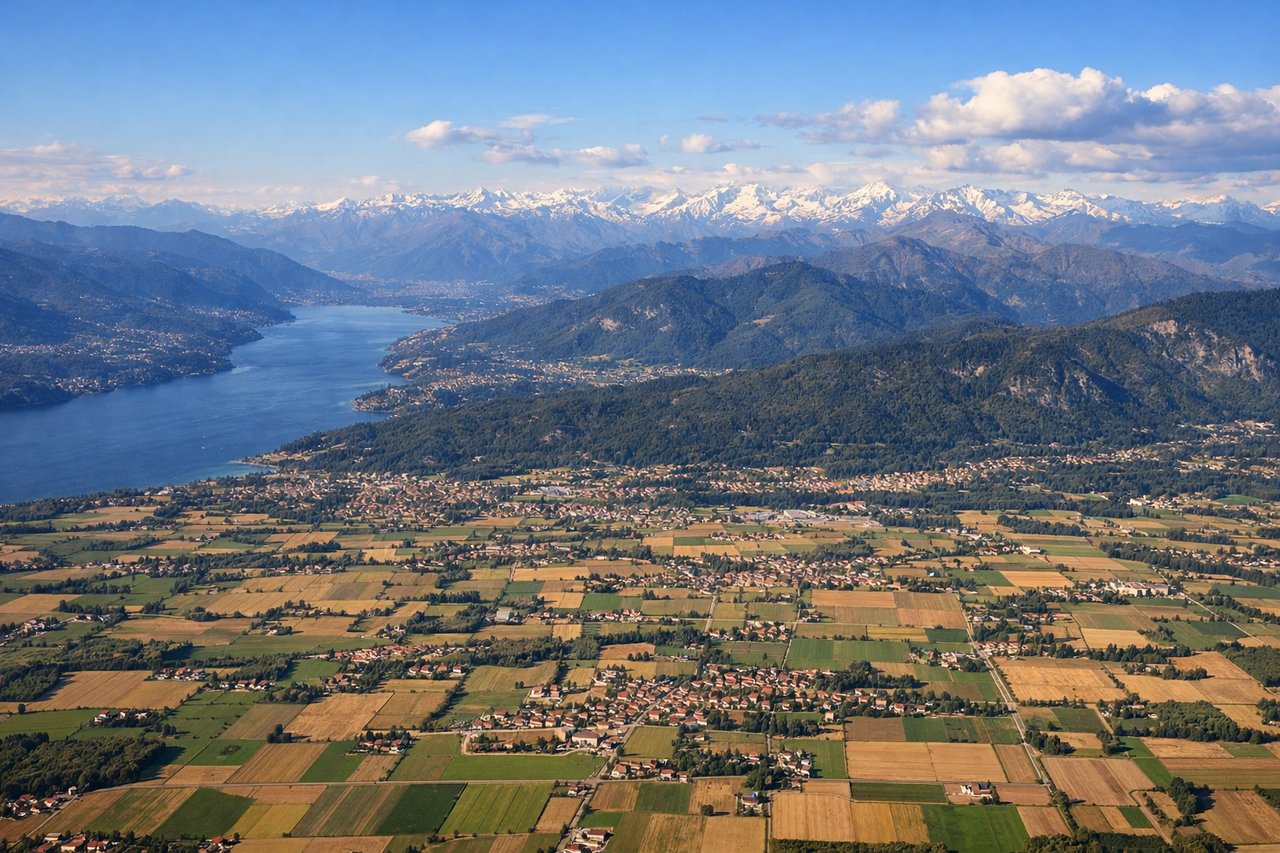
Landing at MXP
LEFTLeft-side seats provide excellent views during the final descent into Malpensa. The approach typically crosses the Ticino River valley and the Alpine foothills, with views of the Po River plain and Milan's urban sprawl spreading across the flat Lombardy landscape to the south.
Will your flight be in sunlight?
Pick a date and time in the Sun Map to watch the sun move across your whole flight.
About This Route
Which side of the plane should I sit on flying from Kilimanjaro International (JRO) to Malpensa (MXP)?
Sit on the Right side of the plane for the best views on flights from Kilimanjaro to Milano. Right-side seats capture the most dramatic scenery: Kilimanjaro's snow-capped peak during departure is the flight's visual highlight. While left seats offer good landing views, the takeoff experience over East Africa's most iconic mountain outweighs the landing approach.
What can I see during takeoff from Kilimanjaro International in Kilimanjaro?
During takeoff from Kilimanjaro International (JRO), sit on the Right side for the best views. Right-side seats offer immediate views of Mount Kilimanjaro's snow-capped peak during climb-out, visible to the west-northwest. The mountain dominates the landscape around JRO and remains visible for 10-15 minutes of ascent before the aircraft turns north toward the Mediterranean corridor. Notable sights include: Mount Kilimanjaro (5,895 m, snow-capped crater visible), Arusha town (brown sprawl to the southwest), Moshi town (smaller settlement to the south), Amboseli National Park (dry plains extending eastward).
What can I see when landing at Malpensa in Milano?
When landing at Malpensa (MXP), sit on the Left side for the best views. Left-side seats provide excellent views during the final descent into Malpensa. The approach typically crosses the Ticino River valley and the Alpine foothills, with views of the Po River plain and Milan's urban sprawl spreading across the flat Lombardy landscape to the south. Notable sights include: Po River (major river valley running east-west across Lombardy plain), Ticino River (tributary visible as darker line through green agricultural land), Milan metropolitan area (extensive urban grid to the south), Alpine foothills (low mountains to the north and west).
How long is the flight from Kilimanjaro to Milano?
The flight from Kilimanjaro International (JRO) to Malpensa (MXP) takes about 7 hours 15 minutes. The shortest flight path between them is 3,810 miles (6,131 km); winds and air traffic control usually add a few percent.
What does the Kilimanjaro to Milano flight path pass over?
The flight path crosses the East African plateau, then transitions over the Red Sea and Suez Canal region, continues across the Mediterranean Sea, and approaches the Alps. Notable midpoint features include: the Red Sea (visible as deep blue water with Egyptian and Saudi Arabian coastlines), the Suez Canal (thin linear feature), the Mediterranean coastline of Libya and Tunisia, and the snow-capped Alps appearing on the horizon during final descent into northern Italy.