Kochi to Dubai is 4,638 miles (7,465 km), a flight of about 10 hours 30 minutes.
The left side wins overall due to the spectacular Dubai arrival views — Palm Jumeirah, the Marina skyline, and the Burj Khalifa on final approach are among the most dramatic urban aerial views in the world. The takeoff right-side advantage over Tosa Bay is scenic but relatively brief, while the left side also captures views over the Indian subcontinent's western coastline and the Arabian Peninsula during descent.
Flight Path
The flight tracks west-southwest from Shikoku across the Seto Inland Sea region, then over the Korean Strait or southern Japan Sea, crossing southern China or tracking along the Bay of Bengal depending on routing. The flight typically passes over Myanmar and Bangladesh, then across India — the Ganges plain and possibly the Thar Desert of Rajasthan are visible. The route then crosses the Arabian Sea before descending over the Gulf of Oman and the UAE coast into Dubai.
Great circle distance and headings ›
.jpg?width=600)
_and_the_Dubai_skyline_(25781049892).jpg?width=600)
.jpg?width=600)
Phase by phase
Takeoff from KCZ
RIGHTKochi Airport sits on a sandbar peninsula in Urado Bay. Departing westward on runway 32, the right side gives you views over Urado Bay and the Pacific coastline of Shikoku, with the Tosa Bay stretching out to the south. The city of Kochi and its coastal plain are clearly visible before the aircraft turns.
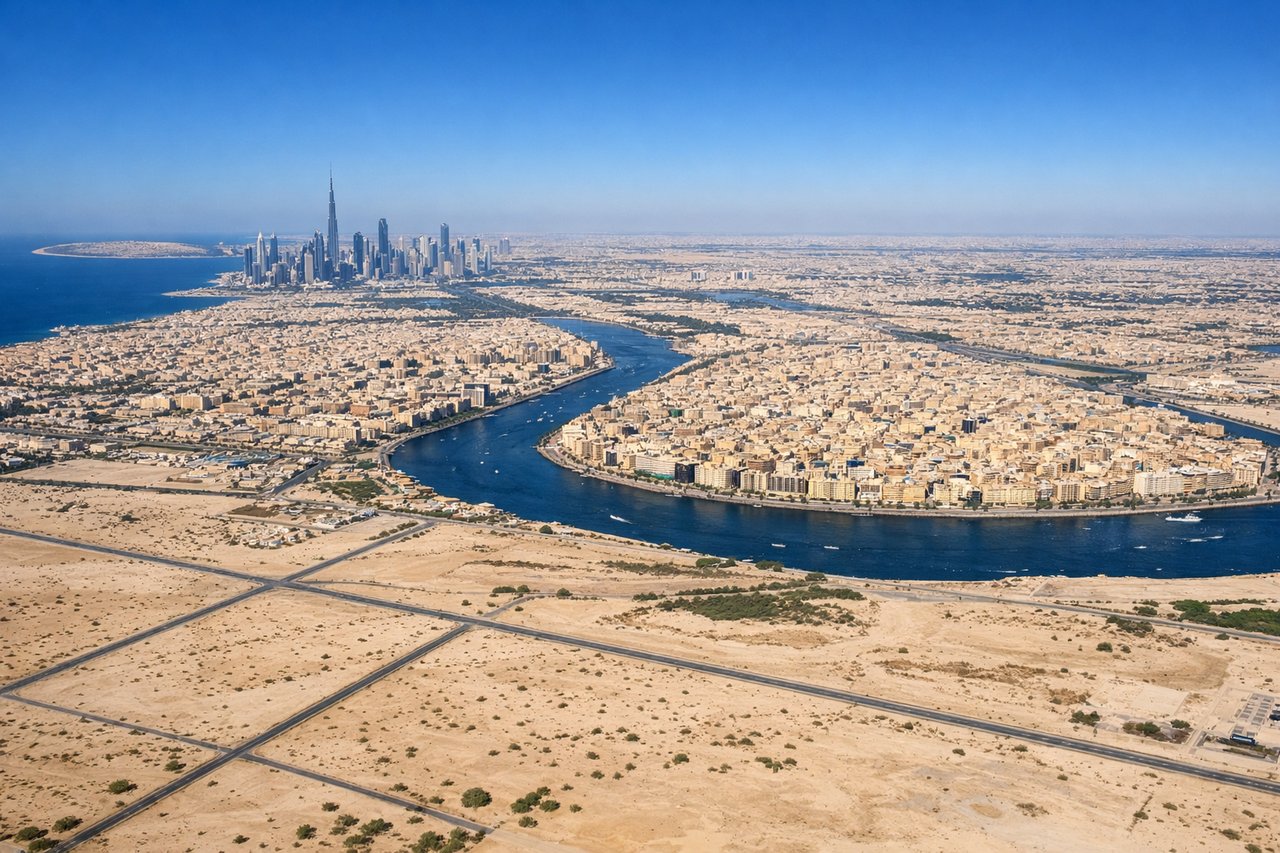
Landing at DXB
LEFTDubai International's primary arrival runway 30L/30R brings aircraft in from the southeast over the Arabian Gulf. The left side gives a clear view of the Dubai skyline including Downtown Dubai and the Burj Khalifa, the Palm Jumeirah, and the coastline along the Gulf. The right side faces inland toward the desert.
Landmarks on this routeAll landmarks →
Will your flight be in sunlight?
Pick a date and time in the Sun Map to watch the sun move across your whole flight.
About This Route
Which side of the plane should I sit on flying from Kochi (KCZ) to Dubai International (DXB)?
Sit on the Left side of the plane for the best views on flights from Kochi to Dubai. The left side wins overall due to the spectacular Dubai arrival views — Palm Jumeirah, the Marina skyline, and the Burj Khalifa on final approach are among the most dramatic urban aerial views in the world. The takeoff right-side advantage over Tosa Bay is scenic but relatively brief, while the left side also captures views over the Indian subcontinent's western coastline and the Arabian Peninsula during descent.
What can I see during takeoff from Kochi in Kochi?
During takeoff from Kochi (KCZ), sit on the Right side for the best views. Kochi Airport sits on a sandbar peninsula in Urado Bay. Departing westward on runway 32, the right side gives you views over Urado Bay and the Pacific coastline of Shikoku, with the Tosa Bay stretching out to the south. The city of Kochi and its coastal plain are clearly visible before the aircraft turns. Notable sights include: Urado Bay and its narrow inlet, Tosa Bay (Pacific Ocean), Kochi city coastal plain, Shikoku's forested interior hills.
What can I see when landing at Dubai International in Dubai?
When landing at Dubai International (DXB), sit on the Left side for the best views. Dubai International's primary arrival runway 30L/30R brings aircraft in from the southeast over the Arabian Gulf. The left side gives a clear view of the Dubai skyline including Downtown Dubai and the Burj Khalifa, the Palm Jumeirah, and the coastline along the Gulf. The right side faces inland toward the desert. Notable sights include: Palm Jumeirah, Dubai Marina and JBR coastline, Downtown Dubai skyline with Burj Khalifa, Dubai Creek and Deira district.
How long is the flight from Kochi to Dubai?
The flight from Kochi (KCZ) to Dubai International (DXB) takes about 10 hours 30 minutes. The shortest flight path between them is 4,638 miles (7,465 km); winds and air traffic control usually add a few percent.
What does the Kochi to Dubai flight path pass over?
The flight tracks west-southwest from Shikoku across the Seto Inland Sea region, then over the Korean Strait or southern Japan Sea, crossing southern China or tracking along the Bay of Bengal depending on routing. The flight typically passes over Myanmar and Bangladesh, then across India — the Ganges plain and possibly the Thar Desert of Rajasthan are visible. The route then crosses the Arabian Sea before descending over the Gulf of Oman and the UAE coast into Dubai.