Kirkenes to Oslo is 850 miles (1,369 km), a flight of about 2 hours 15 minutes.
While takeoff favors the right for Arctic coastal views, the landing approach into Oslo is significantly more visually rewarding on the left, with the Oslofjord and city geography providing more distinctive landmarks. The landing experience outweighs the takeoff advantage.
Flight Path
The flight path crosses from the Arctic coast southwestward across the Finnmark plateau and into the boreal forest zone. Notable midpoint features include the Tana River valley (visible as a linear feature around 1 hour into flight), the transition from tundra to dense forest around 67°N, and the numerous lakes of the Trøndelag region. The flight generally follows a corridor over the Norwegian interior, with the Scandinavian mountain spine visible distantly to the west. Around the 1.5-hour mark, the terrain transitions from sparse Arctic vegetation to continuous forest, and the first signs of Oslo's urban influence (roads, cleared areas) appear in the final 30 minutes.
Great circle distance and headings ›Phase by phase
Takeoff from KKN
RIGHTKirkenes typically departs runway 09 (westbound). Right-side seats face north toward the Barents Sea coast and the dramatic fjord-cut terrain of northeastern Norway. Left seats look inland over relatively flat tundra.
Landing at OSL
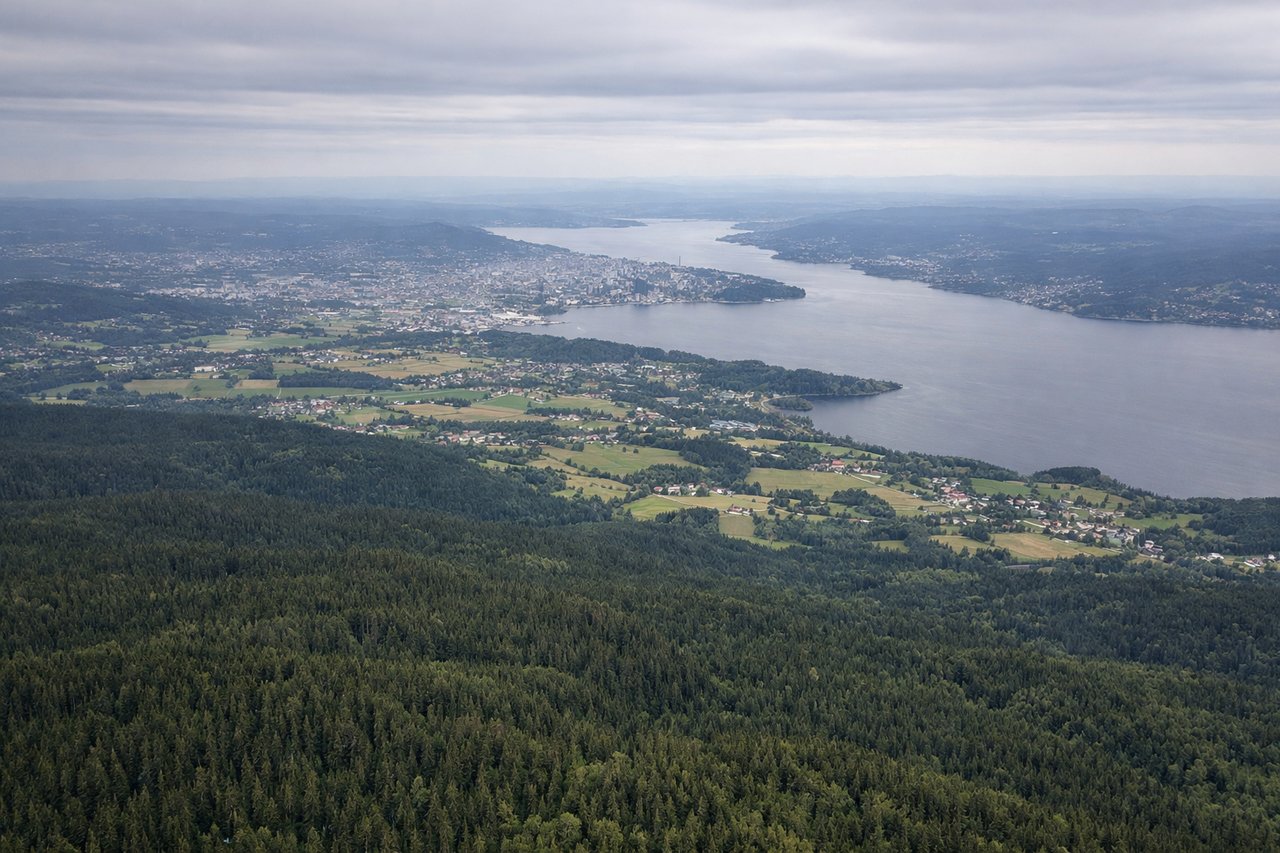
LEFTOslo Gardermoen typically uses runway 01L/01R for northbound approaches. Left-side seats on approach from the north offer views of the Oslofjord, the city's eastern districts, and the forested terrain of Akershus. Right seats see only inland forest and lakes.
Will your flight be in sunlight?
Pick a date and time in the Sun Map to watch the sun move across your whole flight.
About This Route
Which side of the plane should I sit on flying from Kirkenes Hoybuktmoen (KKN) to Oslo Gardermoen (OSL)?
Sit on the Left side of the plane for the best views on flights from Kirkenes to Oslo. While takeoff favors the right for Arctic coastal views, the landing approach into Oslo is significantly more visually rewarding on the left, with the Oslofjord and city geography providing more distinctive landmarks. The landing experience outweighs the takeoff advantage.
What can I see during takeoff from Kirkenes Hoybuktmoen in Kirkenes?
During takeoff from Kirkenes Hoybuktmoen (KKN), sit on the Right side for the best views. Kirkenes typically departs runway 09 (westbound). Right-side seats face north toward the Barents Sea coast and the dramatic fjord-cut terrain of northeastern Norway. Left seats look inland over relatively flat tundra. Notable sights include: Porsangerfjord (major fjord system east of airport), Barents Sea coastline with its characteristic pale water, North Cape region peaks on distant horizon, Varangerfjord to the southeast.
What can I see when landing at Oslo Gardermoen in Oslo?
When landing at Oslo Gardermoen (OSL), sit on the Left side for the best views. Oslo Gardermoen typically uses runway 01L/01R for northbound approaches. Left-side seats on approach from the north offer views of the Oslofjord, the city's eastern districts, and the forested terrain of Akershus. Right seats see only inland forest and lakes. Notable sights include: Oslofjord (major fjord with islands and skerries), Oslo city center and eastern suburbs, Akershus Fortress on the fjord's western shore, forested ridges of the Oslo region.
How long is the flight from Kirkenes to Oslo?
The flight from Kirkenes Hoybuktmoen (KKN) to Oslo Gardermoen (OSL) takes about 2 hours 15 minutes. The shortest flight path between them is 850 miles (1,369 km); winds and air traffic control usually add a few percent.
What does the Kirkenes to Oslo flight path pass over?
The flight path crosses from the Arctic coast southwestward across the Finnmark plateau and into the boreal forest zone. Notable midpoint features include the Tana River valley (visible as a linear feature around 1 hour into flight), the transition from tundra to dense forest around 67°N, and the numerous lakes of the Trøndelag region. The flight generally follows a corridor over the Norwegian interior, with the Scandinavian mountain spine visible distantly to the west. Around the 1.5-hour mark, the terrain transitions from sparse Arctic vegetation to continuous forest, and the first signs of Oslo's urban influence (roads, cleared areas) appear in the final 30 minutes.