Right-side seats capture the most dramatic geography: the Tatra Mountains and Vistula valley on departure, then the entire flight path northward across Poland and into the Baltic region. The approach into Helsinki on the left is secondary to the superior departure views.
Flight Path
The flight path crosses central Poland's flat terrain (Masovian Plain), then transitions into the Baltic region. Notable features include the Narew River valley (tributary system visible as linear patterns in the landscape around 52°N), the Vistula Lagoon near the Polish coast (shallow water body with distinctive pale coloration), and the transition into Lithuania and Latvia where the landscape becomes more forested and lake-dotted. The Baltic Sea coastline becomes visible around 55°N latitude. The approach into Finland crosses the outer archipelago and numerous glacially-carved lakes characteristic of Scandinavia.
Great circle distance and headings ›Phase by phase
Takeoff from KRK
RIGHTKrakow typically departs eastbound (Runway 27 or westbound Runway 09). Right-side seats on eastbound departures offer views of the Vistula River valley and the city's historic core spreading beneath you. The Tatra Mountains appear on the southern horizon during climb-out.
Landing at HEL
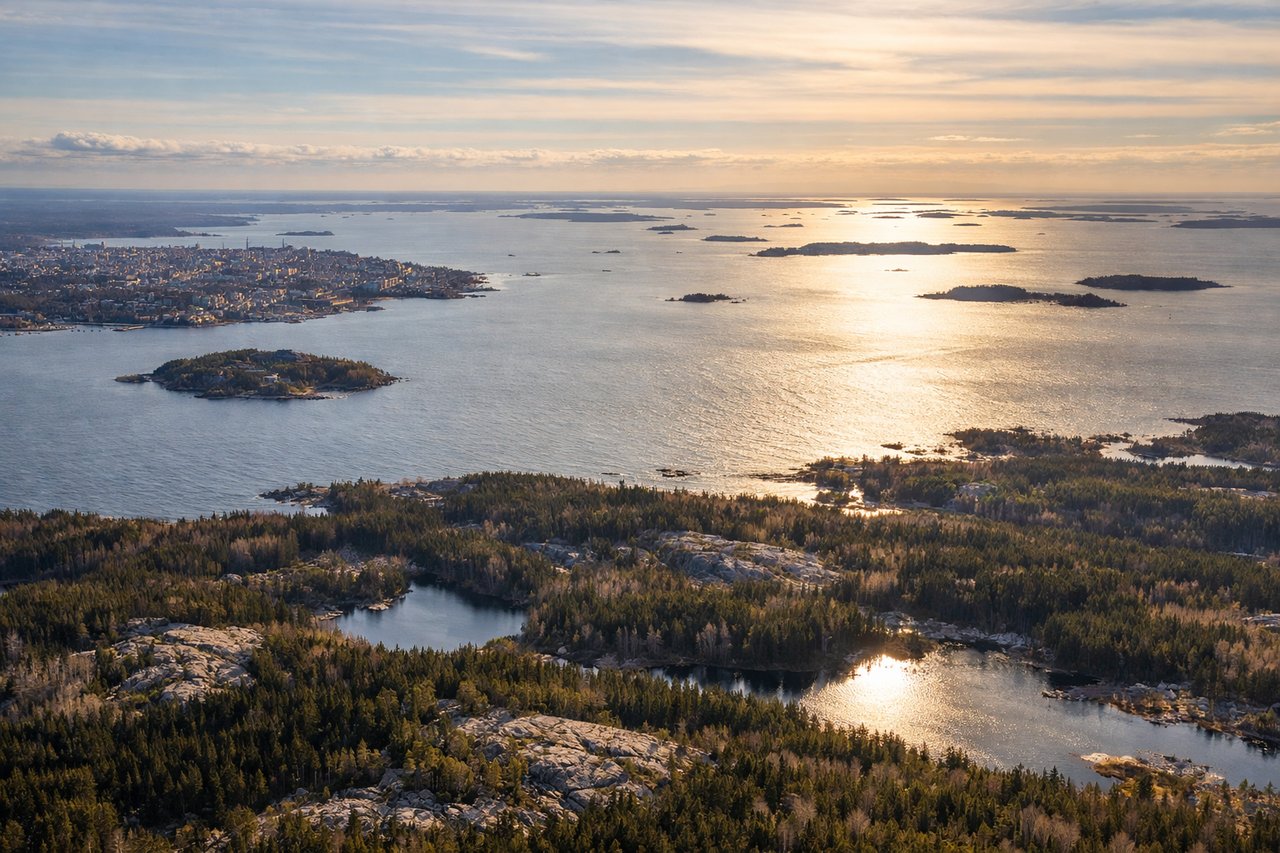
LEFTHelsinki Vantaa typically lands from the west (Runway 04R/04L) or east (Runway 22L/22R). On westbound approaches, left-side seats provide views of the Baltic Sea coastline, the archipelago's islands, and Lake Tuusula inland. The approach path crosses over Finland's characteristic lake-and-forest landscape.
Will your flight be in sunlight?
See exactly which side of the plane gets sun and shade at your departure time.
About This Route
Which side of the plane should I sit on flying from Balice Jp Ii International Airport (KRK) to Helsinki Vantaa (HEL)?
Sit on the Right side of the plane for the best views on flights from Krakow to Helsinki. Right-side seats capture the most dramatic geography: the Tatra Mountains and Vistula valley on departure, then the entire flight path northward across Poland and into the Baltic region. The approach into Helsinki on the left is secondary to the superior departure views.
What can I see during takeoff from Balice Jp Ii International Airport in Krakow?
During takeoff from Balice Jp Ii International Airport (KRK), sit on the Right side for the best views. Krakow typically departs eastbound (Runway 27 or westbound Runway 09). Right-side seats on eastbound departures offer views of the Vistula River valley and the city's historic core spreading beneath you. The Tatra Mountains appear on the southern horizon during climb-out. Notable sights include: Vistula River (winding through the city below), Krakow's Old Town and Wawel Castle district (visible as dense medieval street patterns), Tatra Mountains (southern horizon as a distant ridge), Wieliczka Salt Mine area (subtle terrain changes southeast of the city).
What can I see when landing at Helsinki Vantaa in Helsinki?
When landing at Helsinki Vantaa (HEL), sit on the Left side for the best views. Helsinki Vantaa typically lands from the west (Runway 04R/04L) or east (Runway 22L/22R). On westbound approaches, left-side seats provide views of the Baltic Sea coastline, the archipelago's islands, and Lake Tuusula inland. The approach path crosses over Finland's characteristic lake-and-forest landscape. Notable sights include: Baltic Sea and archipelago (islands and skerries visible as dark patches in blue water), Lake Tuusula (large freshwater lake inland, northwest of airport), Finnish boreal forest (dense green coverage across the landscape), Vantaa River valley (threading through forested terrain toward the airport).
How long is the flight from Krakow to Helsinki?
The flight from Balice Jp Ii International Airport (KRK) to Helsinki Vantaa (HEL) takes Approximately 2 hours 15 minutes.
What does the Krakow to Helsinki flight path pass over?
The flight path crosses central Poland's flat terrain (Masovian Plain), then transitions into the Baltic region. Notable features include the Narew River valley (tributary system visible as linear patterns in the landscape around 52°N), the Vistula Lagoon near the Polish coast (shallow water body with distinctive pale coloration), and the transition into Lithuania and Latvia where the landscape becomes more forested and lake-dotted. The Baltic Sea coastline becomes visible around 55°N latitude. The approach into Finland crosses the outer archipelago and numerous glacially-carved lakes characteristic of Scandinavia.