Guilin to Shanghai is 824 miles (1,327 km), a flight of about 2 hours 20 minutes.
While takeoff favors the right for karst scenery, the landing approach—which offers the more dramatic and concentrated visual experience—strongly favors the left. The Huangpu River and Pudong skyline are iconic and unmissable from the left during descent.
Flight Path
The flight path crosses the Ganzhou region with scattered karst formations diminishing northward, then transitions over the Zhejiang plains with agricultural areas and scattered lakes. The Qiantang River becomes visible as the aircraft approaches the Shanghai region, flowing northward into Hangzhou Bay. No major mountain ranges obstruct the route; the terrain gradually flattens from Guilin's karst landscape toward the Yangtze River Delta's low-lying alluvial plains.
Great circle distance and headings ›.jpg?width=600)
.jpg?width=600)

Phase by phase
Takeoff from KWL
RIGHTGuilin's karst peaks dominate the immediate landscape south and southeast of the airport. Right-side seats capture the dramatic limestone formations of the Guilin karst region as the aircraft climbs northeastward on typical departure routing toward Shanghai.
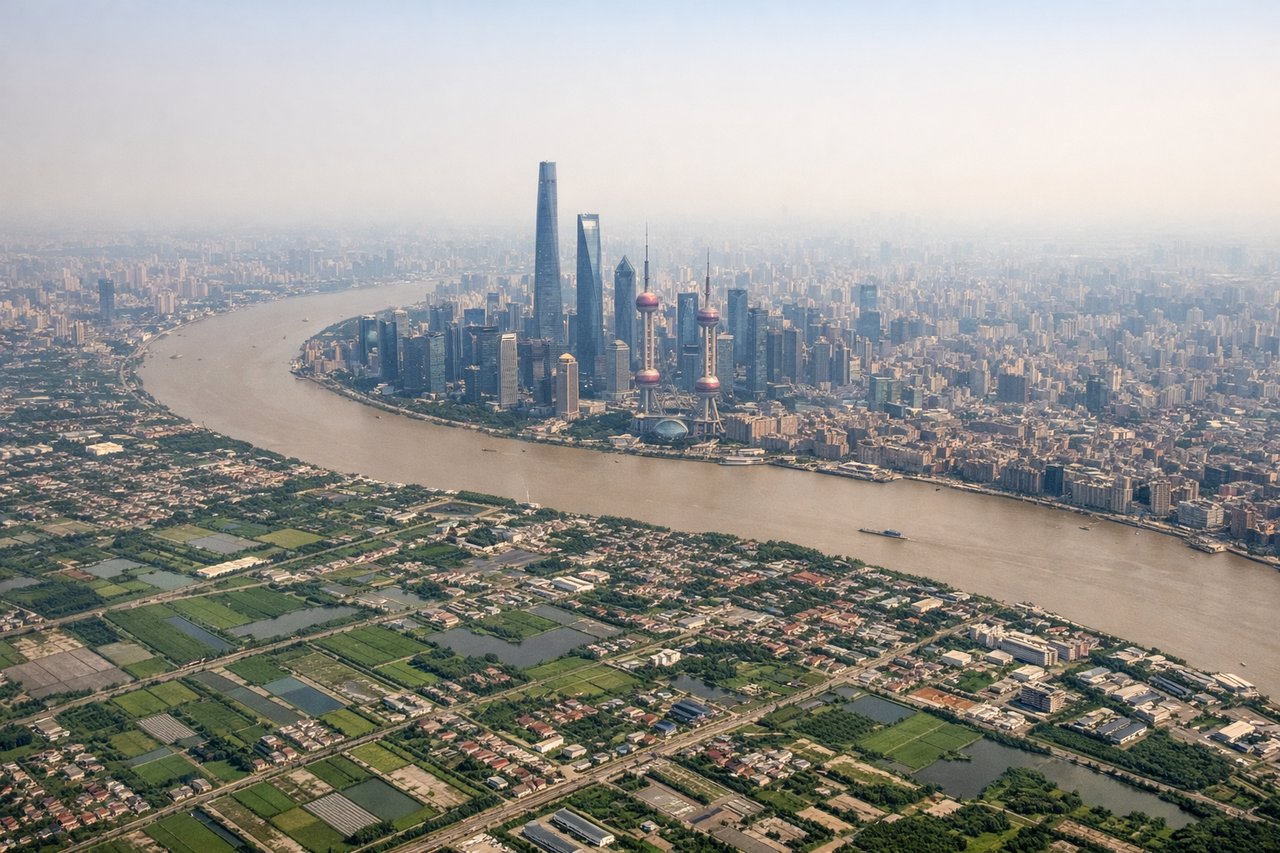
Landing at PVG
LEFTApproaching Shanghai Pudong from the southwest, left-side seats offer views of the Huangpu River's distinctive curves and the Pudong skyline's vertical profile. The river's serpentine path and the contrast between Pudong's high-rises and Puxi's lower urban fabric are most visible from the left during standard approach vectors.
Landmarks on this routeAll landmarks →
Will your flight be in sunlight?
Pick a date and time in the Sun Map to watch the sun move across your whole flight.
About This Route
Which side of the plane should I sit on flying from Liangjiang (KWL) to Shanghai Pudong International (PVG)?
Sit on the Left side of the plane for the best views on flights from Guilin to Shanghai. While takeoff favors the right for karst scenery, the landing approach—which offers the more dramatic and concentrated visual experience—strongly favors the left. The Huangpu River and Pudong skyline are iconic and unmissable from the left during descent.
What can I see during takeoff from Liangjiang in Guilin?
During takeoff from Liangjiang (KWL), sit on the Right side for the best views. Guilin's karst peaks dominate the immediate landscape south and southeast of the airport. Right-side seats capture the dramatic limestone formations of the Guilin karst region as the aircraft climbs northeastward on typical departure routing toward Shanghai. Notable sights include: Guilin karst peaks (Liangjiang district), Li River valley, Taohuayuan scenic area to the south, Yangshuo karst formations in the distance.
What can I see when landing at Shanghai Pudong International in Shanghai?
When landing at Shanghai Pudong International (PVG), sit on the Left side for the best views. Approaching Shanghai Pudong from the southwest, left-side seats offer views of the Huangpu River's distinctive curves and the Pudong skyline's vertical profile. The river's serpentine path and the contrast between Pudong's high-rises and Puxi's lower urban fabric are most visible from the left during standard approach vectors. Notable sights include: Huangpu River (Huang Pu Jiang), Pudong financial district skyline, Puxi waterfront, Hangzhou Bay to the east.
How long is the flight from Guilin to Shanghai?
The flight from Liangjiang (KWL) to Shanghai Pudong International (PVG) takes about 2 hours 20 minutes. The shortest flight path between them is 824 miles (1,327 km); winds and air traffic control usually add a few percent.
What does the Guilin to Shanghai flight path pass over?
The flight path crosses the Ganzhou region with scattered karst formations diminishing northward, then transitions over the Zhejiang plains with agricultural areas and scattered lakes. The Qiantang River becomes visible as the aircraft approaches the Shanghai region, flowing northward into Hangzhou Bay. No major mountain ranges obstruct the route; the terrain gradually flattens from Guilin's karst landscape toward the Yangtze River Delta's low-lying alluvial plains.