Both sides face over 14 hours of open Pacific Ocean at cruise, capping their scores, but the left side offers meaningfully better bookend scenery — the Southern California coastline and Catalina Island at departure, and Moreton Bay with the Brisbane skyline at arrival.
Flight Path
Open Pacific Ocean with no land visible; the route passes well south of Hawaii and north of most Pacific island chains, crossing the equator and international date line before approaching the Australian coast near Brisbane.
Great circle distance and headings ›.jpg?width=600)

Phase by phase
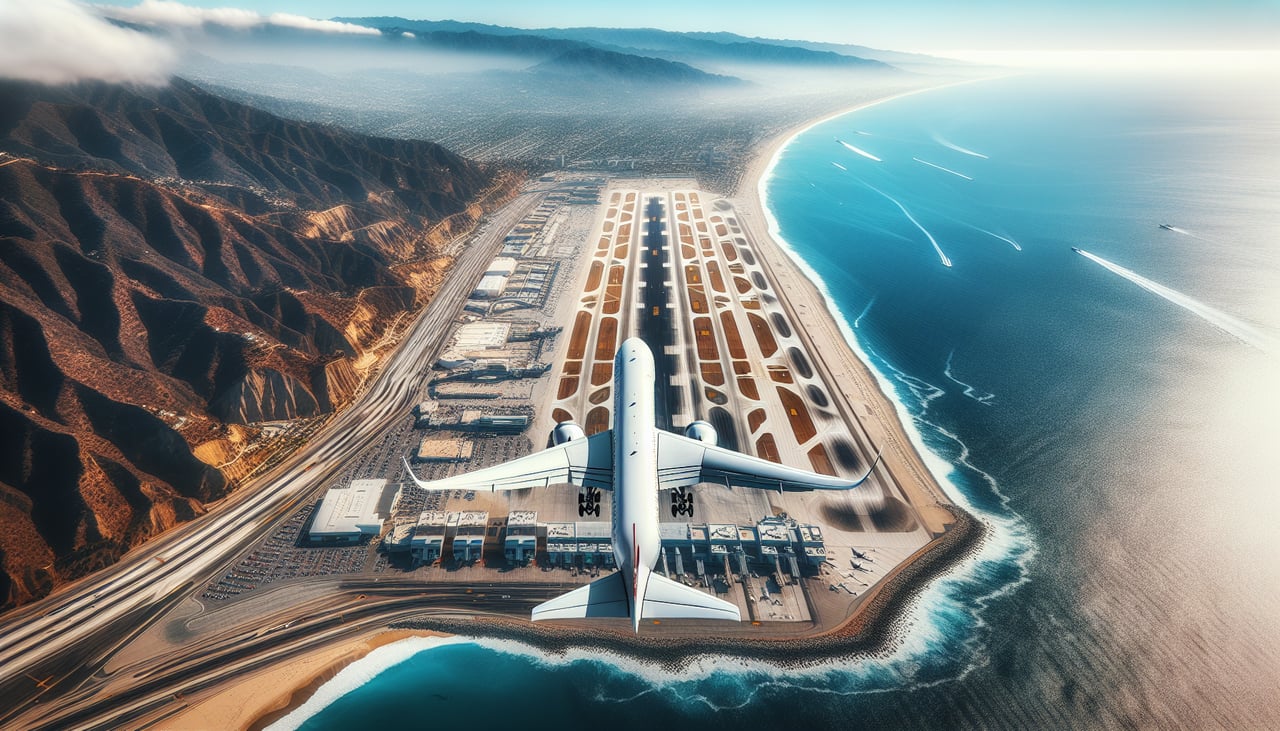
Takeoff from LAX
LEFTDeparting LAX in the standard west-flow pattern, aircraft climb out over Santa Monica Bay and then bank left toward the southwest for the long Pacific crossing. Passengers on the left get a sweeping view of the Palos Verdes Peninsula, the harbor at San Pedro, and Catalina Island fading into the haze as the plane turns onto its oceanic track.
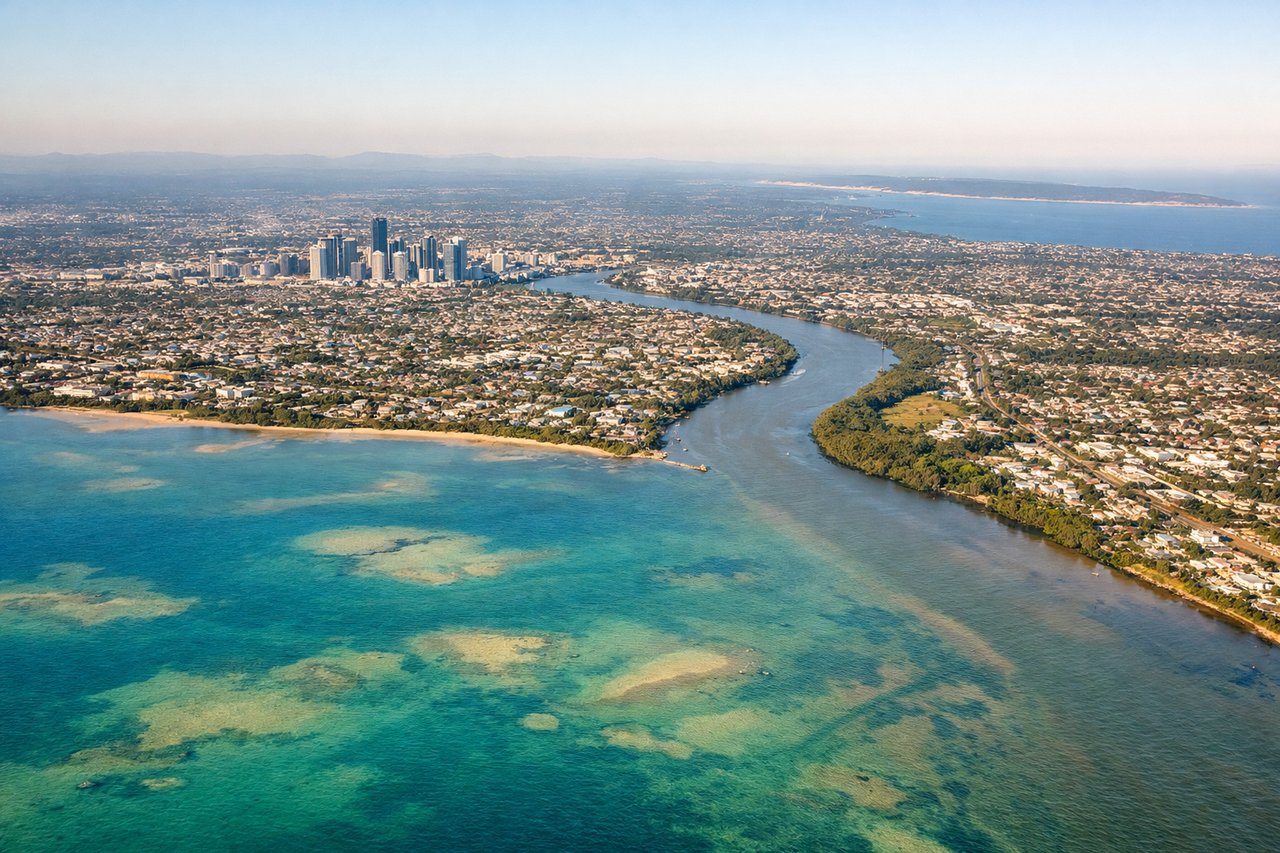
Landing at BNE
LEFTArriving into Brisbane from the Pacific, flights typically descend over Moreton Bay before lining up for the southern runway (19), giving left-side passengers a good look at the bay's islands and the Brisbane River winding through the city skyline just before touchdown.
Landmarks on this routeAll landmarks →
Will your flight be in sunlight?
See exactly which side of the plane gets sun and shade at your departure time.
About This Route
Which side of the plane should I sit on flying from Los Angeles International (LAX) to Brisbane International (BNE)?
Sit on the Left side of the plane for the best views on flights from Los Angeles to Brisbane. Both sides face over 14 hours of open Pacific Ocean at cruise, capping their scores, but the left side offers meaningfully better bookend scenery — the Southern California coastline and Catalina Island at departure, and Moreton Bay with the Brisbane skyline at arrival.
What can I see during takeoff from Los Angeles International in Los Angeles?
During takeoff from Los Angeles International (LAX), sit on the Left side for the best views. Departing LAX in the standard west-flow pattern, aircraft climb out over Santa Monica Bay and then bank left toward the southwest for the long Pacific crossing. Passengers on the left get a sweeping view of the Palos Verdes Peninsula, the harbor at San Pedro, and Catalina Island fading into the haze as the plane turns onto its oceanic track. Notable sights include: Palos Verdes Peninsula, Port of Los Angeles/San Pedro, Catalina Island, Santa Monica Bay coastline.
What can I see when landing at Brisbane International in Brisbane?
When landing at Brisbane International (BNE), sit on the Left side for the best views. Arriving into Brisbane from the Pacific, flights typically descend over Moreton Bay before lining up for the southern runway (19), giving left-side passengers a good look at the bay's islands and the Brisbane River winding through the city skyline just before touchdown. Notable sights include: Moreton Bay and its islands, Brisbane River, Brisbane CBD skyline, D'Aguilar Range in the distance.
How long is the flight from Los Angeles to Brisbane?
The flight from Los Angeles International (LAX) to Brisbane International (BNE) takes 15h 35m.
What does the Los Angeles to Brisbane flight path pass over?
Open Pacific Ocean with no land visible; the route passes well south of Hawaii and north of most Pacific island chains, crossing the equator and international date line before approaching the Australian coast near Brisbane.