Both takeoff and landing favor the right side with genuine terrain and coastal features, while the long mid-Pacific cruise is largely featureless ocean on either side, occasionally broken on the right by distant glimpses of the Kamchatka and Kuril Island chain near the route's northern apex.
Flown LAX to GMP? Did we get it right?
Flight Path
Los Angeles to Seoul is 5,963 miles (9,596 km), a flight of about 13 hours 45 minutes.
Open North Pacific Ocean, with the flight path passing south of the Aleutian Islands and near the Kamchatka Peninsula and Kuril Islands before descending toward the Sea of Japan and Korean Peninsula.
Great circle distance and headings ›


Phase by phase
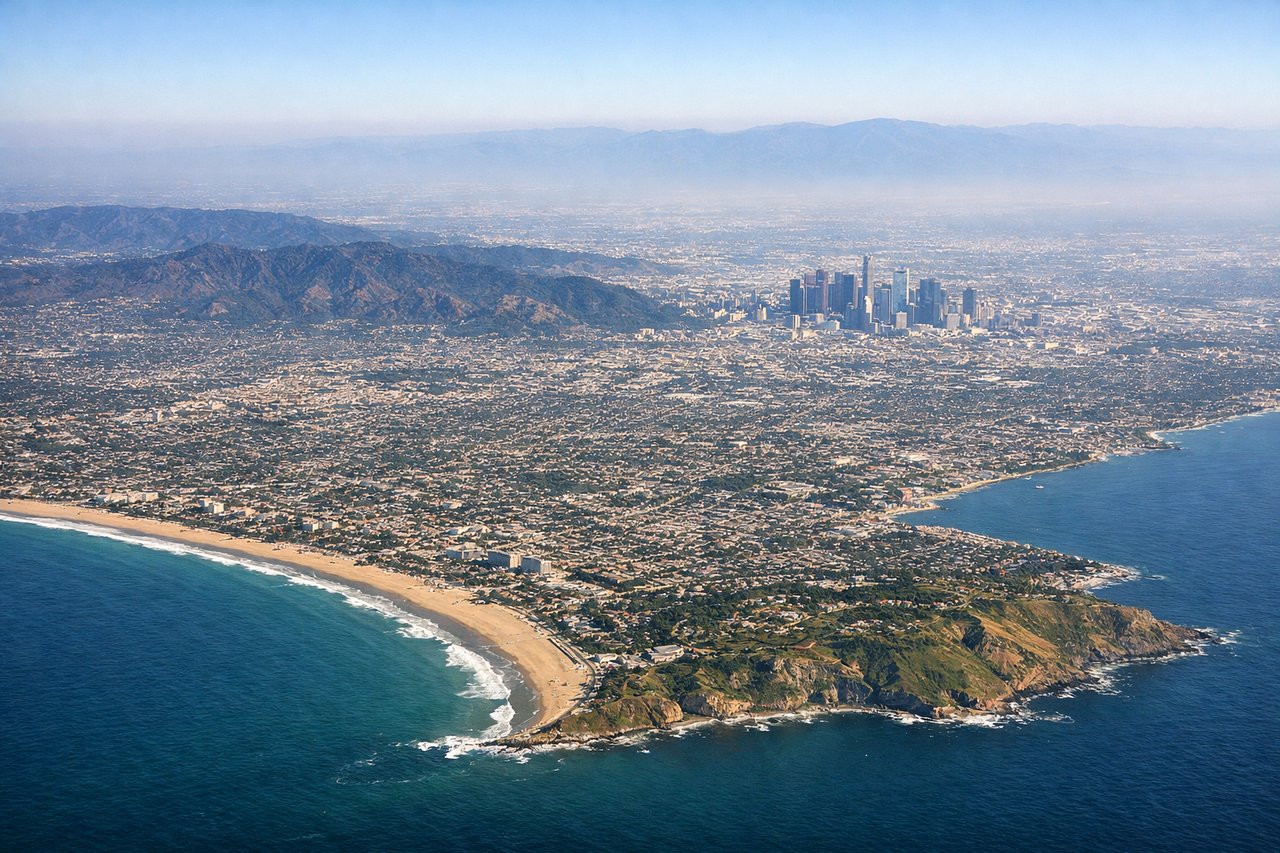
Takeoff from LAX
RIGHTDeparting LAX in the normal west-flow pattern, the aircraft climbs out over Santa Monica Bay and then banks north-northwest toward the Pacific great-circle track. On the right side, passengers get a clear view of the Santa Monica Mountains, the Malibu coastline, and the San Fernando Valley sliding by before the plane turns fully out to sea, while the left side only shows open ocean and a hazy glimpse of the Palos Verdes Peninsula.
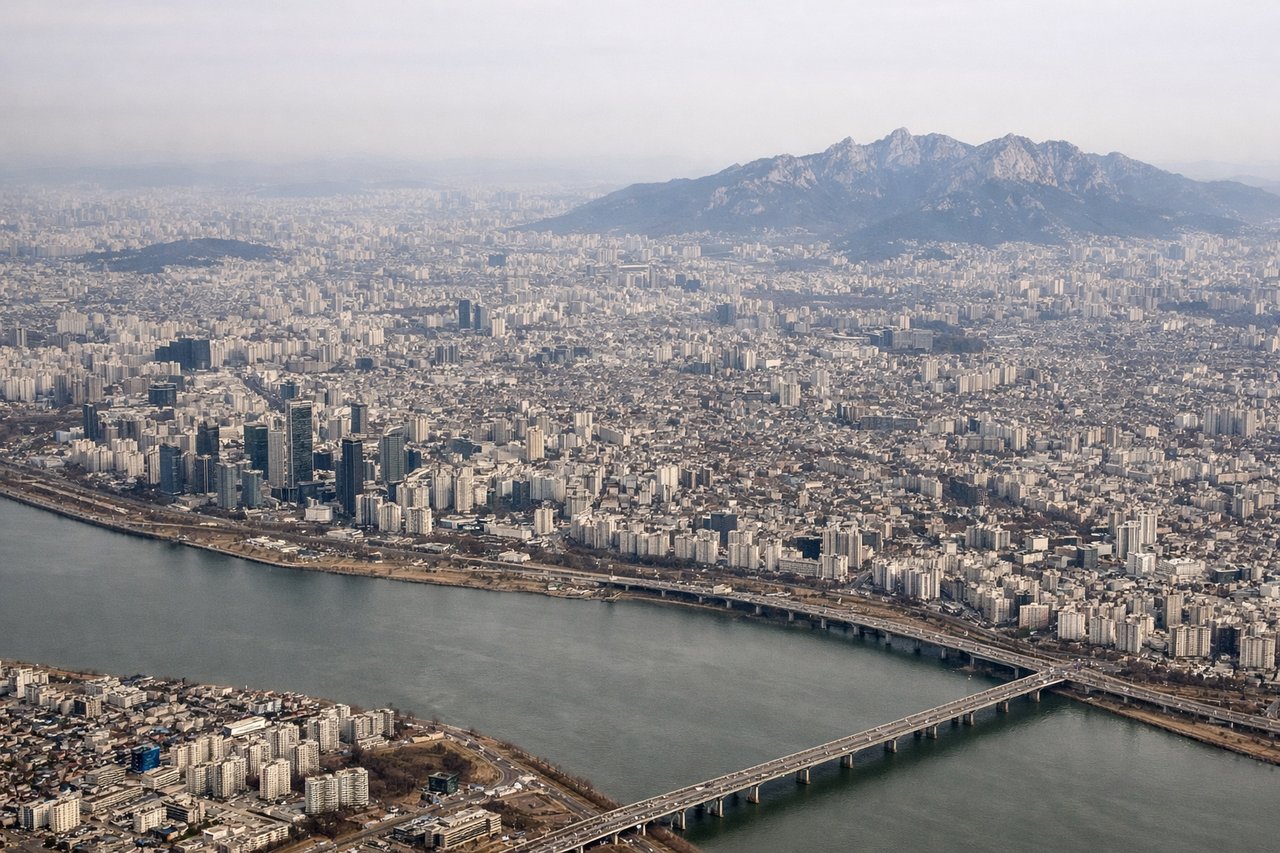
Landing at GMP
RIGHTOn approach into Gimpo, arrivals typically curve in from the south over the Yellow Sea before lining up with runway 32, giving right-side passengers a good look at the Incheon coastline, tidal flats, and the Han River estuary as the plane descends toward Seoul. The left side mostly shows featureless water until very late in the descent.
Will your flight be in sunlight?
Pick a date and time in the Sun Map to watch the sun move across your whole flight.
About This Route
Which side of the plane should I sit on flying from Los Angeles International (LAX) to Gimpo (GMP)?
Sit on the Right side of the plane for the best views on flights from Los Angeles to Seoul. Both takeoff and landing favor the right side with genuine terrain and coastal features, while the long mid-Pacific cruise is largely featureless ocean on either side, occasionally broken on the right by distant glimpses of the Kamchatka and Kuril Island chain near the route's northern apex.
What can I see during takeoff from Los Angeles International in Los Angeles?
During takeoff from Los Angeles International (LAX), sit on the Right side for the best views. Departing LAX in the normal west-flow pattern, the aircraft climbs out over Santa Monica Bay and then banks north-northwest toward the Pacific great-circle track. On the right side, passengers get a clear view of the Santa Monica Mountains, the Malibu coastline, and the San Fernando Valley sliding by before the plane turns fully out to sea, while the left side only shows open ocean and a hazy glimpse of the Palos Verdes Peninsula. Notable sights include: Santa Monica Mountains, Malibu coastline, San Fernando Valley, Santa Monica Bay.
What can I see when landing at Gimpo in Seoul?
When landing at Gimpo (GMP), sit on the Right side for the best views. On approach into Gimpo, arrivals typically curve in from the south over the Yellow Sea before lining up with runway 32, giving right-side passengers a good look at the Incheon coastline, tidal flats, and the Han River estuary as the plane descends toward Seoul. The left side mostly shows featureless water until very late in the descent. Notable sights include: Han River estuary, Incheon tidal flats, Yellow Sea coastline, Seoul's western districts.
How long is the flight from Los Angeles to Seoul?
The flight from Los Angeles International (LAX) to Gimpo (GMP) takes about 13 hours 45 minutes. The shortest flight path between them is 5,963 miles (9,596 km); winds and air traffic control usually add a few percent.
What does the Los Angeles to Seoul flight path pass over?
Open North Pacific Ocean, with the flight path passing south of the Aleutian Islands and near the Kamchatka Peninsula and Kuril Islands before descending toward the Sea of Japan and Korean Peninsula.