Los Angeles to Minot is 1,330 miles (2,141 km), a flight of about 3 hours 30 minutes.
The right side delivers the dramatic LA departure views over the Santa Monica Mountains and San Fernando Valley, and along the cruise portion it tracks the eastern Rockies and Wyoming basin terrain. The landing views on the left are interesting but relatively flat prairie. Right side wins overall for the more visually varied experience.
Flight Path
The route crosses the Mojave Desert, then the southern Sierra Nevada foothills, before tracking over the Great Basin of Nevada and into southern Idaho. Over Wyoming, the Bighorn Mountains are visible to the right side. The route then crosses into Montana briefly before descending into North Dakota, with the Missouri River drainage and Lake Sakakawea visible on approach. The terrain transitions from high desert to Rocky Mountain ranges to the vast flat northern Great Plains.
Great circle distance and headings ›.jpg?width=600)


.jpg?width=600)
Phase by phase
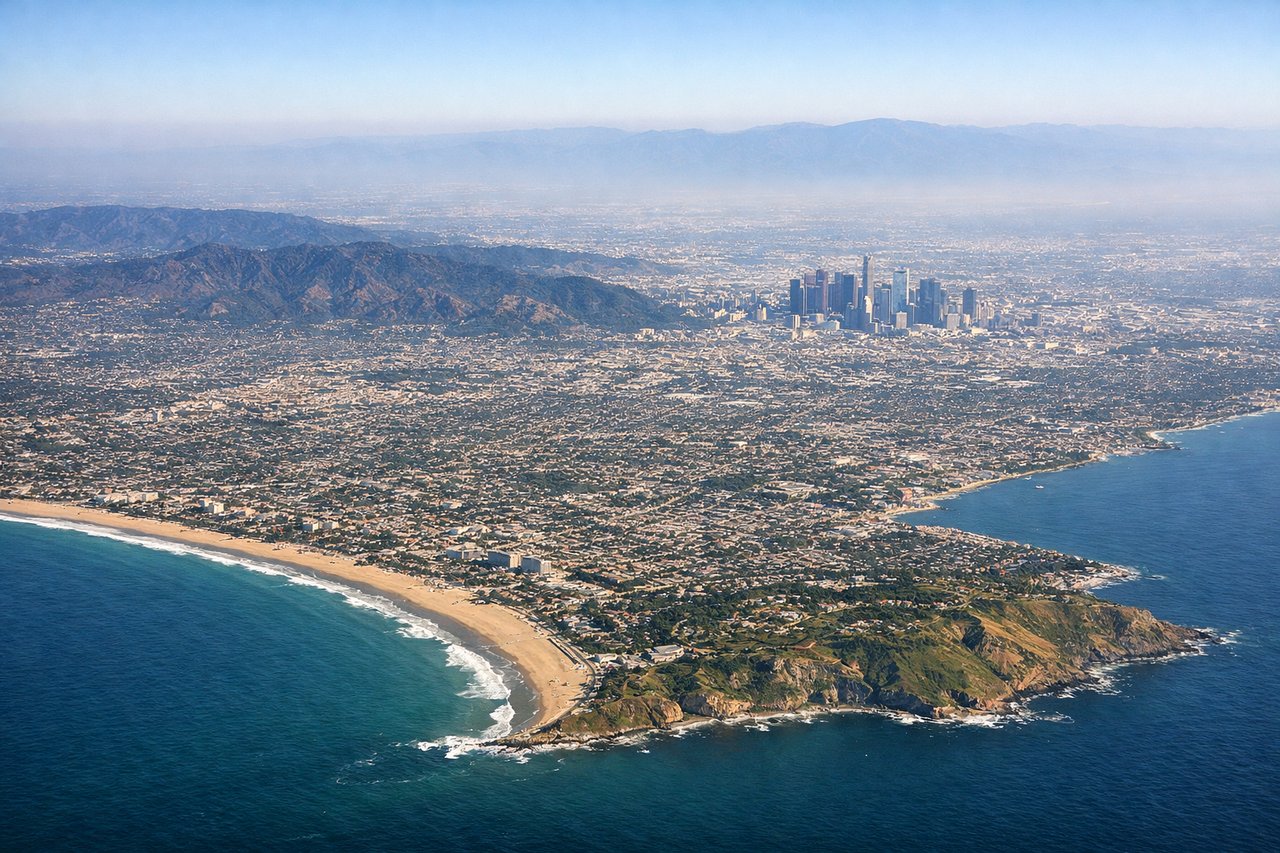
Takeoff from LAX
RIGHTLAX typically departs westward over the ocean on runways 24L/24R, then turns north. A right window seat gives you the sweep back over the LA Basin, the Santa Monica Mountains, and the San Fernando Valley as the aircraft banks northeast. Left seats face the Pacific during the initial climb.
Landing at MIB
LEFTMinot AFB sits just north of Minot, ND, and approaches typically come from the south or southwest. A left window seat on final approach gives a clear view of the Missouri River valley, the Minot city grid, and the rolling prairie coulees that define this part of North Dakota.
Landmarks on this routeAll landmarks →
Will your flight be in sunlight?
Pick a date and time in the Sun Map to watch the sun move across your whole flight.
About This Route
Which side of the plane should I sit on flying from Los Angeles International (LAX) to Minot Afb (MIB)?
Sit on the Right side of the plane for the best views on flights from Los Angeles to Minot. The right side delivers the dramatic LA departure views over the Santa Monica Mountains and San Fernando Valley, and along the cruise portion it tracks the eastern Rockies and Wyoming basin terrain. The landing views on the left are interesting but relatively flat prairie. Right side wins overall for the more visually varied experience.
What can I see during takeoff from Los Angeles International in Los Angeles?
During takeoff from Los Angeles International (LAX), sit on the Right side for the best views. LAX typically departs westward over the ocean on runways 24L/24R, then turns north. A right window seat gives you the sweep back over the LA Basin, the Santa Monica Mountains, and the San Fernando Valley as the aircraft banks northeast. Left seats face the Pacific during the initial climb. Notable sights include: Santa Monica Mountains, San Fernando Valley sprawl, Griffith Observatory area, Burbank/Glendale urban grid.
What can I see when landing at Minot Afb in Minot?
When landing at Minot Afb (MIB), sit on the Left side for the best views. Minot AFB sits just north of Minot, ND, and approaches typically come from the south or southwest. A left window seat on final approach gives a clear view of the Missouri River valley, the Minot city grid, and the rolling prairie coulees that define this part of North Dakota. Notable sights include: Missouri River valley and Lake Sakakawea arm, Minot city grid, Souris River valley, rolling prairie and coulees of the Williston Basin.
How long is the flight from Los Angeles to Minot?
The flight from Los Angeles International (LAX) to Minot Afb (MIB) takes about 3 hours 30 minutes. The shortest flight path between them is 1,330 miles (2,141 km); winds and air traffic control usually add a few percent.
What does the Los Angeles to Minot flight path pass over?
The route crosses the Mojave Desert, then the southern Sierra Nevada foothills, before tracking over the Great Basin of Nevada and into southern Idaho. Over Wyoming, the Bighorn Mountains are visible to the right side. The route then crosses into Montana briefly before descending into North Dakota, with the Missouri River drainage and Lake Sakakawea visible on approach. The terrain transitions from high desert to Rocky Mountain ranges to the vast flat northern Great Plains.