Los Angeles to Oakland is 337 miles (543 km), a flight of about 1 hour 5 minutes.
While the right side wins at takeoff, the left side delivers the more dramatic payoff: the full San Francisco Bay panorama on approach to Oakland, including the Bay Bridge and SF skyline, is one of the most iconic urban aerial views in the US. During the cruise portion heading northwest, the left side also picks up the Central Valley and Coast Ranges.
Flight Path
The flight tracks northwest along the California coast or just inland, passing over the Santa Barbara Channel area, then the Diablo Range and Coast Ranges come into view. The broad flat Central Valley may be visible to the right depending on routing. The Transverse Ranges and the Tehachapi Mountains mark the transition zone roughly a third of the way through the flight.
Great circle distance and headings ›.jpg?width=600)

Phase by phase
Takeoff from LAX
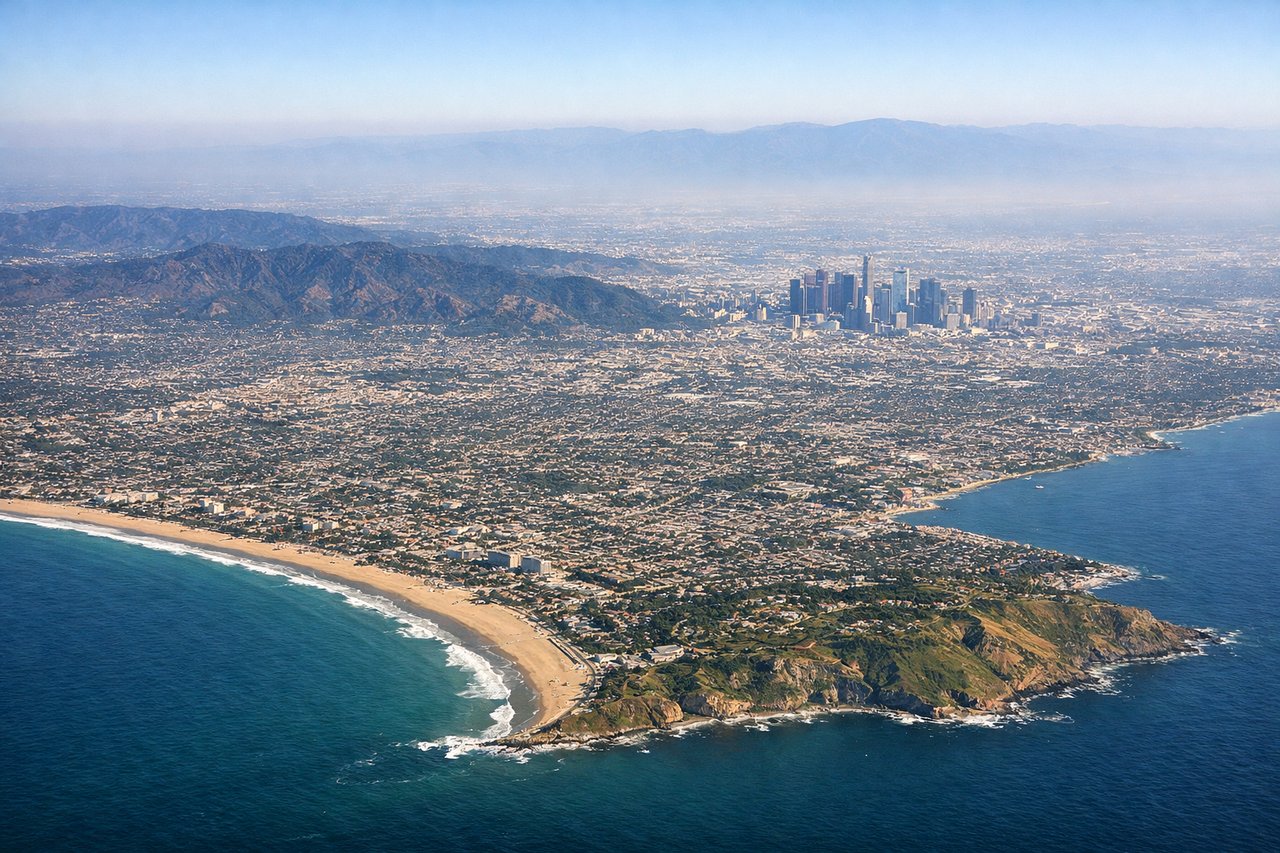
RIGHTLAX typically departs westbound over the ocean before turning north, and right-side seats get the sweeping view back over the LA basin, Santa Monica Bay, and the Santa Monica Mountains as the aircraft banks. Left side faces open Pacific with little to see.
Landing at OAK
LEFTOAK typically lands on runways 28L/28R approaching from the east, meaning the aircraft tracks westward over the East Bay hills before descending over the bay. Left-side seats face south toward the San Francisco Bay, the Bay Bridge, and the San Francisco skyline across the water.
Landmarks on this routeAll landmarks →
Will your flight be in sunlight?
Pick a date and time in the Sun Map to watch the sun move across your whole flight.
About This Route
Which side of the plane should I sit on flying from Los Angeles International (LAX) to Metropolitan Oakland International (OAK)?
Sit on the Left side of the plane for the best views on flights from Los Angeles to Oakland. While the right side wins at takeoff, the left side delivers the more dramatic payoff: the full San Francisco Bay panorama on approach to Oakland, including the Bay Bridge and SF skyline, is one of the most iconic urban aerial views in the US. During the cruise portion heading northwest, the left side also picks up the Central Valley and Coast Ranges.
What can I see during takeoff from Los Angeles International in Los Angeles?
During takeoff from Los Angeles International (LAX), sit on the Right side for the best views. LAX typically departs westbound over the ocean before turning north, and right-side seats get the sweeping view back over the LA basin, Santa Monica Bay, and the Santa Monica Mountains as the aircraft banks. Left side faces open Pacific with little to see. Notable sights include: Santa Monica Bay coastline, Santa Monica Mountains, downtown LA skyline to the northeast, Palos Verdes Peninsula.
What can I see when landing at Metropolitan Oakland International in Oakland?
When landing at Metropolitan Oakland International (OAK), sit on the Left side for the best views. OAK typically lands on runways 28L/28R approaching from the east, meaning the aircraft tracks westward over the East Bay hills before descending over the bay. Left-side seats face south toward the San Francisco Bay, the Bay Bridge, and the San Francisco skyline across the water. Notable sights include: San Francisco Bay, San Francisco skyline and Bay Bridge, Alameda island, San Francisco-Oakland Bay Bridge.
How long is the flight from Los Angeles to Oakland?
The flight from Los Angeles International (LAX) to Metropolitan Oakland International (OAK) takes about 1 hour 5 minutes. The shortest flight path between them is 337 miles (543 km); winds and air traffic control usually add a few percent.
What does the Los Angeles to Oakland flight path pass over?
The flight tracks northwest along the California coast or just inland, passing over the Santa Barbara Channel area, then the Diablo Range and Coast Ranges come into view. The broad flat Central Valley may be visible to the right depending on routing. The Transverse Ranges and the Tehachapi Mountains mark the transition zone roughly a third of the way through the flight.