The right side captures LA's coastal scenery during takeoff and Philadelphia's skyline and river during landing, the two most visually rewarding moments of this transcontinental route, while the left side's main advantage is a distant glimpse of the Rockies and Grand Canyon region during the otherwise flat cruise over the Plains.
Flight Path
Mojave Desert, southern Rocky Mountain foothills near the Colorado-New Mexico border, Great Plains farmland across Kansas and Missouri, and the Appalachian ridgelines of western Pennsylvania before descent into Philadelphia
Great circle distance and headings ›.jpg?width=600)
.jpeg?width=600)
.jpg?width=600)

.jpg?width=600)
.jpg?width=600)
.jpeg?width=600)
Phase by phase
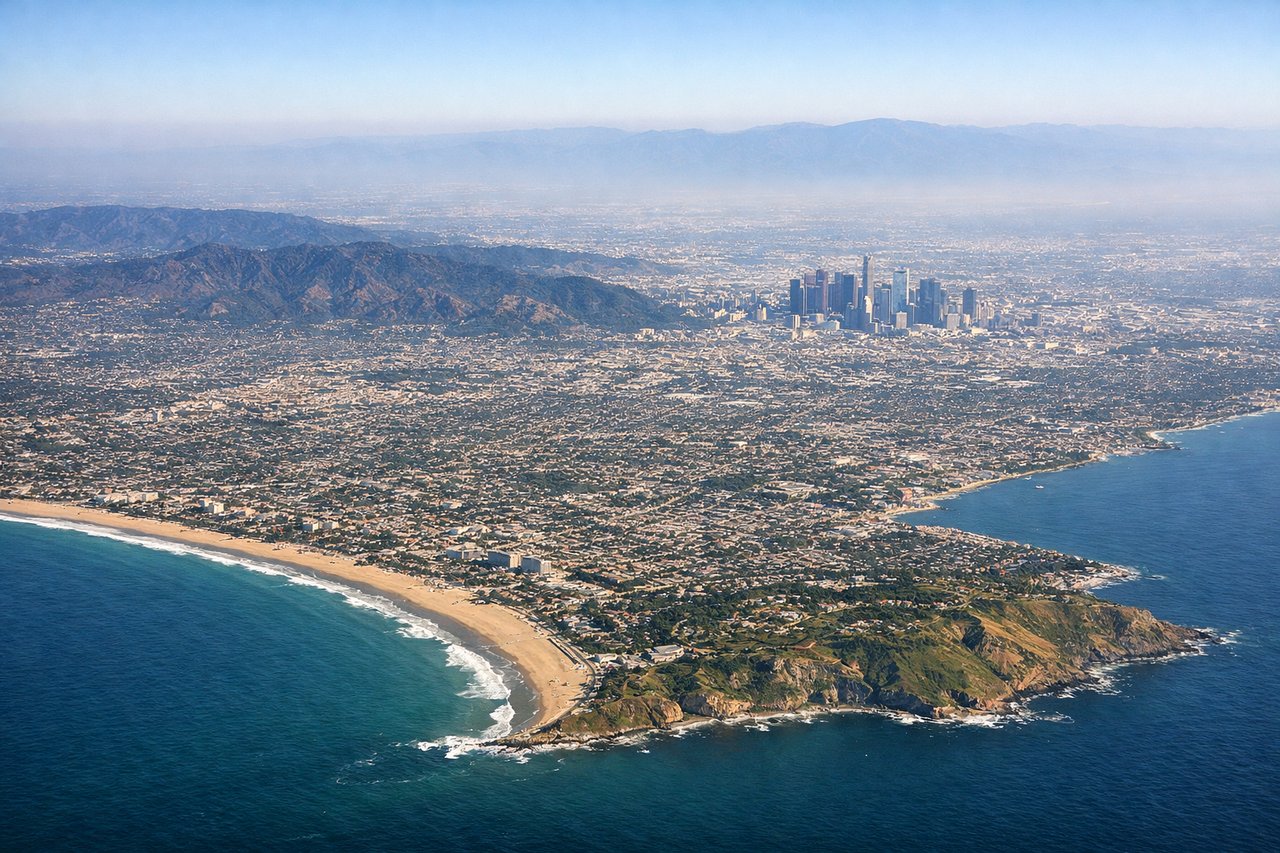
Takeoff from LAX
RIGHTLAX's west-flow departure sends eastbound flights out over the ocean before turning south and then east across the LA basin, putting the Palos Verdes Peninsula, Santa Monica Bay, and the Port of Long Beach on the right side of the aircraft during the climb. The left side mostly shows the flatter San Fernando Valley and distant San Gabriel foothills.
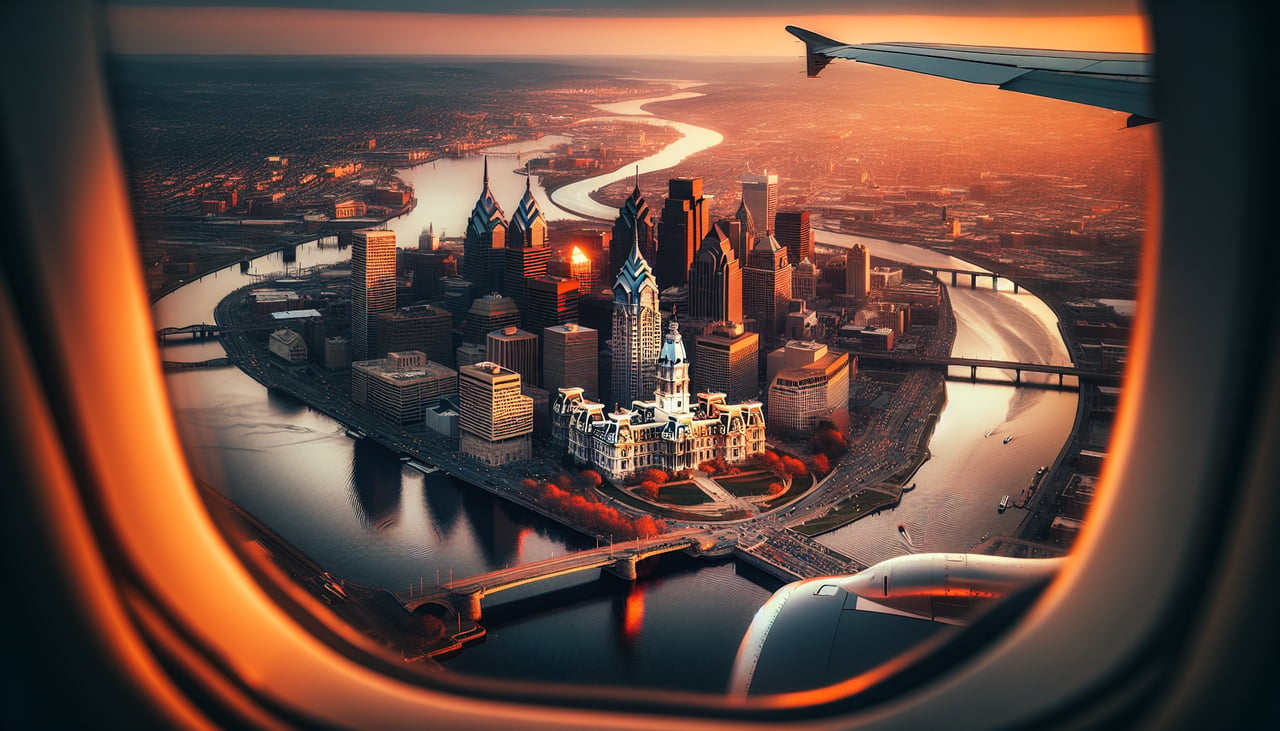
Landing at PHL
RIGHTPHL's westward landing approach brings arriving flights in from the east over New Jersey and the Delaware River, and on final approach north sits to the right, giving those passengers a clear view of Center City Philadelphia's skyline and the river bridges just before touchdown. The left side instead faces south toward flatter suburban New Jersey and Delaware County with fewer landmarks.
Landmarks on this routeAll landmarks →
Will your flight be in sunlight?
See exactly which side of the plane gets sun and shade at your departure time.
About This Route
Which side of the plane should I sit on flying from Los Angeles International (LAX) to Philadelphia International (PHL)?
Sit on the Right side of the plane for the best views on flights from Los Angeles to Philadelphia. The right side captures LA's coastal scenery during takeoff and Philadelphia's skyline and river during landing, the two most visually rewarding moments of this transcontinental route, while the left side's main advantage is a distant glimpse of the Rockies and Grand Canyon region during the otherwise flat cruise over the Plains.
What can I see during takeoff from Los Angeles International in Los Angeles?
During takeoff from Los Angeles International (LAX), sit on the Right side for the best views. LAX's west-flow departure sends eastbound flights out over the ocean before turning south and then east across the LA basin, putting the Palos Verdes Peninsula, Santa Monica Bay, and the Port of Long Beach on the right side of the aircraft during the climb. The left side mostly shows the flatter San Fernando Valley and distant San Gabriel foothills. Notable sights include: Palos Verdes Peninsula, Santa Monica Bay coastline, Port of Long Beach, South Bay shoreline.
What can I see when landing at Philadelphia International in Philadelphia?
When landing at Philadelphia International (PHL), sit on the Right side for the best views. PHL's westward landing approach brings arriving flights in from the east over New Jersey and the Delaware River, and on final approach north sits to the right, giving those passengers a clear view of Center City Philadelphia's skyline and the river bridges just before touchdown. The left side instead faces south toward flatter suburban New Jersey and Delaware County with fewer landmarks. Notable sights include: Delaware River, Philadelphia Center City skyline, Benjamin Franklin Bridge, Camden waterfront.
How long is the flight from Los Angeles to Philadelphia?
The flight from Los Angeles International (LAX) to Philadelphia International (PHL) takes 4h 55m.
What does the Los Angeles to Philadelphia flight path pass over?
Mojave Desert, southern Rocky Mountain foothills near the Colorado-New Mexico border, Great Plains farmland across Kansas and Missouri, and the Appalachian ridgelines of western Pennsylvania before descent into Philadelphia