The right side wins across the whole flight: it captures the San Gabriel Mountains and LA basin during the climb-out turn, then the Wasatch Range up close during the descent into Salt Lake City, giving the most consistent mountain and terrain drama of the trip.
Flight Path
Mojave Desert and the Mojave National Preserve's basin-and-range terrain, followed by southern Nevada's arid highlands and the Great Basin's scattered mountain ranges before descending into the Wasatch Front near Salt Lake City.
Great circle distance and headings ›.jpg?width=600)


Phase by phase
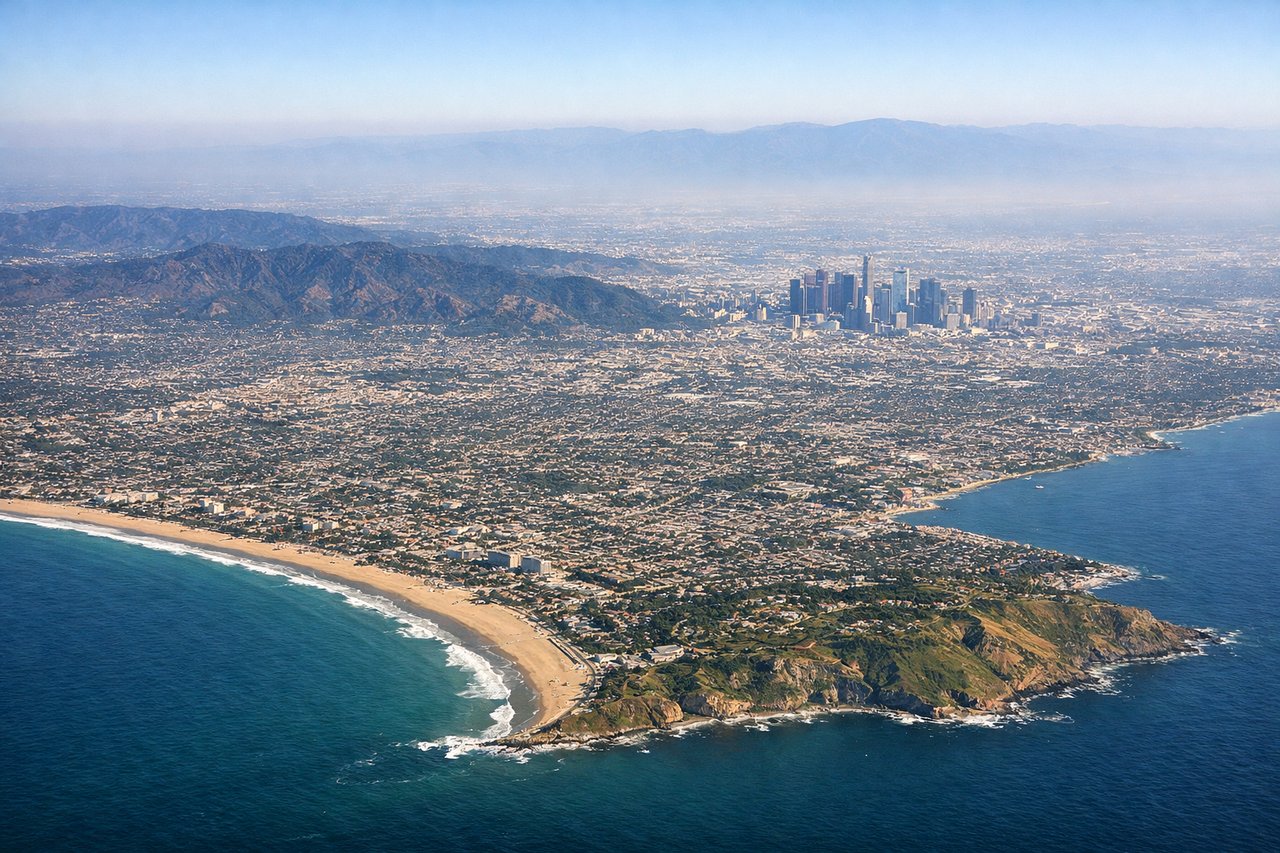
Takeoff from LAX
RIGHTLAX's typical west-flow departure sends the aircraft out over Santa Monica Bay before banking right toward the northeast for Utah. During that turn, right-side passengers get a sweeping view of the San Fernando Valley and the San Gabriel Mountains rising sharply behind Los Angeles, while the left side only briefly catches the ocean before it falls away.
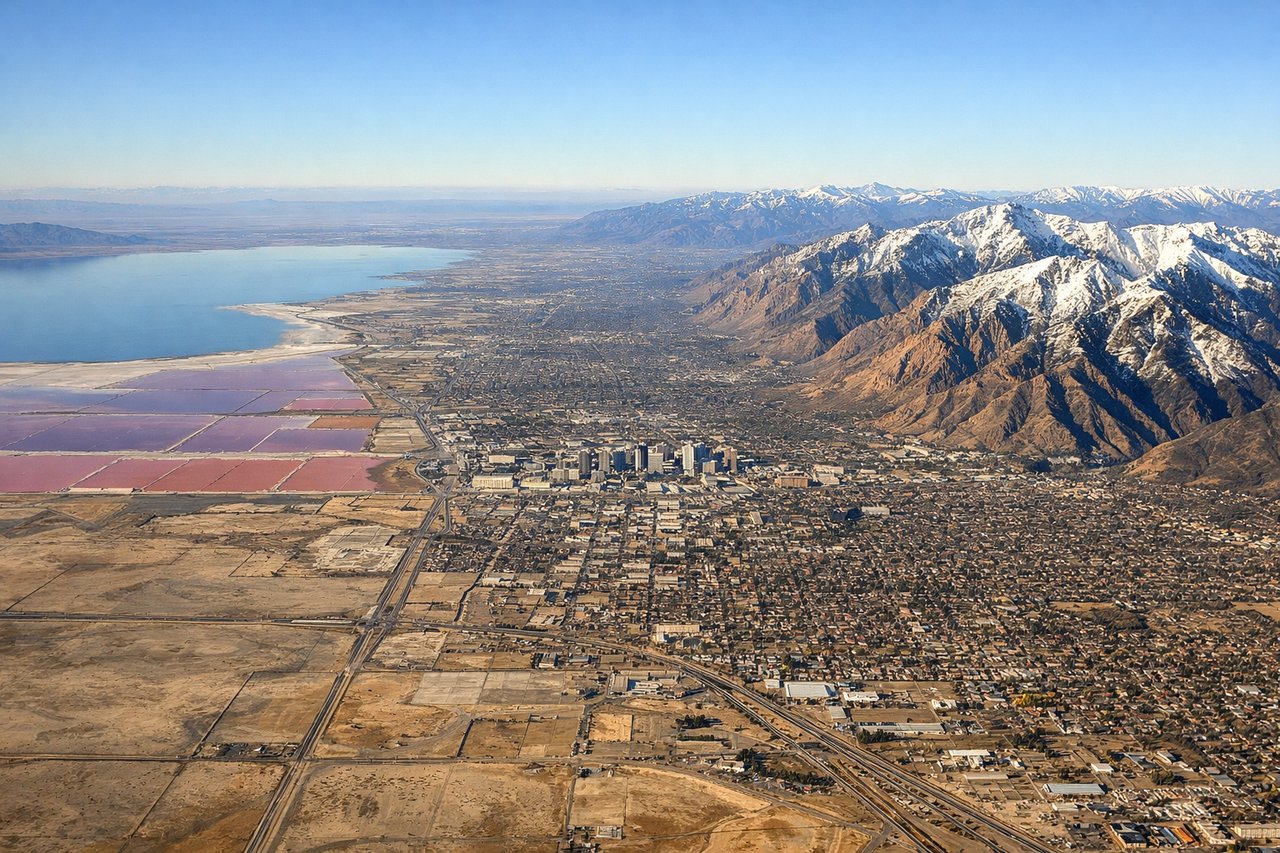
Landing at SLC
RIGHTOn approach into Salt Lake City, the north-south runway alignment means the final descent tracks close alongside the Wasatch Range, which rises dramatically along the east side of the valley. Passengers on the right see steep, often snow-dusted peaks just beyond the wingtip, while the left side faces the flatter valley floor and distant lake.
Landmarks on this routeAll landmarks →
Will your flight be in sunlight?
See exactly which side of the plane gets sun and shade at your departure time.
About This Route
Which side of the plane should I sit on flying from Los Angeles International (LAX) to Salt Lake City International (SLC)?
Sit on the Right side of the plane for the best views on flights from Los Angeles to Salt Lake City. The right side wins across the whole flight: it captures the San Gabriel Mountains and LA basin during the climb-out turn, then the Wasatch Range up close during the descent into Salt Lake City, giving the most consistent mountain and terrain drama of the trip.
What can I see during takeoff from Los Angeles International in Los Angeles?
During takeoff from Los Angeles International (LAX), sit on the Right side for the best views. LAX's typical west-flow departure sends the aircraft out over Santa Monica Bay before banking right toward the northeast for Utah. During that turn, right-side passengers get a sweeping view of the San Fernando Valley and the San Gabriel Mountains rising sharply behind Los Angeles, while the left side only briefly catches the ocean before it falls away. Notable sights include: San Gabriel Mountains, San Fernando Valley, downtown Los Angeles skyline, Santa Monica Bay (fading left).
What can I see when landing at Salt Lake City International in Salt Lake City?
When landing at Salt Lake City International (SLC), sit on the Right side for the best views. On approach into Salt Lake City, the north-south runway alignment means the final descent tracks close alongside the Wasatch Range, which rises dramatically along the east side of the valley. Passengers on the right see steep, often snow-dusted peaks just beyond the wingtip, while the left side faces the flatter valley floor and distant lake. Notable sights include: Wasatch Range, Salt Lake Valley floor, Great Salt Lake (distant), Salt Lake City street grid.
How long is the flight from Los Angeles to Salt Lake City?
The flight from Los Angeles International (LAX) to Salt Lake City International (SLC) takes 1h 55m.
What does the Los Angeles to Salt Lake City flight path pass over?
Mojave Desert and the Mojave National Preserve's basin-and-range terrain, followed by southern Nevada's arid highlands and the Great Basin's scattered mountain ranges before descending into the Wasatch Front near Salt Lake City.