Los Angeles to Tucson is 451 miles (725 km), a flight of about 1 hour 10 minutes.
While the right side wins at takeoff, the left side delivers the better overall experience. Once airborne and heading east, the left side tracks the San Gabriel and San Bernardino Mountains near LA, then has unobstructed views of the Mojave Desert transition, and crucially delivers the spectacular arrival view of the Santa Catalina Mountains towering over Tucson on approach.
Flight Path
The route crosses the eastern Mojave Desert with the Chocolate Mountains visible, then transitions into the lower Colorado River valley near Yuma, followed by the broad Sonoran Desert basin with scattered desert mountain ranges including the Kofa Mountains and Growler Mountains visible as isolated dark ridgelines rising from the flat desert floor before the approach into Tucson
Great circle distance and headings ›.jpg?width=600)

Phase by phase
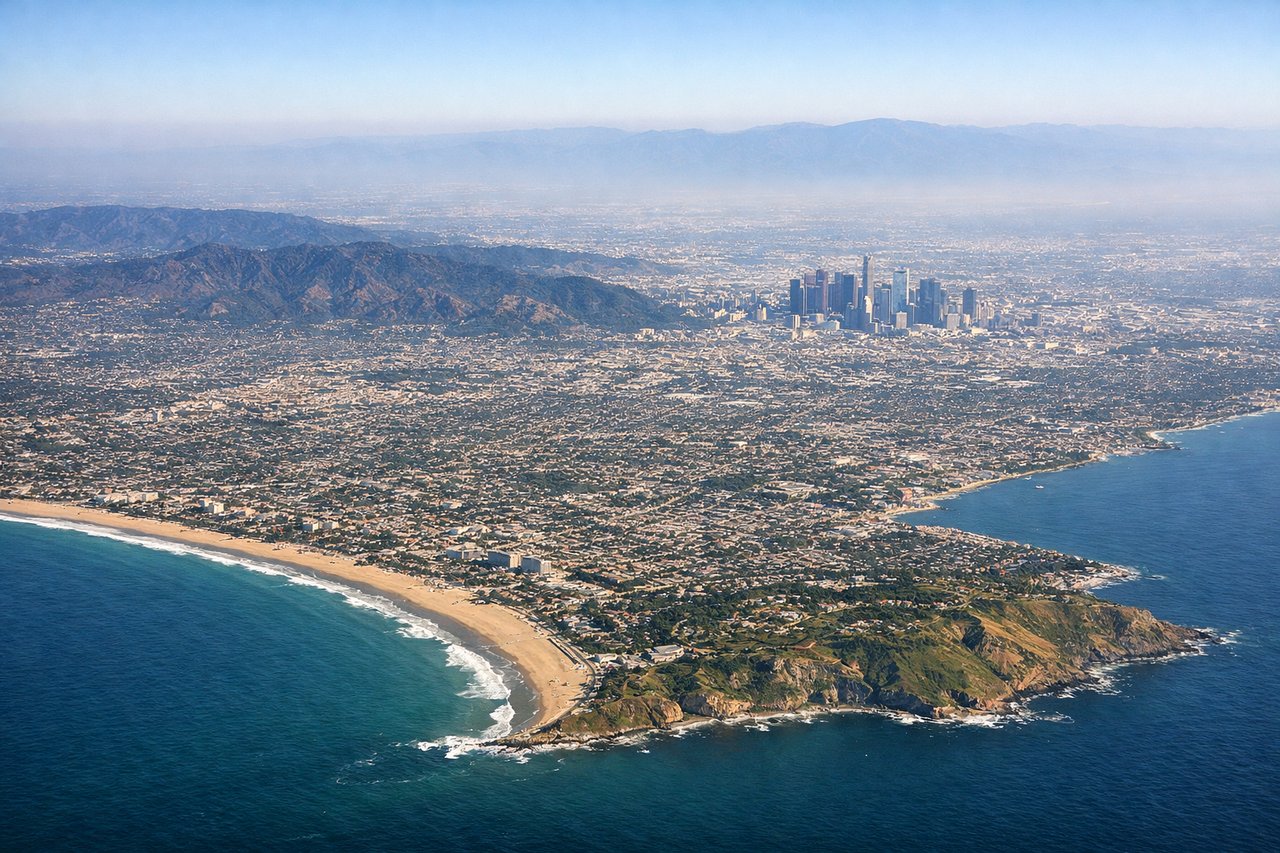
Takeoff from LAX
RIGHTLAX typically departs westward over the ocean on runways 24L/24R, then turns east. Right side passengers get the sweeping view back over the LA basin, Santa Monica Bay, and the Santa Monica Mountains as the aircraft banks. Left side faces the open Pacific during initial climb.
Landing at TUS
LEFTTUS typically lands on runway 11L/11R heading southeast, or runway 29 heading northwest. On the common southeast approach, the left side looks northeast toward the Santa Catalina Mountains and Mount Lemmon rising dramatically above Tucson, which is the defining visual feature of arriving at Tucson. Right side faces the flatter Sonoran Desert to the south.
Landmarks on this routeAll landmarks →
Will your flight be in sunlight?
Pick a date and time in the Sun Map to watch the sun move across your whole flight.
About This Route
Which side of the plane should I sit on flying from Los Angeles International (LAX) to Tucson International (TUS)?
Sit on the Left side of the plane for the best views on flights from Los Angeles to Tucson. While the right side wins at takeoff, the left side delivers the better overall experience. Once airborne and heading east, the left side tracks the San Gabriel and San Bernardino Mountains near LA, then has unobstructed views of the Mojave Desert transition, and crucially delivers the spectacular arrival view of the Santa Catalina Mountains towering over Tucson on approach.
What can I see during takeoff from Los Angeles International in Los Angeles?
During takeoff from Los Angeles International (LAX), sit on the Right side for the best views. LAX typically departs westward over the ocean on runways 24L/24R, then turns east. Right side passengers get the sweeping view back over the LA basin, Santa Monica Bay, and the Santa Monica Mountains as the aircraft banks. Left side faces the open Pacific during initial climb. Notable sights include: Santa Monica Bay coastline, Santa Monica Mountains, Downtown LA skyline to the northeast, Palos Verdes Peninsula.
What can I see when landing at Tucson International in Tucson?
When landing at Tucson International (TUS), sit on the Left side for the best views. TUS typically lands on runway 11L/11R heading southeast, or runway 29 heading northwest. On the common southeast approach, the left side looks northeast toward the Santa Catalina Mountains and Mount Lemmon rising dramatically above Tucson, which is the defining visual feature of arriving at Tucson. Right side faces the flatter Sonoran Desert to the south. Notable sights include: Santa Catalina Mountains and Mount Lemmon (9,157 ft), Rincon Mountains to the east, Tucson urban grid in the basin, Saguaro National Park desert terrain.
How long is the flight from Los Angeles to Tucson?
The flight from Los Angeles International (LAX) to Tucson International (TUS) takes about 1 hour 10 minutes. The shortest flight path between them is 451 miles (725 km); winds and air traffic control usually add a few percent.
What does the Los Angeles to Tucson flight path pass over?
The route crosses the eastern Mojave Desert with the Chocolate Mountains visible, then transitions into the lower Colorado River valley near Yuma, followed by the broad Sonoran Desert basin with scattered desert mountain ranges including the Kofa Mountains and Growler Mountains visible as isolated dark ridgelines rising from the flat desert floor before the approach into Tucson