While takeoff offers decent Paris views on the right, the landing approach into La Guardia from the left side provides more dramatic and sustained scenery—the Hudson River, Manhattan skyline, and East River are iconic and visually striking during descent.
Flown LBG to LGA? Did we get it right?
Flight Path
Paris to New York is 3,620 miles (5,825 km), a flight of about 7 hours 15 minutes.
The flight crosses the Atlantic Ocean for roughly 5 hours. Notable geographic features along the route include the English Channel and southern England (visible during the first 30 minutes), the Irish Sea and Irish coastline (1 hour into flight), then open Atlantic. On approach to North America, Newfoundland and the Canadian Maritime provinces appear on the horizon before the aircraft turns south toward New York. The entire mid-ocean crossing offers only water and occasional cloud formations—no significant landmarks visible at cruise altitude.
Great circle distance and headings ›

Phase by phase
Takeoff from LBG
RIGHTRight-side seats offer views of Paris and the Seine valley during the initial climb-out northeastward from Le Bourget. You'll see the city sprawl and surrounding Île-de-France countryside receding beneath you.
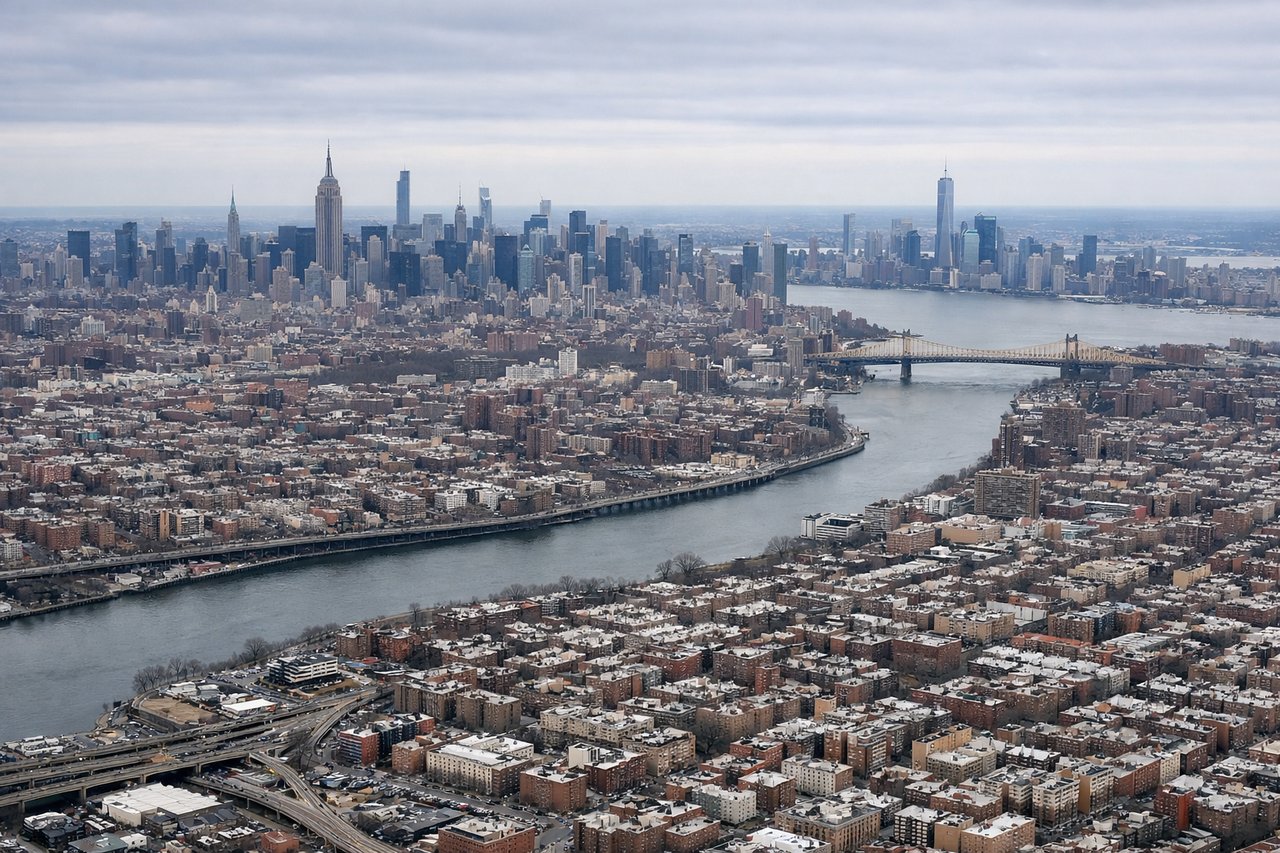
Landing at LGA
LEFTLeft-side seats provide excellent views during the descent into La Guardia, particularly of the Hudson River, Manhattan's skyline, and the East River as the aircraft approaches from the northeast over the Atlantic.
Will your flight be in sunlight?
Pick a date and time in the Sun Map to watch the sun move across your whole flight.
About This Route
Which side of the plane should I sit on flying from Le Bourget (LBG) to La Guardia (LGA)?
Sit on the Left side of the plane for the best views on flights from Paris to New York. While takeoff offers decent Paris views on the right, the landing approach into La Guardia from the left side provides more dramatic and sustained scenery—the Hudson River, Manhattan skyline, and East River are iconic and visually striking during descent.
What can I see during takeoff from Le Bourget in Paris?
During takeoff from Le Bourget (LBG), sit on the Right side for the best views. Right-side seats offer views of Paris and the Seine valley during the initial climb-out northeastward from Le Bourget. You'll see the city sprawl and surrounding Île-de-France countryside receding beneath you. Notable sights include: Paris city center and the Seine River, Île-de-France agricultural plains, Le Bourget airfield itself during initial climb.
What can I see when landing at La Guardia in New York?
When landing at La Guardia (LGA), sit on the Left side for the best views. Left-side seats provide excellent views during the descent into La Guardia, particularly of the Hudson River, Manhattan's skyline, and the East River as the aircraft approaches from the northeast over the Atlantic. Notable sights include: Hudson River and Manhattan skyline, East River, Long Island Sound, Queens and Brooklyn neighborhoods.
How long is the flight from Paris to New York?
The flight from Le Bourget (LBG) to La Guardia (LGA) takes about 7 hours 15 minutes. The shortest flight path between them is 3,620 miles (5,825 km); winds and air traffic control usually add a few percent.
What does the Paris to New York flight path pass over?
The flight crosses the Atlantic Ocean for roughly 5 hours. Notable geographic features along the route include the English Channel and southern England (visible during the first 30 minutes), the Irish Sea and Irish coastline (1 hour into flight), then open Atlantic. On approach to North America, Newfoundland and the Canadian Maritime provinces appear on the horizon before the aircraft turns south toward New York. The entire mid-ocean crossing offers only water and occasional cloud formations—no significant landmarks visible at cruise altitude.