While the left side dominates the Cyprus departure with Mediterranean and mountain scenery, the right side captures the most visually dramatic segment—the approach to New York with the Hudson River, Manhattan skyline, and New York Harbor. The landing views are more iconic and detailed than the takeoff scenery.
Flight Path
The flight path crosses the Mediterranean Sea for roughly 6 hours, passing over open water with no major landmarks. The aircraft then crosses southern Europe (typically over Greece, southern Italy, or the Balkans depending on routing), followed by the Atlantic Ocean for the final 4-5 hours. The Apennine Mountains in Italy and the Alps may be visible if the northern routing is used, but most of the transatlantic leg offers only open ocean. The approach to North America brings views of the Atlantic coast, New England, and eventually the New York metropolitan area.
Great circle distance and headings ›


.jpg?width=600)
Phase by phase
Takeoff from LCA
LEFTLeft side offers immediate views of Cyprus's southern coastline and the Mediterranean Sea. The aircraft climbs northwestward from Larnaca, so the left wing captures the Larnaca Bay shoreline, salt lakes, and the dramatic transition from coastal plains to the Troodos Mountains inland.
Landing at JFK
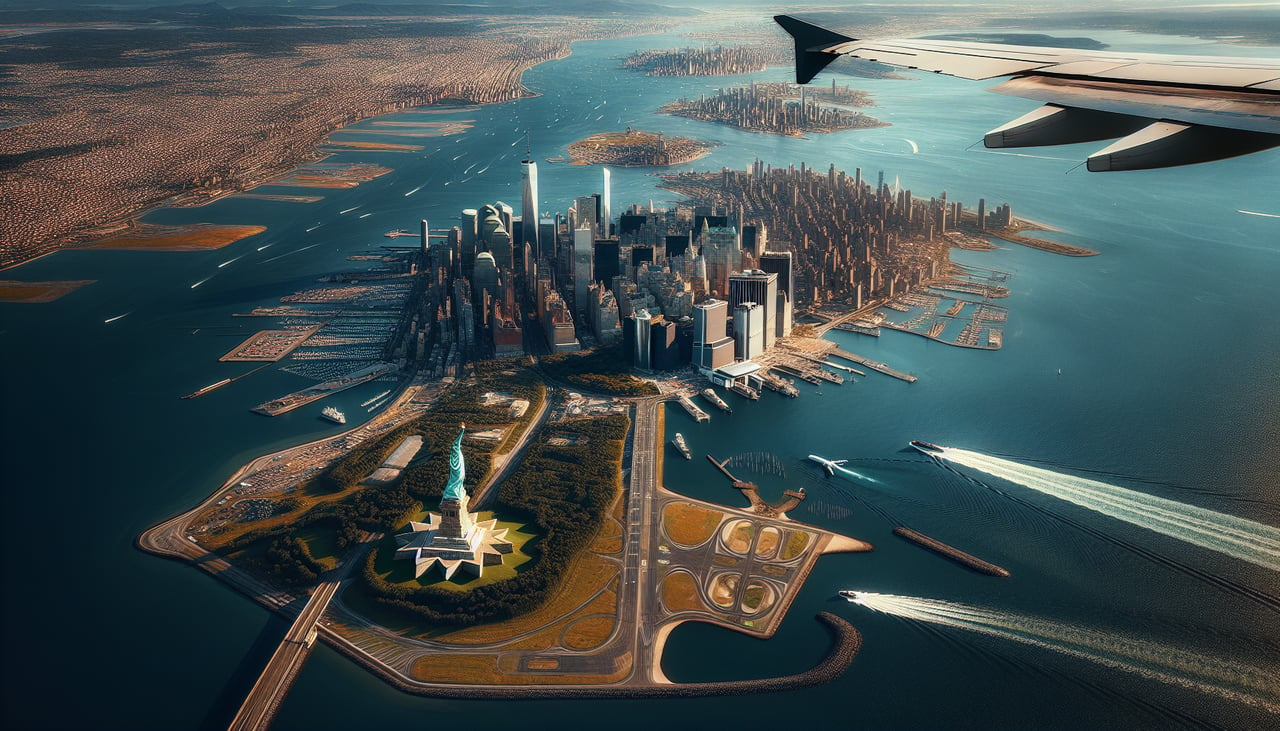
RIGHTRight side provides the best views during approach to JFK. Aircraft descend from the northwest over New Jersey, and the right wing captures the Hudson River, Manhattan's skyline, and the distinctive geography of New York Harbor including the East River and Jamaica Bay.
Landmarks on this routeAll landmarks →
Will your flight be in sunlight?
See exactly which side of the plane gets sun and shade at your departure time.
About This Route
Which side of the plane should I sit on flying from Larnaca (LCA) to John F Kennedy International (JFK)?
Sit on the Right side of the plane for the best views on flights from Larnaca to New York. While the left side dominates the Cyprus departure with Mediterranean and mountain scenery, the right side captures the most visually dramatic segment—the approach to New York with the Hudson River, Manhattan skyline, and New York Harbor. The landing views are more iconic and detailed than the takeoff scenery.
What can I see during takeoff from Larnaca in Larnaca?
During takeoff from Larnaca (LCA), sit on the Left side for the best views. Left side offers immediate views of Cyprus's southern coastline and the Mediterranean Sea. The aircraft climbs northwestward from Larnaca, so the left wing captures the Larnaca Bay shoreline, salt lakes, and the dramatic transition from coastal plains to the Troodos Mountains inland. Notable sights include: Larnaca Bay and harbor, Mediterranean Sea coastline, Larnaca Salt Lake (visible as white/pink mineral deposits), Troodos Mountains rising inland to the northwest.
What can I see when landing at John F Kennedy International in New York?
When landing at John F Kennedy International (JFK), sit on the Right side for the best views. Right side provides the best views during approach to JFK. Aircraft descend from the northwest over New Jersey, and the right wing captures the Hudson River, Manhattan's skyline, and the distinctive geography of New York Harbor including the East River and Jamaica Bay. Notable sights include: Hudson River and New Jersey Palisades, Manhattan skyline and East River, Jamaica Bay and barrier islands, Long Island Sound in the distance.
How long is the flight from Larnaca to New York?
The flight from Larnaca (LCA) to John F Kennedy International (JFK) takes Approximately 10.5 to 11.5 hours.
What does the Larnaca to New York flight path pass over?
The flight path crosses the Mediterranean Sea for roughly 6 hours, passing over open water with no major landmarks. The aircraft then crosses southern Europe (typically over Greece, southern Italy, or the Balkans depending on routing), followed by the Atlantic Ocean for the final 4-5 hours. The Apennine Mountains in Italy and the Alps may be visible if the northern routing is used, but most of the transatlantic leg offers only open ocean. The approach to North America brings views of the Atlantic coast, New England, and eventually the New York metropolitan area.