Left side scores higher due to the scenic London departure over the Thames estuary and southeast England's coastline, combined with the full cruise across the Mediterranean and continental Europe. Although the landing at Amman favors the right side, the takeoff advantage and the visual variety of the outbound journey (English Channel, French coast, Alps in distance, Mediterranean crossing) outweigh the landing-only benefit of the right side.
Flight Path
English Channel and Dover Strait, northern France coastline, Paris basin (visible as urban haze), Burgundy plateau, Rhône valley, Alps (southern edge, visible as distant peaks), Mediterranean coast near Provence, Balearic Islands (optional depending on routing), Mediterranean open water, Italian coast (possible), Adriatic Sea (possible depending on routing), Greek islands (possible), southern Turkey coast, Cyprus (possible), Levantine coast approaching Syria-Lebanon, Anti-Lebanon mountains, Dead Sea rift valley
Great circle distance and headings ›.jpeg?width=600)


Phase by phase
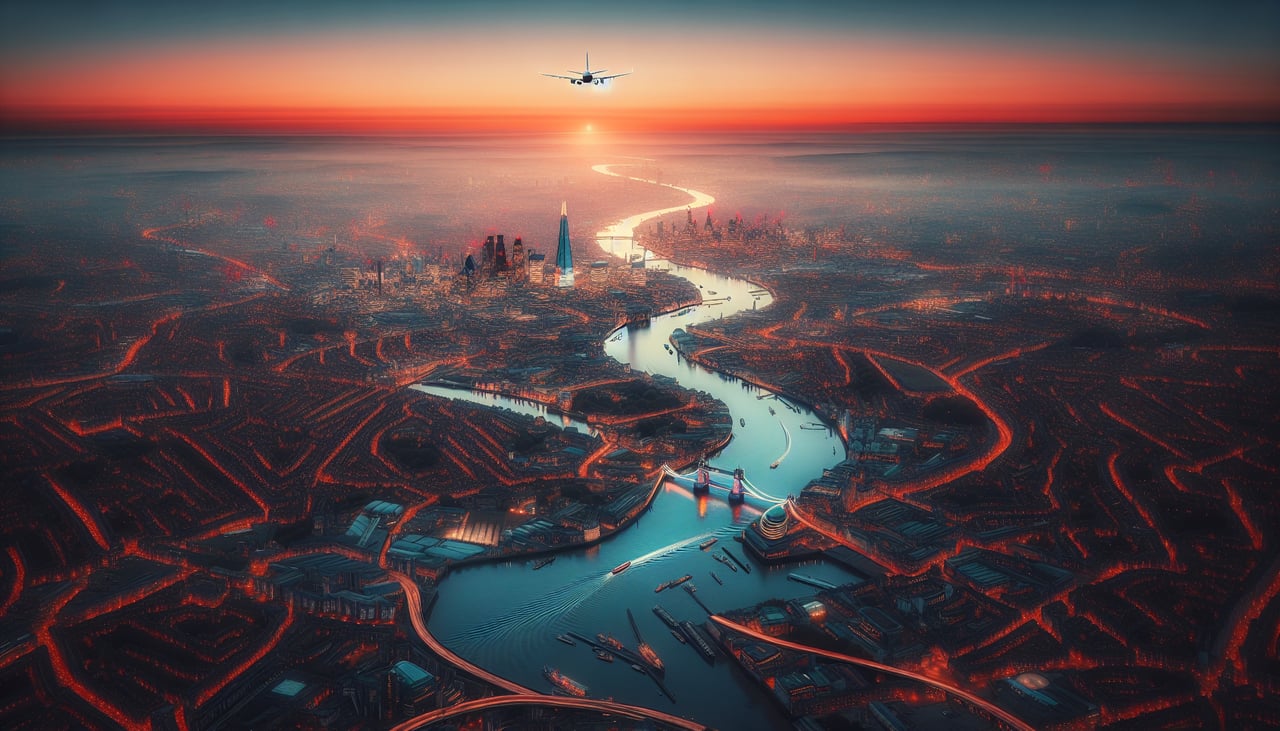
Takeoff from LCY
LEFTLeft side captures the Thames estuary, London's urban sprawl, and the Kent coastline during climb-out. Right side faces inland toward the Midlands with minimal dramatic terrain.
Landing at AMM
RIGHTRight side offers the dramatic approach to Amman over the Jordanian highlands and the Dead Sea rift valley. The terrain transitions from Mediterranean scrubland to arid mountains with visible settlement patterns. Left side faces the Syrian plateau—flatter and less visually distinctive.
Landmarks on this routeAll landmarks →
Will your flight be in sunlight?
See exactly which side of the plane gets sun and shade at your departure time.
About This Route
Which side of the plane should I sit on flying from City (LCY) to Queen Alia International (AMM)?
Sit on the Left side of the plane for the best views on flights from London to Amman. Left side scores higher due to the scenic London departure over the Thames estuary and southeast England's coastline, combined with the full cruise across the Mediterranean and continental Europe. Although the landing at Amman favors the right side, the takeoff advantage and the visual variety of the outbound journey (English Channel, French coast, Alps in distance, Mediterranean crossing) outweigh the landing-only benefit of the right side.
What can I see during takeoff from City in London?
During takeoff from City (LCY), sit on the Left side for the best views. Left side captures the Thames estuary, London's urban sprawl, and the Kent coastline during climb-out. Right side faces inland toward the Midlands with minimal dramatic terrain. Notable sights include: Thames estuary and docks, London city skyline receding, Kent coastline and white cliffs (distant), North Sea horizon.
What can I see when landing at Queen Alia International in Amman?
When landing at Queen Alia International (AMM), sit on the Right side for the best views. Right side offers the dramatic approach to Amman over the Jordanian highlands and the Dead Sea rift valley. The terrain transitions from Mediterranean scrubland to arid mountains with visible settlement patterns. Left side faces the Syrian plateau—flatter and less visually distinctive. Notable sights include: Dead Sea (lowest point on Earth, visible as a narrow blue-grey strip), Jordanian highlands and escarpment, Amman's urban sprawl on hillsides, Zarqa valley.
How long is the flight from London to Amman?
The flight from City (LCY) to Queen Alia International (AMM) takes 4h 50m.
What does the London to Amman flight path pass over?
English Channel and Dover Strait, northern France coastline, Paris basin (visible as urban haze), Burgundy plateau, Rhône valley, Alps (southern edge, visible as distant peaks), Mediterranean coast near Provence, Balearic Islands (optional depending on routing), Mediterranean open water, Italian coast (possible), Adriatic Sea (possible depending on routing), Greek islands (possible), southern Turkey coast, Cyprus (possible), Levantine coast approaching Syria-Lebanon, Anti-Lebanon mountains, Dead Sea rift valley