London departure over the Thames and Docklands (3.5 points for urban drama and river scenery) outweighs Denver's mountain approach (2.5 points for landing views). The Thames departure is consistently scenic and iconic; Denver's approach is dramatic but brief and dependent on wind direction. The westbound transatlantic crossing itself offers minimal scenic value—6+ hours of open Atlantic Ocean scores no higher than 2.0 per constraints. Left side captures the most distinctive and recognizable landmarks at both ends of the journey.
Flight Path
Transatlantic crossing over open Atlantic Ocean (minimal scenic value); Newfoundland coast on approach to North America; Canadian Shield and boreal forest in eastern Canada; Great Lakes region (if visible during descent); transition from flat Midwest plains to the rising terrain of the Great Plains as the aircraft approaches Colorado; the Continental Divide becomes visible approximately 100 miles west of Denver
Great circle distance and headings ›.jpeg?width=600)

.jpg?width=600)
Phase by phase
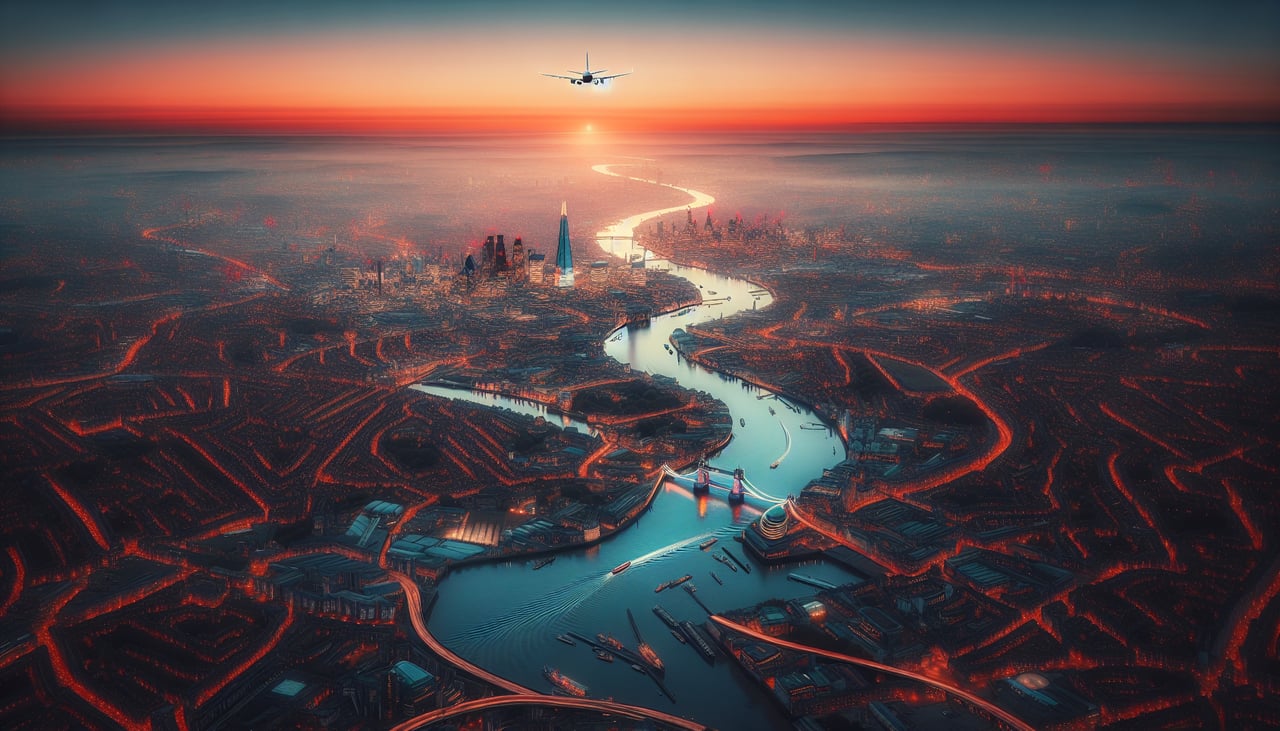
Takeoff from LCY
LEFTWesterly runway 27 departures (most common) climb over the Thames, Docklands, and East London urban sprawl. The left side captures the river's meandering path through central London and the contrast between historic city and modern development. Right side sees only inland suburbs and flat Essex countryside.
Landing at BJC
RIGHTApproach to Denver typically uses runways 12 or 30 depending on wind. Descents from the northeast or southeast reveal the Front Range of the Rocky Mountains in dramatic relief—the Sawatch Range and Sangre de Cristo Range dominate the western horizon. Right-side passengers see these peaks clearly during the final approach. Left side sees the high plains extending eastward with minimal terrain variation.
Landmarks on this routeAll landmarks →
Will your flight be in sunlight?
See exactly which side of the plane gets sun and shade at your departure time.
About This Route
Which side of the plane should I sit on flying from City (LCY) to Rocky Mountain Metropolitan Airport (BJC)?
Sit on the Left side of the plane for the best views on flights from London to Denver. London departure over the Thames and Docklands (3.5 points for urban drama and river scenery) outweighs Denver's mountain approach (2.5 points for landing views). The Thames departure is consistently scenic and iconic; Denver's approach is dramatic but brief and dependent on wind direction. The westbound transatlantic crossing itself offers minimal scenic value—6+ hours of open Atlantic Ocean scores no higher than 2.0 per constraints. Left side captures the most distinctive and recognizable landmarks at both ends of the journey.
What can I see during takeoff from City in London?
During takeoff from City (LCY), sit on the Left side for the best views. Westerly runway 27 departures (most common) climb over the Thames, Docklands, and East London urban sprawl. The left side captures the river's meandering path through central London and the contrast between historic city and modern development. Right side sees only inland suburbs and flat Essex countryside. Notable sights include: River Thames with its distinctive bends through London, Canary Wharf and Docklands skyline, Greenwich Peninsula, North Sea horizon in distance.
What can I see when landing at Rocky Mountain Metropolitan Airport in Denver?
When landing at Rocky Mountain Metropolitan Airport (BJC), sit on the Right side for the best views. Approach to Denver typically uses runways 12 or 30 depending on wind. Descents from the northeast or southeast reveal the Front Range of the Rocky Mountains in dramatic relief—the Sawatch Range and Sangre de Cristo Range dominate the western horizon. Right-side passengers see these peaks clearly during the final approach. Left side sees the high plains extending eastward with minimal terrain variation. Notable sights include: Front Range peaks (Mount Evans, Mount Bierstadt visible on clear days), South Platte River valley, Denver metropolitan area sprawl, high plains extending eastward.
How long is the flight from London to Denver?
The flight from City (LCY) to Rocky Mountain Metropolitan Airport (BJC) takes 7h 15m.
What does the London to Denver flight path pass over?
Transatlantic crossing over open Atlantic Ocean (minimal scenic value); Newfoundland coast on approach to North America; Canadian Shield and boreal forest in eastern Canada; Great Lakes region (if visible during descent); transition from flat Midwest plains to the rising terrain of the Great Plains as the aircraft approaches Colorado; the Continental Divide becomes visible approximately 100 miles west of Denver