Right side scores higher (3.0 vs 2.5) due to superior landing scenery: the Blue Ridge Mountains provide genuine terrain drama and visual interest during the critical descent and approach phase, while the Piedmont's rolling landscape offers more variety than the flat Atlantic crossing. Takeoff favors left (London's Thames and Docklands), but the landing advantage on the right outweighs this over the full 7-hour flight.
Flown LCY to CLT? Did we get it right?
Flight Path
London to Charlotte is 4,003 miles (6,442 km), a flight of about 7 hours 5 minutes.
Atlantic Ocean (5+ hours of open water with minimal landmarks), occasional glimpses of Newfoundland's eastern coast if routed north, the continental shelf transition, and the Appalachian Mountains appearing on the horizon during final descent into North Carolina
Great circle distance and headings ›Phase by phase
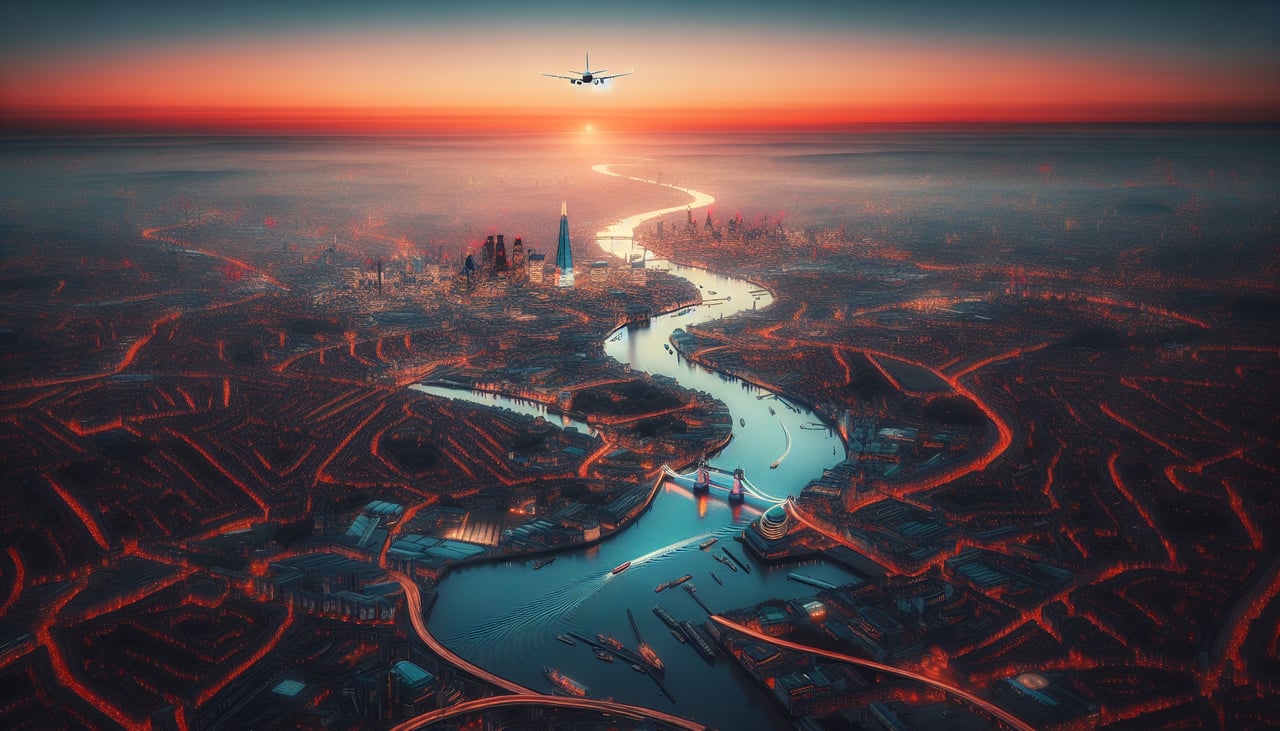
Takeoff from LCY
LEFTRunway 27 departures (prevailing westerly winds) offer immediate views of the Thames, Canary Wharf, and Docklands before climbing over Greater London. Runway 09 eastbound departures see only suburban sprawl and open countryside.

Landing at CLT
RIGHTApproach to CLT typically descends over the Piedmont region with views of the Blue Ridge Mountains to the west and northwest, visible as a distinct ridge on the horizon during final approach. Charlotte's urban sprawl and the airport's location provide city views during descent. Right-side seats face the mountains during typical south-flow approaches.
Will your flight be in sunlight?
Pick a date and time in the Sun Map to watch the sun move across your whole flight.
About This Route
Which side of the plane should I sit on flying from City (LCY) to Charlotte Douglas International (CLT)?
Sit on the Right side of the plane for the best views on flights from London to Charlotte. Right side scores higher (3.0 vs 2.5) due to superior landing scenery: the Blue Ridge Mountains provide genuine terrain drama and visual interest during the critical descent and approach phase, while the Piedmont's rolling landscape offers more variety than the flat Atlantic crossing. Takeoff favors left (London's Thames and Docklands), but the landing advantage on the right outweighs this over the full 7-hour flight.
What can I see during takeoff from City in London?
During takeoff from City (LCY), sit on the Left side for the best views. Runway 27 departures (prevailing westerly winds) offer immediate views of the Thames, Canary Wharf, and Docklands before climbing over Greater London. Runway 09 eastbound departures see only suburban sprawl and open countryside. Notable sights include: River Thames with meanders through central London, Canary Wharf tower cluster, London City Airport's immediate urban surroundings, Isle of Dogs.
What can I see when landing at Charlotte Douglas International in Charlotte?
When landing at Charlotte Douglas International (CLT), sit on the Right side for the best views. Approach to CLT typically descends over the Piedmont region with views of the Blue Ridge Mountains to the west and northwest, visible as a distinct ridge on the horizon during final approach. Charlotte's urban sprawl and the airport's location provide city views during descent. Right-side seats face the mountains during typical south-flow approaches. Notable sights include: Blue Ridge Mountains (western horizon), Lake Norman (north of Charlotte), Charlotte city center and skyline, Piedmont rolling terrain.
How long is the flight from London to Charlotte?
The flight from City (LCY) to Charlotte Douglas International (CLT) takes about 7 hours 5 minutes. The shortest flight path between them is 4,003 miles (6,442 km); winds and air traffic control usually add a few percent.
What does the London to Charlotte flight path pass over?
Atlantic Ocean (5+ hours of open water with minimal landmarks), occasional glimpses of Newfoundland's eastern coast if routed north, the continental shelf transition, and the Appalachian Mountains appearing on the horizon during final descent into North Carolina