The right seat wins on takeoff with the Thames Barrier and Canary Wharf spectacle, and during the cruise offers views of the Alps (right side gets the main Alpine arc on a typical routing via central Europe), the Aegean coastline, and the Zagros Mountains over Iran. The left seat is marginally better on landing into Dubai, but the takeoff and cruise advantages make right the stronger overall choice.
Flown LCY to DXB? Did we get it right?
Flight Path
London to Dubai is 3,395 miles (5,464 km), a flight of about 7 hours.
Typical routing takes you over the English Channel, then Belgium or the Netherlands, across southern Germany and Austria where the Alps are visible, over the Adriatic or Greece, then Turkey, Cyprus, Lebanon or Syria airspace, Iraq, Kuwait, and down the Arabian Gulf coast into Dubai. The Zagros Mountain range in western Iran is a dramatic feature if routing takes you that way. The Bosphorus and Istanbul are visible if routing goes via Turkey.
Great circle distance and headings ›


Phase by phase
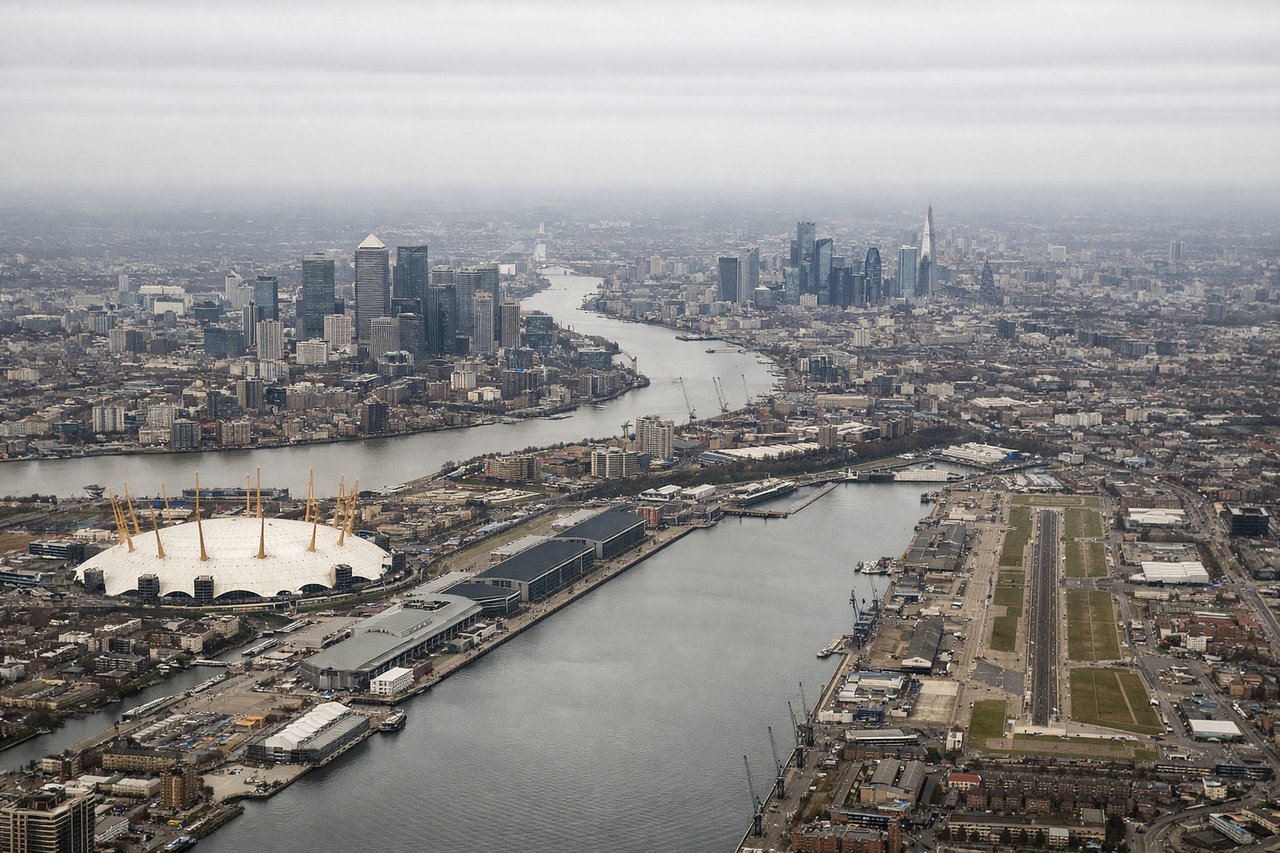
Takeoff from LCY
RIGHTLCY's runway 09/27 runs east-west along the Thames. Departing eastbound on runway 09, the right (south) side gives you the Thames Barrier, the O2 Arena dome, and Canary Wharf's tower cluster as you climb out over east London. Left side faces industrial Beckton and the less distinctive northern marshes.
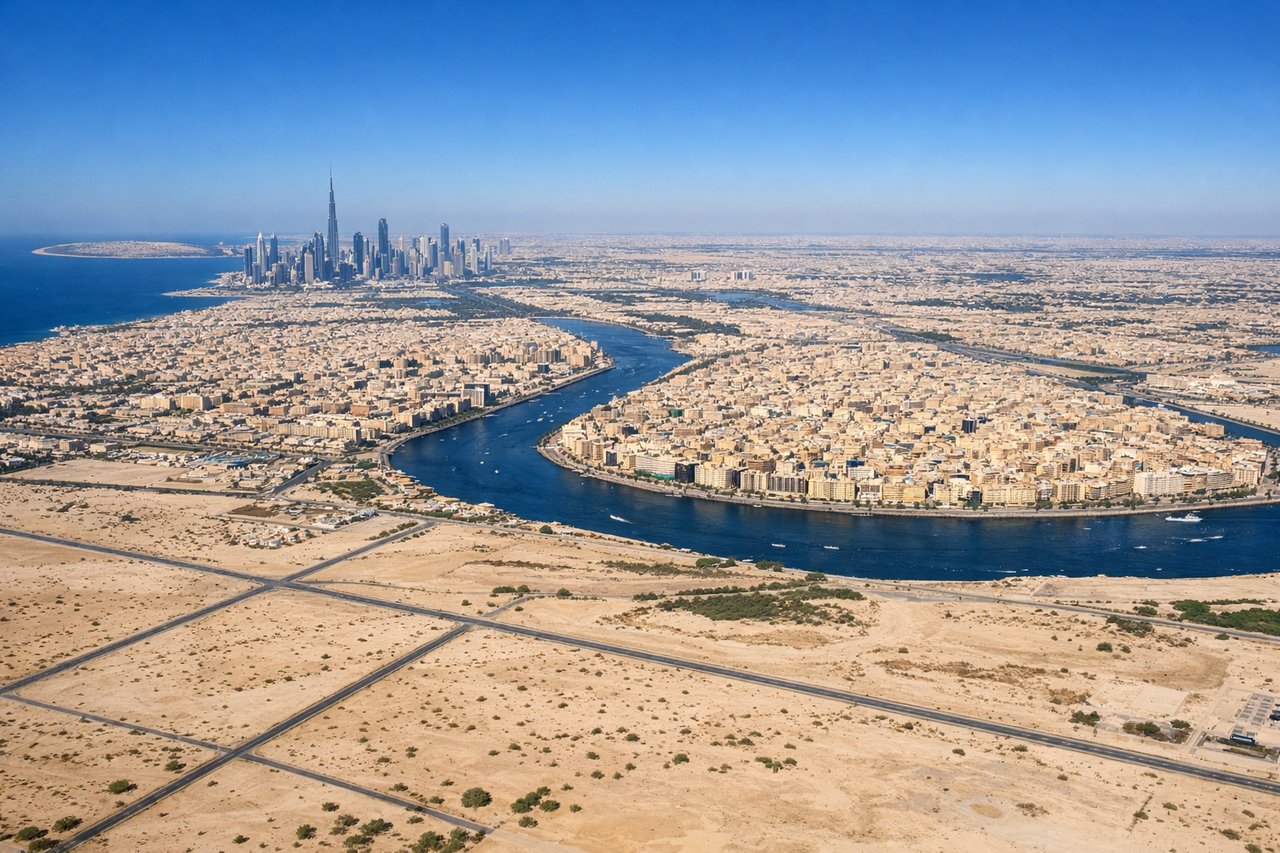
Landing at DXB
LEFTDubai International uses runways 12L/30R and 12R/30L oriented roughly northwest-southeast. On approach from the northwest on runway 12, the left (east) side gives you the Dubai Creek, Deira's dense urban grid, and the older city districts. However on the more common approach from the north, the left side captures the Dubai skyline including Downtown Dubai and the Burj Khalifa before touchdown.
Will your flight be in sunlight?
Pick a date and time in the Sun Map to watch the sun move across your whole flight.
About This Route
Which side of the plane should I sit on flying from City (LCY) to Dubai International (DXB)?
Sit on the Right side of the plane for the best views on flights from London to Dubai. The right seat wins on takeoff with the Thames Barrier and Canary Wharf spectacle, and during the cruise offers views of the Alps (right side gets the main Alpine arc on a typical routing via central Europe), the Aegean coastline, and the Zagros Mountains over Iran. The left seat is marginally better on landing into Dubai, but the takeoff and cruise advantages make right the stronger overall choice.
What can I see during takeoff from City in London?
During takeoff from City (LCY), sit on the Right side for the best views. LCY's runway 09/27 runs east-west along the Thames. Departing eastbound on runway 09, the right (south) side gives you the Thames Barrier, the O2 Arena dome, and Canary Wharf's tower cluster as you climb out over east London. Left side faces industrial Beckton and the less distinctive northern marshes. Notable sights include: Thames Barrier, O2 Arena, Canary Wharf towers, Greenwich Peninsula.
What can I see when landing at Dubai International in Dubai?
When landing at Dubai International (DXB), sit on the Left side for the best views. Dubai International uses runways 12L/30R and 12R/30L oriented roughly northwest-southeast. On approach from the northwest on runway 12, the left (east) side gives you the Dubai Creek, Deira's dense urban grid, and the older city districts. However on the more common approach from the north, the left side captures the Dubai skyline including Downtown Dubai and the Burj Khalifa before touchdown. Notable sights include: Burj Khalifa, Dubai Creek, Downtown Dubai skyline, Palm Jumeirah (distant).
How long is the flight from London to Dubai?
The flight from City (LCY) to Dubai International (DXB) takes about 7 hours. The shortest flight path between them is 3,395 miles (5,464 km); winds and air traffic control usually add a few percent.
What does the London to Dubai flight path pass over?
Typical routing takes you over the English Channel, then Belgium or the Netherlands, across southern Germany and Austria where the Alps are visible, over the Adriatic or Greece, then Turkey, Cyprus, Lebanon or Syria airspace, Iraq, Kuwait, and down the Arabian Gulf coast into Dubai. The Zagros Mountain range in western Iran is a dramatic feature if routing takes you that way. The Bosphorus and Istanbul are visible if routing goes via Turkey.