The right side wins the departure with a strong London skyline view, but much of the cruise on that side is open Bay of Biscay water with limited variety. The left side offers a comparable takeoff glimpse of the Thames, brief Channel and French coastline views, and finishes with the flight's most dramatic moment — the Ria Formosa lagoon and Algarve coastline unfolding on final approach — giving it the edge overall.
Flown LCY to FAO? Did we get it right?
Flight Path
London to Faro is 1,075 miles (1,731 km), a flight of about 2 hours 35 minutes.
Bay of Biscay open water crossing, with the French Atlantic coast near Bordeaux fading behind and the northern Spanish coastline occasionally visible ahead before the route continues over inland Spain toward Portugal.
Great circle distance and headings ›

Phase by phase
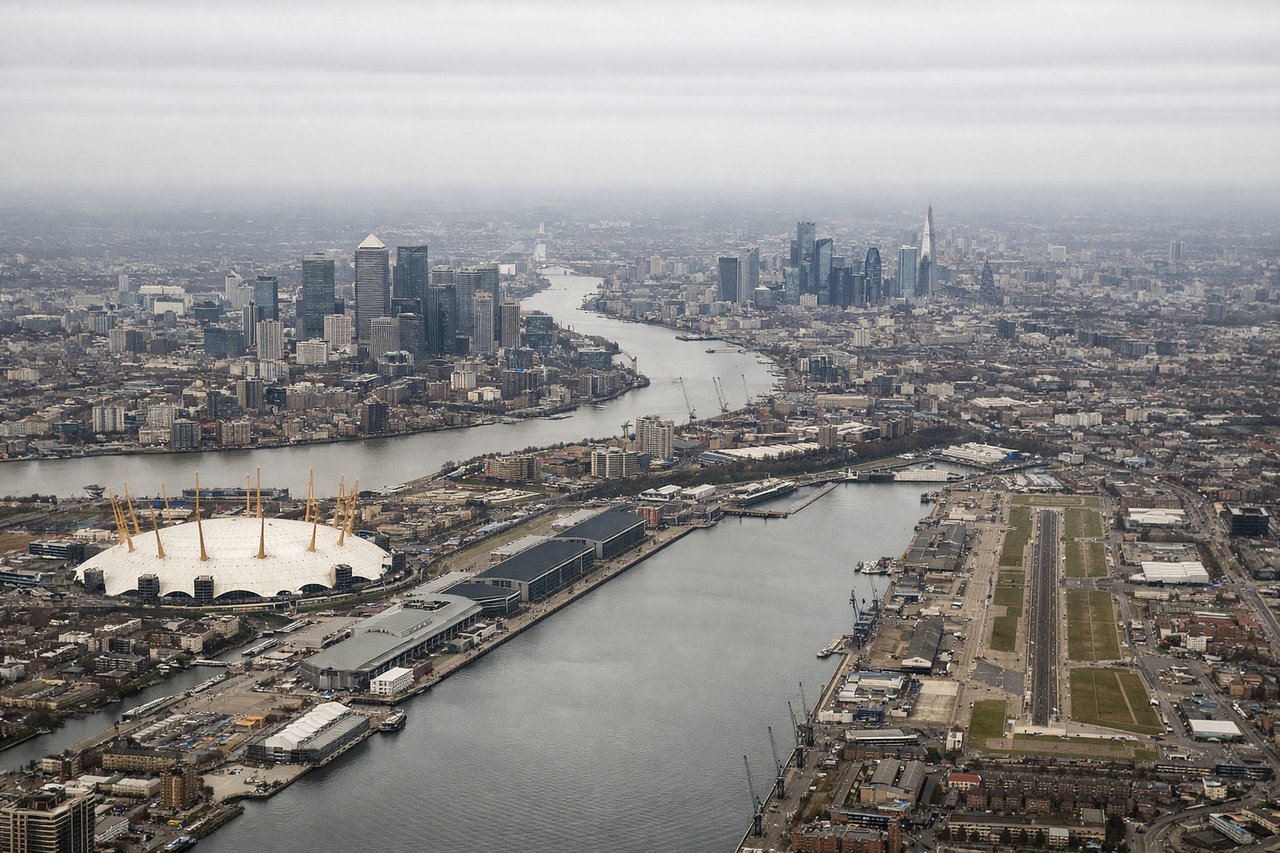
Takeoff from LCY
RIGHTDeparting on runway 27, the aircraft climbs west directly over the Thames before banking south toward Portugal, putting Canary Wharf's towers, the O2 Arena and the Greenwich peninsula squarely in the right-side windows as the city rotates into view during the turn.
Landing at FAO
LEFTOn the approach to runway 28, the aircraft tracks in from the east and turns onto final over the coast, so the left-side windows look south across the Ria Formosa lagoon's sandbars and barrier islands with the open Atlantic just beyond, right before touchdown.
Will your flight be in sunlight?
Pick a date and time in the Sun Map to watch the sun move across your whole flight.
About This Route
Which side of the plane should I sit on flying from City (LCY) to Faro (FAO)?
Sit on the Left side of the plane for the best views on flights from London to Faro. The right side wins the departure with a strong London skyline view, but much of the cruise on that side is open Bay of Biscay water with limited variety. The left side offers a comparable takeoff glimpse of the Thames, brief Channel and French coastline views, and finishes with the flight's most dramatic moment — the Ria Formosa lagoon and Algarve coastline unfolding on final approach — giving it the edge overall.
What can I see during takeoff from City in London?
During takeoff from City (LCY), sit on the Right side for the best views. Departing on runway 27, the aircraft climbs west directly over the Thames before banking south toward Portugal, putting Canary Wharf's towers, the O2 Arena and the Greenwich peninsula squarely in the right-side windows as the city rotates into view during the turn. Notable sights include: River Thames, Canary Wharf skyline, O2 Arena/Greenwich Peninsula, Isle of Dogs.
What can I see when landing at Faro in Faro?
When landing at Faro (FAO), sit on the Left side for the best views. On the approach to runway 28, the aircraft tracks in from the east and turns onto final over the coast, so the left-side windows look south across the Ria Formosa lagoon's sandbars and barrier islands with the open Atlantic just beyond, right before touchdown. Notable sights include: Ria Formosa lagoon, Atlantic barrier islands, Faro coastline, Algarve shoreline.
How long is the flight from London to Faro?
The flight from City (LCY) to Faro (FAO) takes about 2 hours 35 minutes. The shortest flight path between them is 1,075 miles (1,731 km); winds and air traffic control usually add a few percent.
What does the London to Faro flight path pass over?
Bay of Biscay open water crossing, with the French Atlantic coast near Bordeaux fading behind and the northern Spanish coastline occasionally visible ahead before the route continues over inland Spain toward Portugal.