London to Male is 5,284 miles (8,504 km), a flight of about 10 hours 20 minutes.
While left wins at takeoff, the landing view from the right is exceptional and comprises the majority of visual interest on this long route. The atoll approach is genuinely spectacular and unique to this destination.
Flight Path
The flight path crosses the Mediterranean (if routed via southern Europe), then the Sahara Desert (visible as tan/beige expanses with occasional wadi patterns), the Red Sea (narrow body of water between Africa and Arabian Peninsula), the Arabian Peninsula interior (sparse, rocky terrain), the Arabian Sea (open water), and finally approaches the Maldives archipelago from the northeast. Most midpoint flying occurs over featureless ocean or desert with limited window-seat interest.
Great circle distance and headings ›.jpeg?width=600)


.jpg?width=600)

.jpg?width=600)
_and_the_Dubai_skyline_(25781049892).jpg?width=600)
_8.JPG?width=600)
Phase by phase
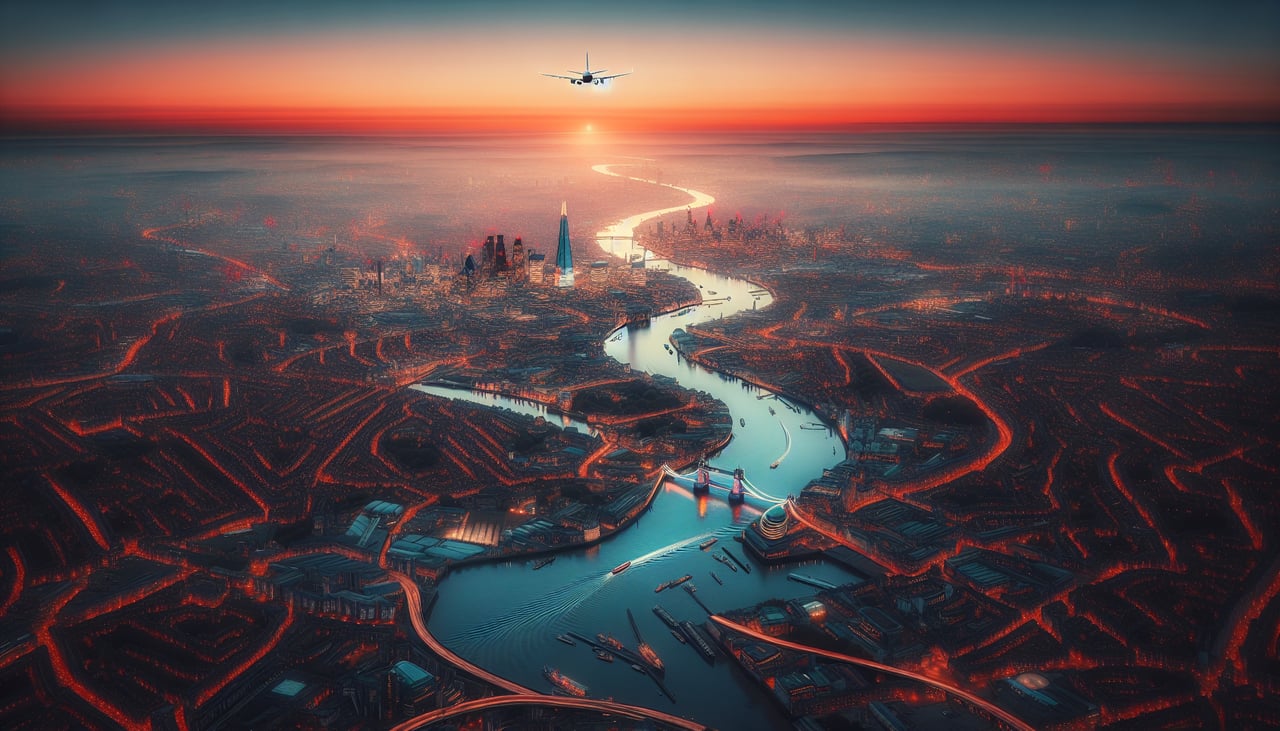
Takeoff from LCY
LEFTLCY typically departs runway 27 (westbound). Left seats face north during initial climb, giving views of central London's urban sprawl, the Thames meanders, and the North Downs escarpment rising inland. Right seats face south toward suburban London and Kent, less distinctive.
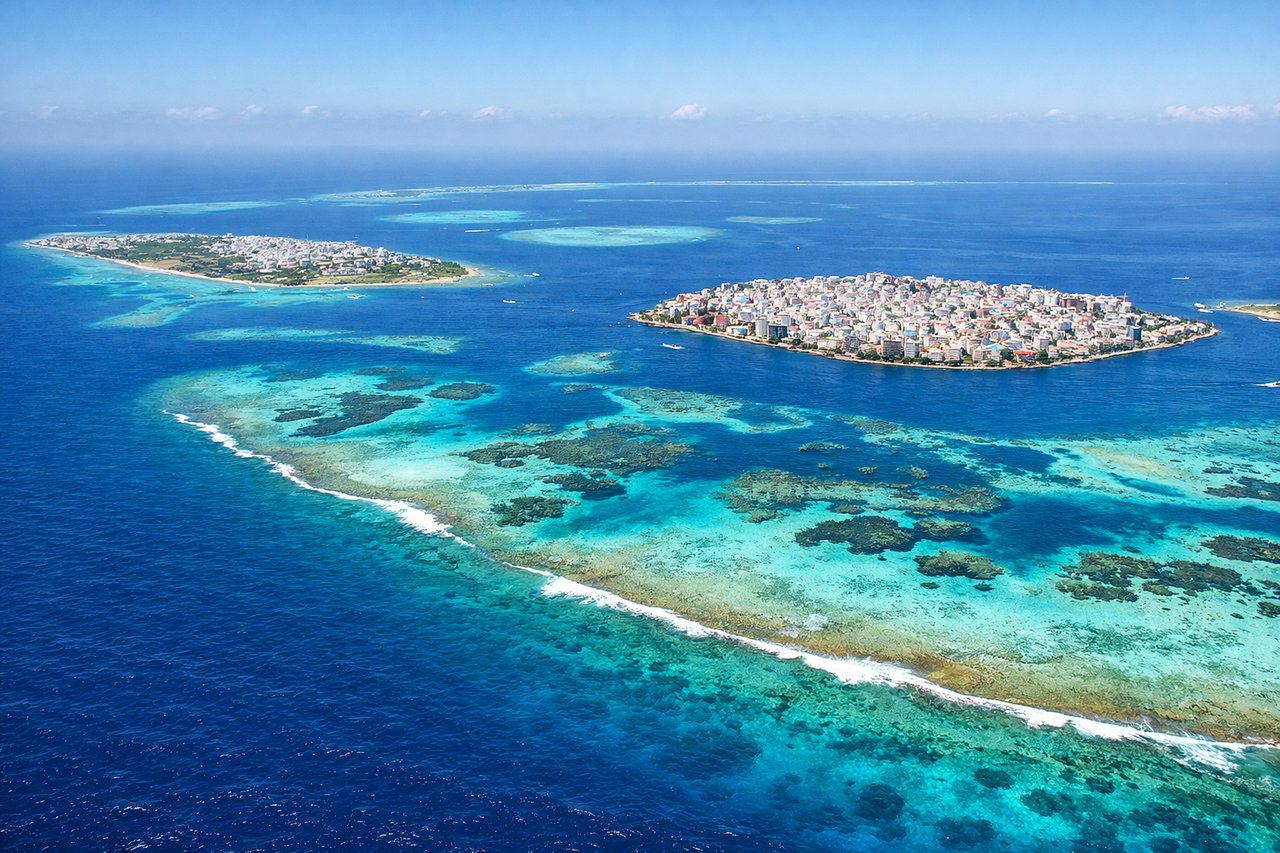
Landing at MLE
RIGHTMLE approaches from the northeast over the Indian Ocean. Right seats face southwest during descent, providing views of the atoll chain, shallow turquoise lagoons, and the main island of Malé itself. Left seats face the open ocean with minimal visual interest.
Landmarks on this routeAll landmarks →
Will your flight be in sunlight?
Pick a date and time in the Sun Map to watch the sun move across your whole flight.
About This Route
Which side of the plane should I sit on flying from City (LCY) to Male International (MLE)?
Sit on the Right side of the plane for the best views on flights from London to Male. While left wins at takeoff, the landing view from the right is exceptional and comprises the majority of visual interest on this long route. The atoll approach is genuinely spectacular and unique to this destination.
What can I see during takeoff from City in London?
During takeoff from City (LCY), sit on the Left side for the best views. LCY typically departs runway 27 (westbound). Left seats face north during initial climb, giving views of central London's urban sprawl, the Thames meanders, and the North Downs escarpment rising inland. Right seats face south toward suburban London and Kent, less distinctive. Notable sights include: River Thames (multiple loops visible below), Central London urban grid, North Downs ridge (distant, southwest horizon), Canary Wharf tower cluster (distinctive point in cityscape).
What can I see when landing at Male International in Male?
When landing at Male International (MLE), sit on the Right side for the best views. MLE approaches from the northeast over the Indian Ocean. Right seats face southwest during descent, providing views of the atoll chain, shallow turquoise lagoons, and the main island of Malé itself. Left seats face the open ocean with minimal visual interest. Notable sights include: Male atoll lagoon (bright turquoise shallow water), North and South Male Atolls (ring-shaped coral formations), Indian Ocean (deep blue water), Malé city waterfront (small but visible urban cluster).
How long is the flight from London to Male?
The flight from City (LCY) to Male International (MLE) takes about 10 hours 20 minutes. The shortest flight path between them is 5,284 miles (8,504 km); winds and air traffic control usually add a few percent.
What does the London to Male flight path pass over?
The flight path crosses the Mediterranean (if routed via southern Europe), then the Sahara Desert (visible as tan/beige expanses with occasional wadi patterns), the Red Sea (narrow body of water between Africa and Arabian Peninsula), the Arabian Peninsula interior (sparse, rocky terrain), the Arabian Sea (open water), and finally approaches the Maldives archipelago from the northeast. Most midpoint flying occurs over featureless ocean or desert with limited window-seat interest.