Left side scores higher due to superior departure scenery from LCY (Thames, Docklands, central London landmarks) and comparable landing views. While the right side offers dramatic North Shore Mountains on arrival, the left side's consistent landmark density and iconic London departure sequence outweigh the landing advantage. The Thames and Canary Wharf departure is more visually distinctive than most transatlantic flights.
Flown LCY to YVR? Did we get it right?
Flight Path
London to Vancouver is 4,720 miles (7,597 km), a flight of about 7 hours 45 minutes.
Greenland's east coast (Davis Strait crossing), Labrador coast, Canadian Shield forests, Hudson Bay region (depending on routing), Great Lakes (if southern routing), Rocky Mountains approaching Vancouver
Great circle distance and headings ›Phase by phase
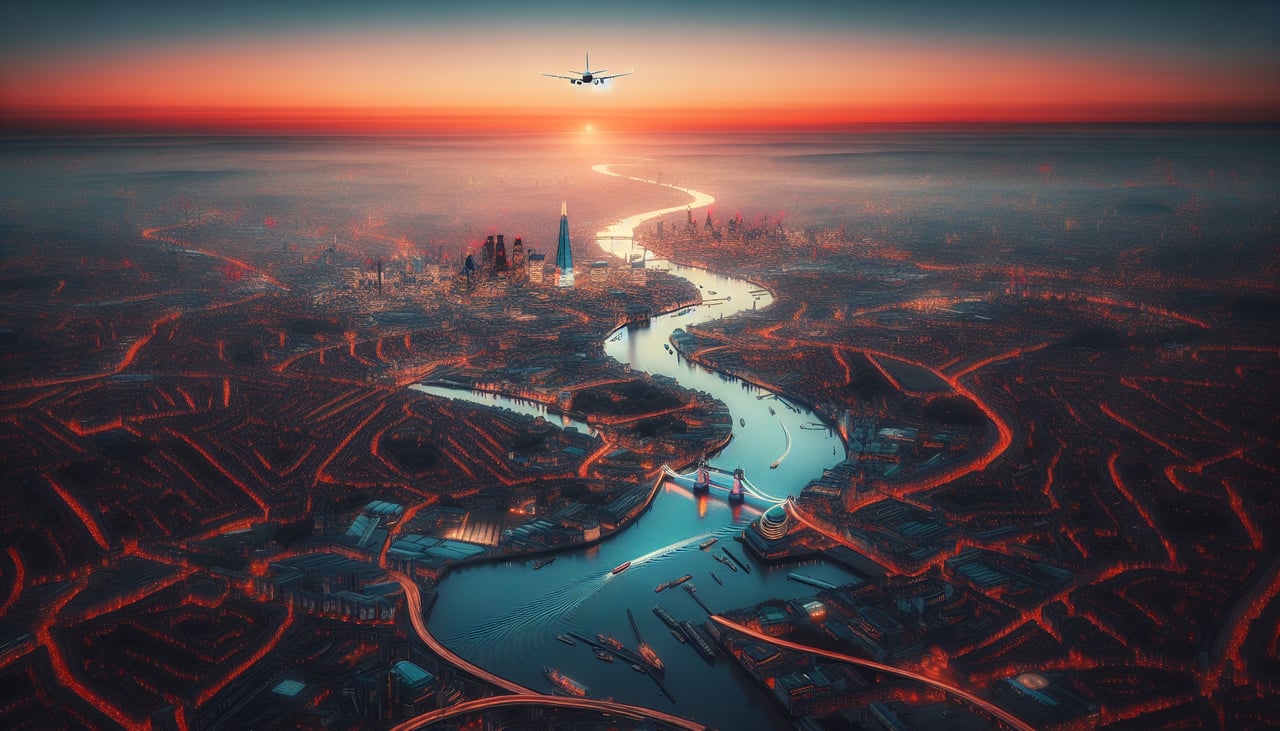
Takeoff from LCY
LEFTRunway 27 (westbound, prevailing) offers immediate views of the Thames, Canary Wharf, and Docklands before climbing over Greater London. Runway 09 (eastbound, less frequent) departs over residential suburbs with minimal landmark density.
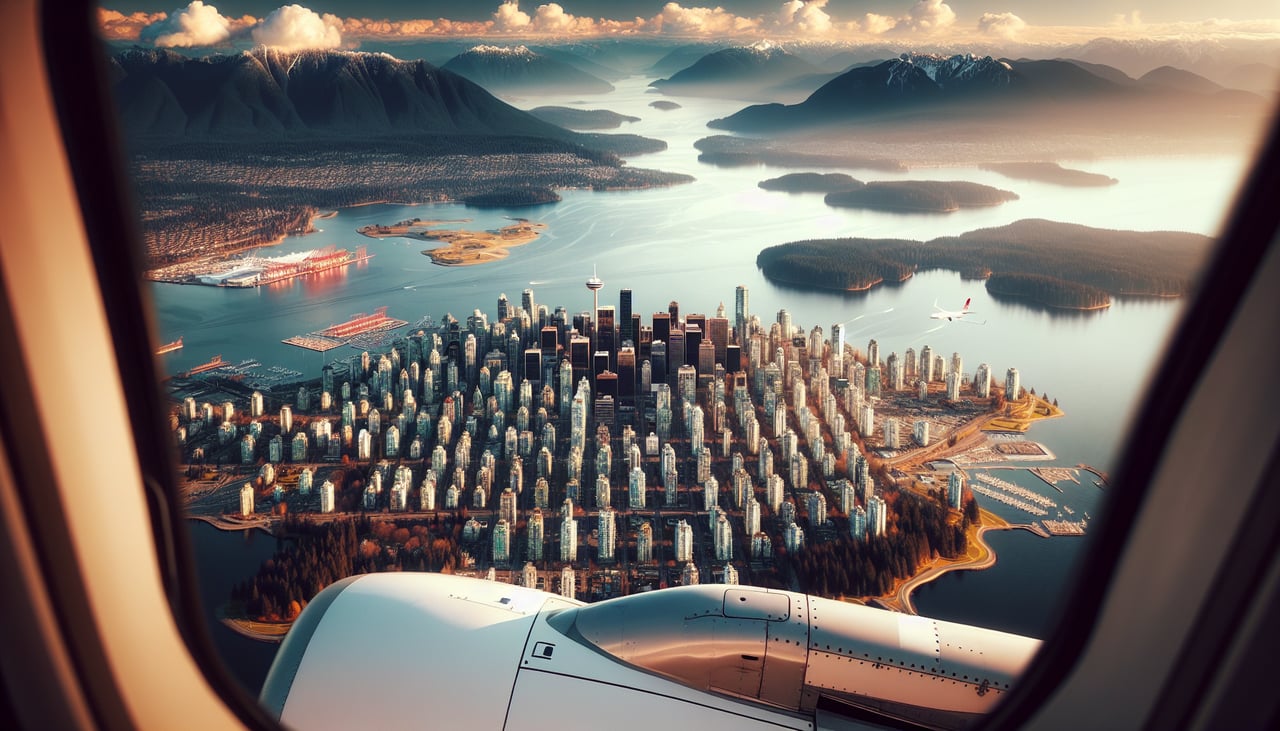
Landing at YVR
RIGHTApproach to YVR runway 26L (westbound, prevailing) descends over the Strait of Georgia with views of the North Shore Mountains, Burrard Inlet, and Vancouver's downtown skyline. Runway 08R (eastbound, less frequent) approaches over suburban Richmond and the Fraser River delta with less dramatic terrain.
Will your flight be in sunlight?
Pick a date and time in the Sun Map to watch the sun move across your whole flight.
About This Route
Which side of the plane should I sit on flying from City (LCY) to Vancouver International (YVR)?
Sit on the Left side of the plane for the best views on flights from London to Vancouver. Left side scores higher due to superior departure scenery from LCY (Thames, Docklands, central London landmarks) and comparable landing views. While the right side offers dramatic North Shore Mountains on arrival, the left side's consistent landmark density and iconic London departure sequence outweigh the landing advantage. The Thames and Canary Wharf departure is more visually distinctive than most transatlantic flights.
What can I see during takeoff from City in London?
During takeoff from City (LCY), sit on the Left side for the best views. Runway 27 (westbound, prevailing) offers immediate views of the Thames, Canary Wharf, and Docklands before climbing over Greater London. Runway 09 (eastbound, less frequent) departs over residential suburbs with minimal landmark density. Notable sights include: River Thames with meanders, Canary Wharf tower cluster, Tower Bridge area, London City Airport's position on the Isle of Dogs.
What can I see when landing at Vancouver International in Vancouver?
When landing at Vancouver International (YVR), sit on the Right side for the best views. Approach to YVR runway 26L (westbound, prevailing) descends over the Strait of Georgia with views of the North Shore Mountains, Burrard Inlet, and Vancouver's downtown skyline. Runway 08R (eastbound, less frequent) approaches over suburban Richmond and the Fraser River delta with less dramatic terrain. Notable sights include: North Shore Mountains (Grouse, Seymour, Cypress peaks), Burrard Inlet waterfront, Vancouver downtown skyline, Strait of Georgia.
How long is the flight from London to Vancouver?
The flight from City (LCY) to Vancouver International (YVR) takes about 7 hours 45 minutes. The shortest flight path between them is 4,720 miles (7,597 km); winds and air traffic control usually add a few percent.
What does the London to Vancouver flight path pass over?
Greenland's east coast (Davis Strait crossing), Labrador coast, Canadian Shield forests, Hudson Bay region (depending on routing), Great Lakes (if southern routing), Rocky Mountains approaching Vancouver