New York to Cleveland is 418 miles (672 km), a flight of about 1 hour 25 minutes.
Both the Manhattan-adjacent departure and the Lake Erie/downtown Cleveland arrival favor the left side, giving passengers two distinct urban and water views bookending an otherwise flat Midwest cruise.
Flight Path
Flat farmland and small towns of central Pennsylvania and eastern Ohio, with the Allegheny Plateau's low rolling hills visible below during cruise.
Great circle distance and headings ›.jpg?width=600)
.jpeg?width=600)
Phase by phase
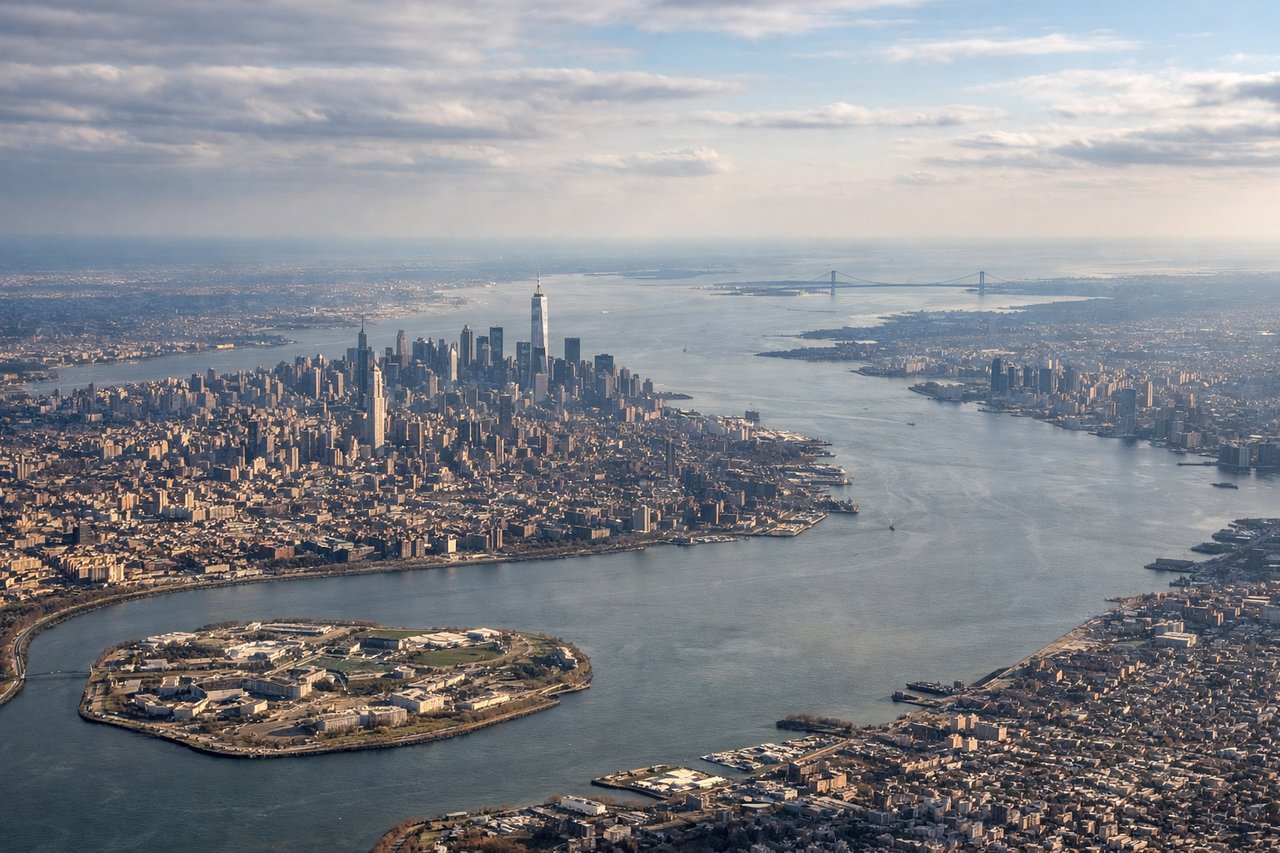
Takeoff from LGA
LEFTDeparting LGA on runway 22 heading northeast, the initial turn toward Cleveland swings the aircraft west, putting Manhattan's skyline and the East River on the left side for passengers. This is a brief but distinctive urban view before leveling onto the westbound cruise track.
Landing at CLE
LEFTArrivals into CLE from the northeast commonly land on runway 24L/24R, requiring a turn that puts the Lake Erie shoreline and downtown Cleveland's skyline on the left side during final approach. This gives a nice urban and waterfront view right before touchdown.
Landmarks on this routeAll landmarks →
Will your flight be in sunlight?
Pick a date and time in the Sun Map to watch the sun move across your whole flight.
About This Route
Which side of the plane should I sit on flying from La Guardia (LGA) to Cleveland Hopkins International (CLE)?
Sit on the Left side of the plane for the best views on flights from New York to Cleveland. Both the Manhattan-adjacent departure and the Lake Erie/downtown Cleveland arrival favor the left side, giving passengers two distinct urban and water views bookending an otherwise flat Midwest cruise.
What can I see during takeoff from La Guardia in New York?
During takeoff from La Guardia (LGA), sit on the Left side for the best views. Departing LGA on runway 22 heading northeast, the initial turn toward Cleveland swings the aircraft west, putting Manhattan's skyline and the East River on the left side for passengers. This is a brief but distinctive urban view before leveling onto the westbound cruise track. Notable sights include: Manhattan skyline, East River, Hell Gate Bridge, LaGuardia's Rikers Island shoreline.
What can I see when landing at Cleveland Hopkins International in Cleveland?
When landing at Cleveland Hopkins International (CLE), sit on the Left side for the best views. Arrivals into CLE from the northeast commonly land on runway 24L/24R, requiring a turn that puts the Lake Erie shoreline and downtown Cleveland's skyline on the left side during final approach. This gives a nice urban and waterfront view right before touchdown. Notable sights include: Lake Erie shoreline, downtown Cleveland skyline, Cuyahoga River mouth, Cleveland Browns Stadium.
How long is the flight from New York to Cleveland?
The flight from La Guardia (LGA) to Cleveland Hopkins International (CLE) takes about 1 hour 25 minutes. The shortest flight path between them is 418 miles (672 km); winds and air traffic control usually add a few percent.
What does the New York to Cleveland flight path pass over?
Flat farmland and small towns of central Pennsylvania and eastern Ohio, with the Allegheny Plateau's low rolling hills visible below during cruise.