New York to Detroit is 500 miles (805 km), a flight of about 1 hour 45 minutes.
The Manhattan skyline and Hudson River departure edges out the Detroit River approach for visual drama and landmark density, though both sides are modest given the short, mostly flat Midwest cruise portion.
Flight Path
Appalachian foothills of central Pennsylvania, Susquehanna River valley, and the flat farmland of eastern Ohio give way to the Great Lakes plain approaching Michigan.
Great circle distance and headings ›.jpg?width=600)
.jpeg?width=600)

Phase by phase
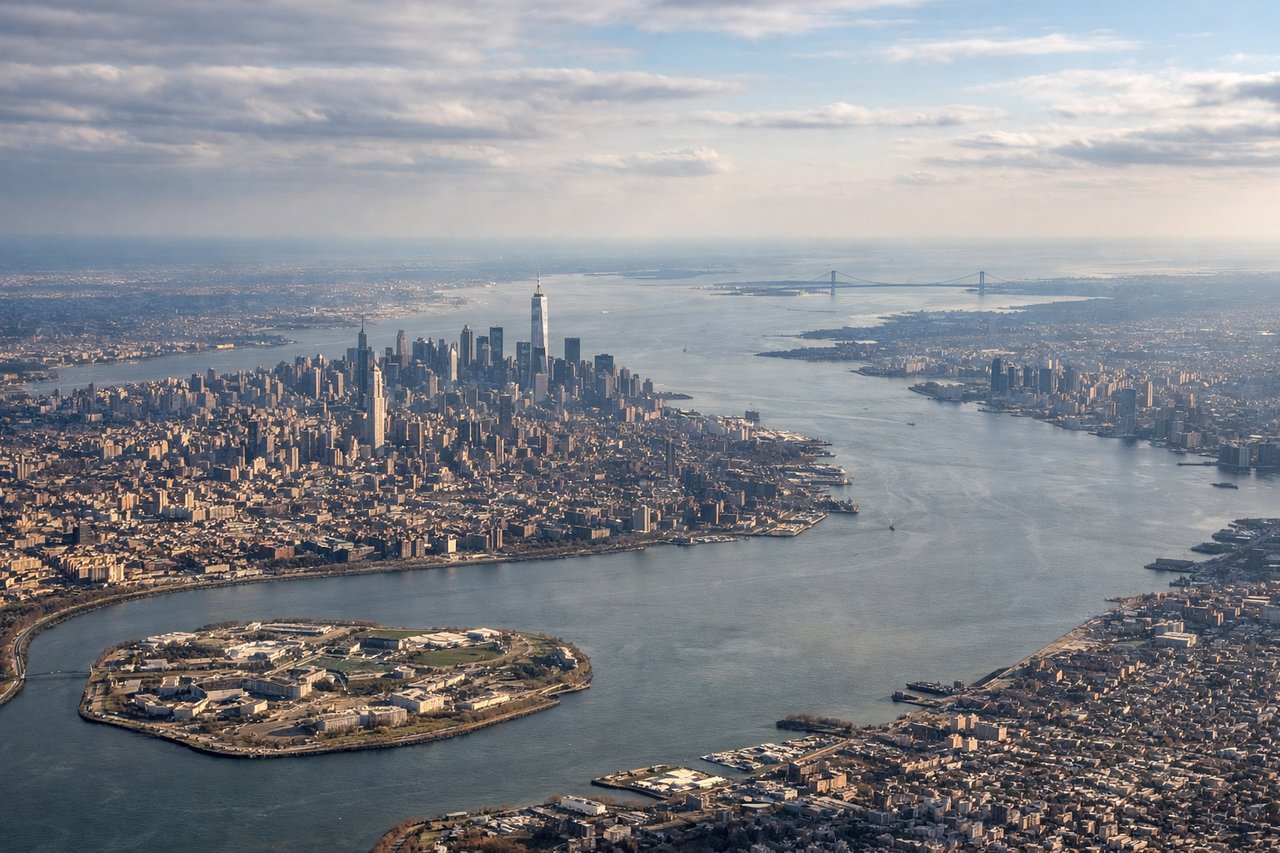
Takeoff from LGA
LEFTDeparting LGA to the west/northwest typically gives left-side passengers a view over the Hudson River, the Manhattan skyline, and the George Washington Bridge before the flight turns toward the interior. Right side sees Long Island and the Sound receding, less distinctive.
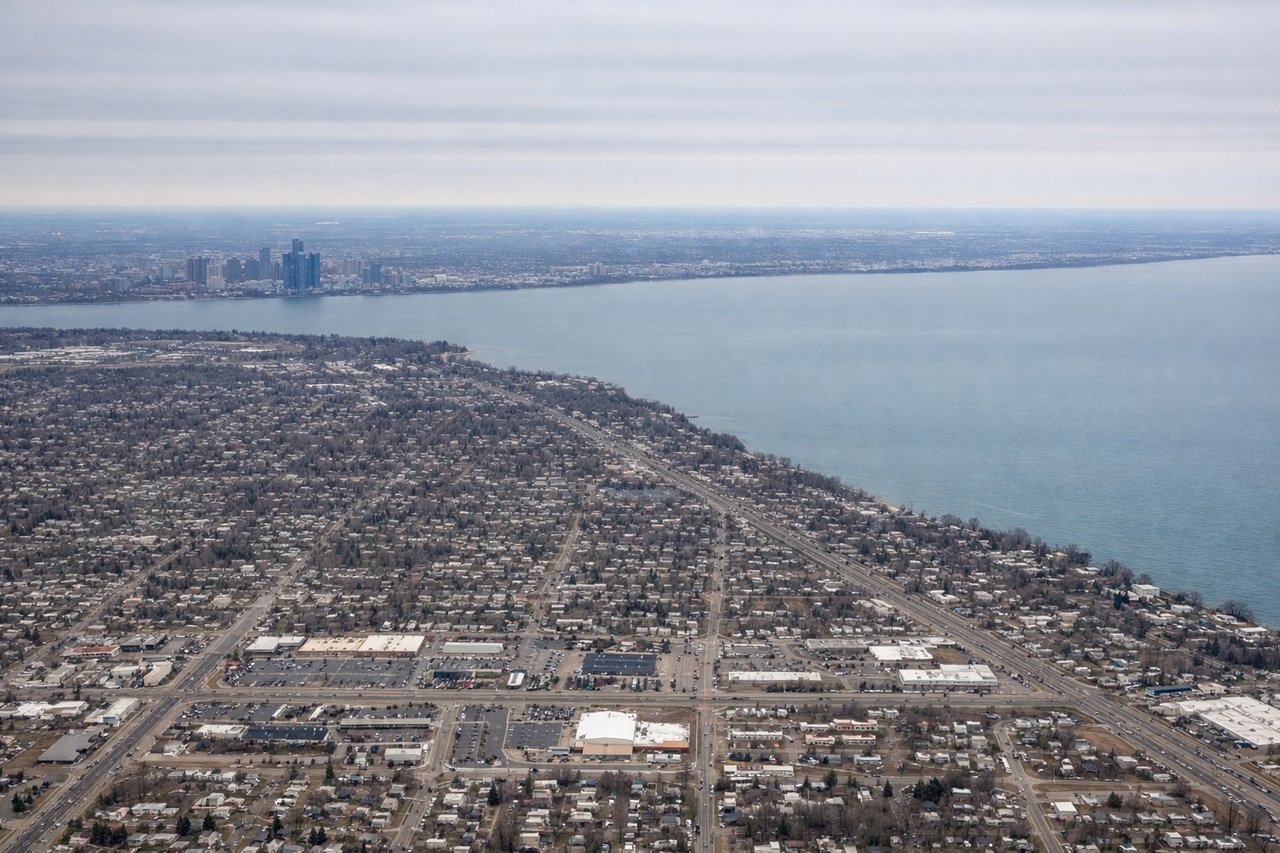
Landing at DTW
RIGHTArriving into DTW from the east, right-side passengers get a view over the Detroit River, the Detroit skyline, and Lake St. Clair before the final descent over flat suburban terrain. Left side mostly sees featureless farmland and suburbs.
Landmarks on this routeAll landmarks →
Will your flight be in sunlight?
Pick a date and time in the Sun Map to watch the sun move across your whole flight.
About This Route
Which side of the plane should I sit on flying from La Guardia (LGA) to Detroit Metro Wayne Co (DTW)?
Sit on the Left side of the plane for the best views on flights from New York to Detroit. The Manhattan skyline and Hudson River departure edges out the Detroit River approach for visual drama and landmark density, though both sides are modest given the short, mostly flat Midwest cruise portion.
What can I see during takeoff from La Guardia in New York?
During takeoff from La Guardia (LGA), sit on the Left side for the best views. Departing LGA to the west/northwest typically gives left-side passengers a view over the Hudson River, the Manhattan skyline, and the George Washington Bridge before the flight turns toward the interior. Right side sees Long Island and the Sound receding, less distinctive. Notable sights include: Manhattan skyline, Hudson River, George Washington Bridge, LaGuardia's Rikers Island area.
What can I see when landing at Detroit Metro Wayne Co in Detroit?
When landing at Detroit Metro Wayne Co (DTW), sit on the Right side for the best views. Arriving into DTW from the east, right-side passengers get a view over the Detroit River, the Detroit skyline, and Lake St. Clair before the final descent over flat suburban terrain. Left side mostly sees featureless farmland and suburbs. Notable sights include: Detroit River, Downtown Detroit skyline, Lake St. Clair, Ambassador Bridge.
How long is the flight from New York to Detroit?
The flight from La Guardia (LGA) to Detroit Metro Wayne Co (DTW) takes about 1 hour 45 minutes. The shortest flight path between them is 500 miles (805 km); winds and air traffic control usually add a few percent.
What does the New York to Detroit flight path pass over?
Appalachian foothills of central Pennsylvania, Susquehanna River valley, and the flat farmland of eastern Ohio give way to the Great Lakes plain approaching Michigan.