Takeoff views from Manhattan and the New York metropolitan area are more visually distinctive and memorable than the approach into ICN, which involves mostly water and industrial zones. Left seats dominate the outbound leg.
Flown LGA to ICN? Did we get it right?
Flight Path
New York to Seoul is 6,880 miles (11,072 km), a flight of about 14 hours 30 minutes.
The flight path crosses the North Atlantic, passing north of Newfoundland and Greenland's southern tip (Davis Strait visible on clear days), then over the Arctic waters and Baffin Island region. Crossing into North American airspace, the route passes over northern Canada's barren tundra and the Beaufort Sea. Transitioning to Asian airspace, the flight crosses the Bering Strait region (Alaska's western coast visible on the left during daylight), then descends across the Bering Sea and into Russian Far East airspace, passing over the Kamchatka Peninsula and the Sea of Okhotsk before approaching the Korean peninsula from the northwest.
Great circle distance and headings ›

Phase by phase
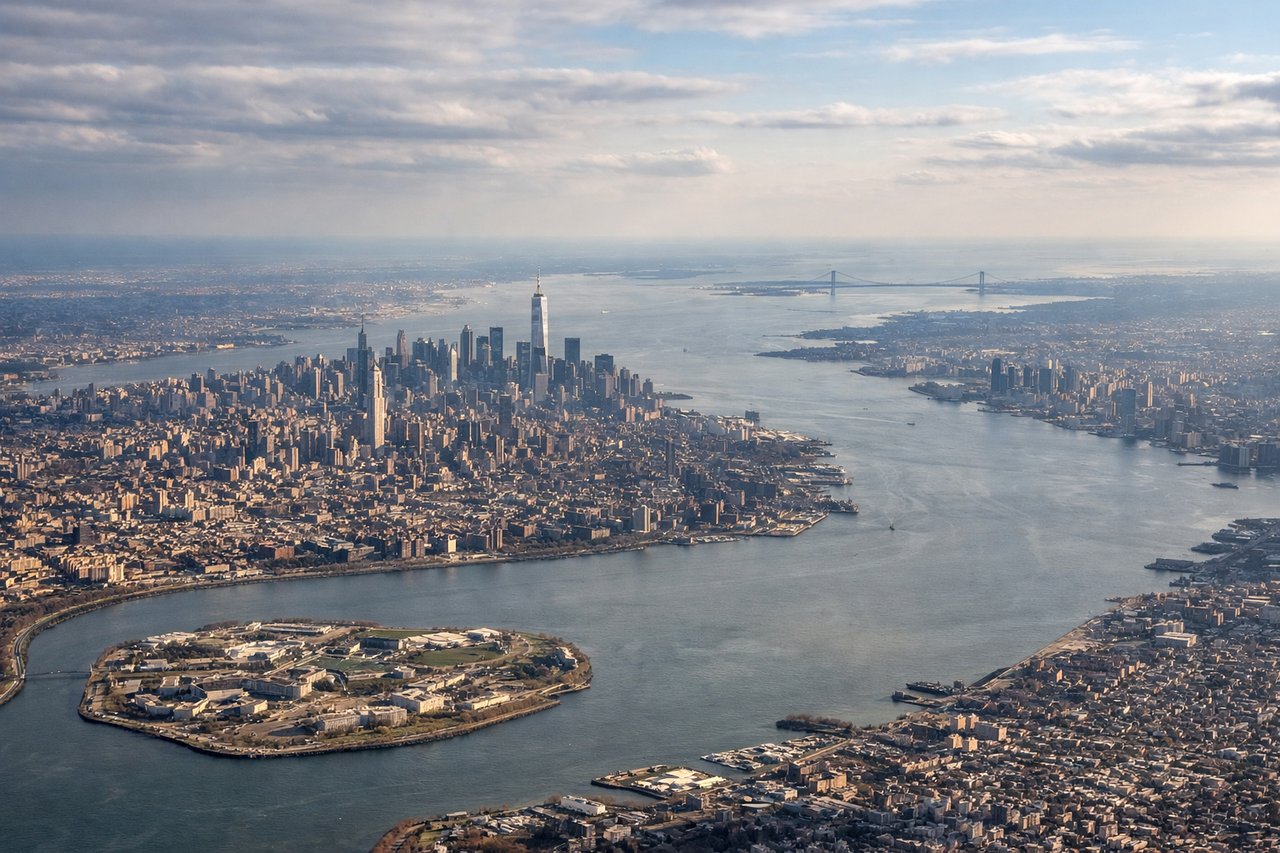
Takeoff from LGA
LEFTLGA typically departs runway 4 or 13 heading northeast or west. Left seats offer views of Manhattan's skyline during initial climb, then the East River, Queens, and the Hudson River valley as you gain altitude northbound.
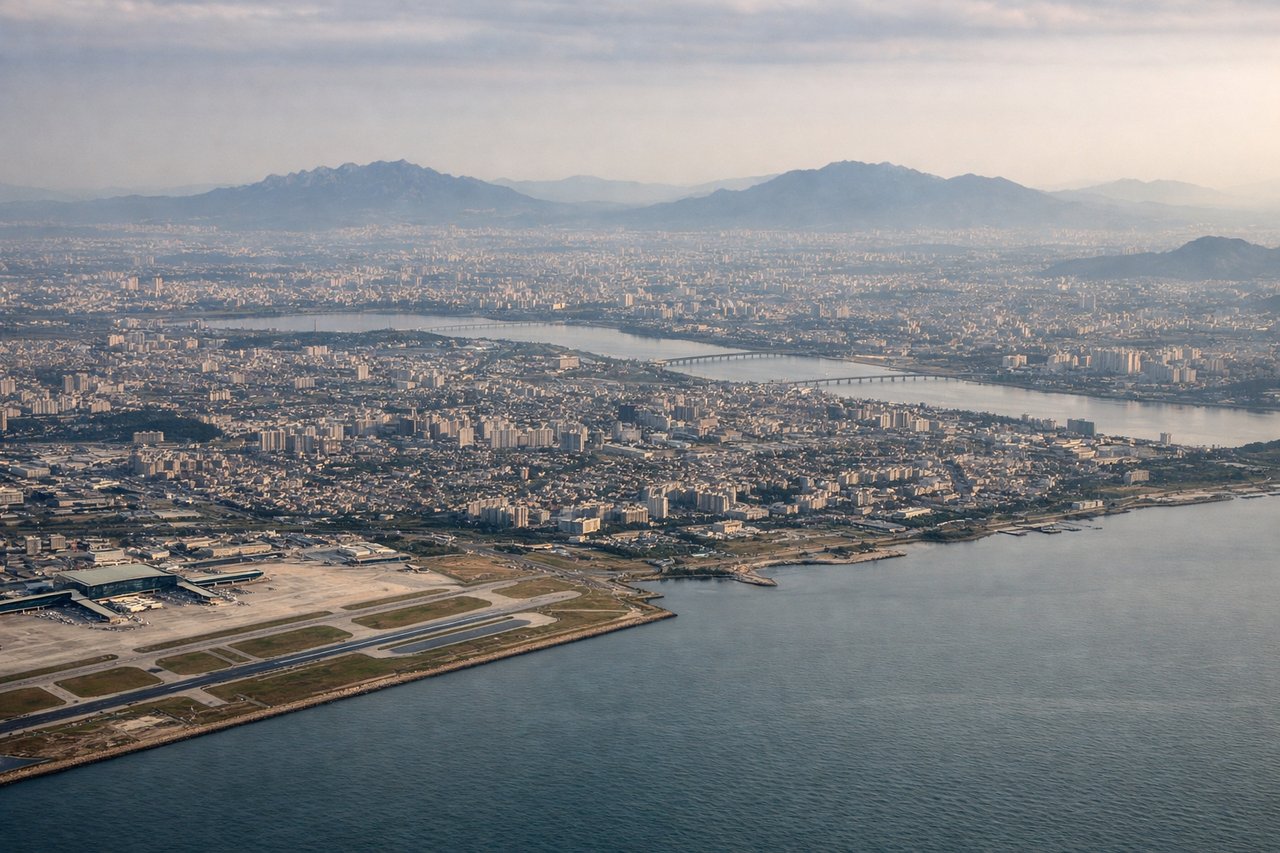
Landing at ICN
RIGHTICN is located on Incheon Island west of Seoul. Typical approach vectors bring aircraft from the west or northwest over the Yellow Sea. Right seats capture the final descent over water, then the island's industrial zones, and the runway environment. Left seats would face inland toward Seoul proper but at too steep a descent angle for clear viewing.
Will your flight be in sunlight?
Pick a date and time in the Sun Map to watch the sun move across your whole flight.
About This Route
Which side of the plane should I sit on flying from La Guardia (LGA) to Incheon International (ICN)?
Sit on the Left side of the plane for the best views on flights from New York to Seoul. Takeoff views from Manhattan and the New York metropolitan area are more visually distinctive and memorable than the approach into ICN, which involves mostly water and industrial zones. Left seats dominate the outbound leg.
What can I see during takeoff from La Guardia in New York?
During takeoff from La Guardia (LGA), sit on the Left side for the best views. LGA typically departs runway 4 or 13 heading northeast or west. Left seats offer views of Manhattan's skyline during initial climb, then the East River, Queens, and the Hudson River valley as you gain altitude northbound. Notable sights include: Manhattan skyline (Empire State Building, One World Trade Center visible as distant spires), East River, Upper New York Bay, Bronx waterfront.
What can I see when landing at Incheon International in Seoul?
When landing at Incheon International (ICN), sit on the Right side for the best views. ICN is located on Incheon Island west of Seoul. Typical approach vectors bring aircraft from the west or northwest over the Yellow Sea. Right seats capture the final descent over water, then the island's industrial zones, and the runway environment. Left seats would face inland toward Seoul proper but at too steep a descent angle for clear viewing. Notable sights include: Yellow Sea (Huang Hai), Incheon Island's reclaimed land and port facilities, Songdo International Business District (modern high-rises), Seoul metropolitan area skyline in distance.
How long is the flight from New York to Seoul?
The flight from La Guardia (LGA) to Incheon International (ICN) takes about 14 hours 30 minutes. The shortest flight path between them is 6,880 miles (11,072 km); winds and air traffic control usually add a few percent.
What does the New York to Seoul flight path pass over?
The flight path crosses the North Atlantic, passing north of Newfoundland and Greenland's southern tip (Davis Strait visible on clear days), then over the Arctic waters and Baffin Island region. Crossing into North American airspace, the route passes over northern Canada's barren tundra and the Beaufort Sea. Transitioning to Asian airspace, the flight crosses the Bering Strait region (Alaska's western coast visible on the left during daylight), then descends across the Bering Sea and into Russian Far East airspace, passing over the Kamchatka Peninsula and the Sea of Okhotsk before approaching the Korean peninsula from the northwest.