New York to Jacksonville is 834 miles (1,343 km), a flight of about 3 hours.
Left seats capture the dramatic Manhattan departure and the scenic St. Johns River meanders during approach. While the landing view favors right seats, the takeoff experience from LGA—one of the world's most visually striking airport departures—outweighs the landing advantage.
Flight Path
The flight path heads south-southwest from New York, crossing the Appalachian foothills of Pennsylvania and West Virginia (visible as rolling terrain with ridge lines during cruise), then transitions to the Piedmont region of North Carolina and South Carolina. The Outer Banks of North Carolina appear as a thin barrier island chain along the Atlantic coast. Coastal South Carolina and Georgia show the distinctive tidal marsh systems of the Low Country. The flight descends into Florida's northern peninsula, crossing the flat coastal plain with scattered lakes and wetlands before reaching Jacksonville.
Great circle distance and headings ›.jpg?width=600)

Phase by phase
Takeoff from LGA
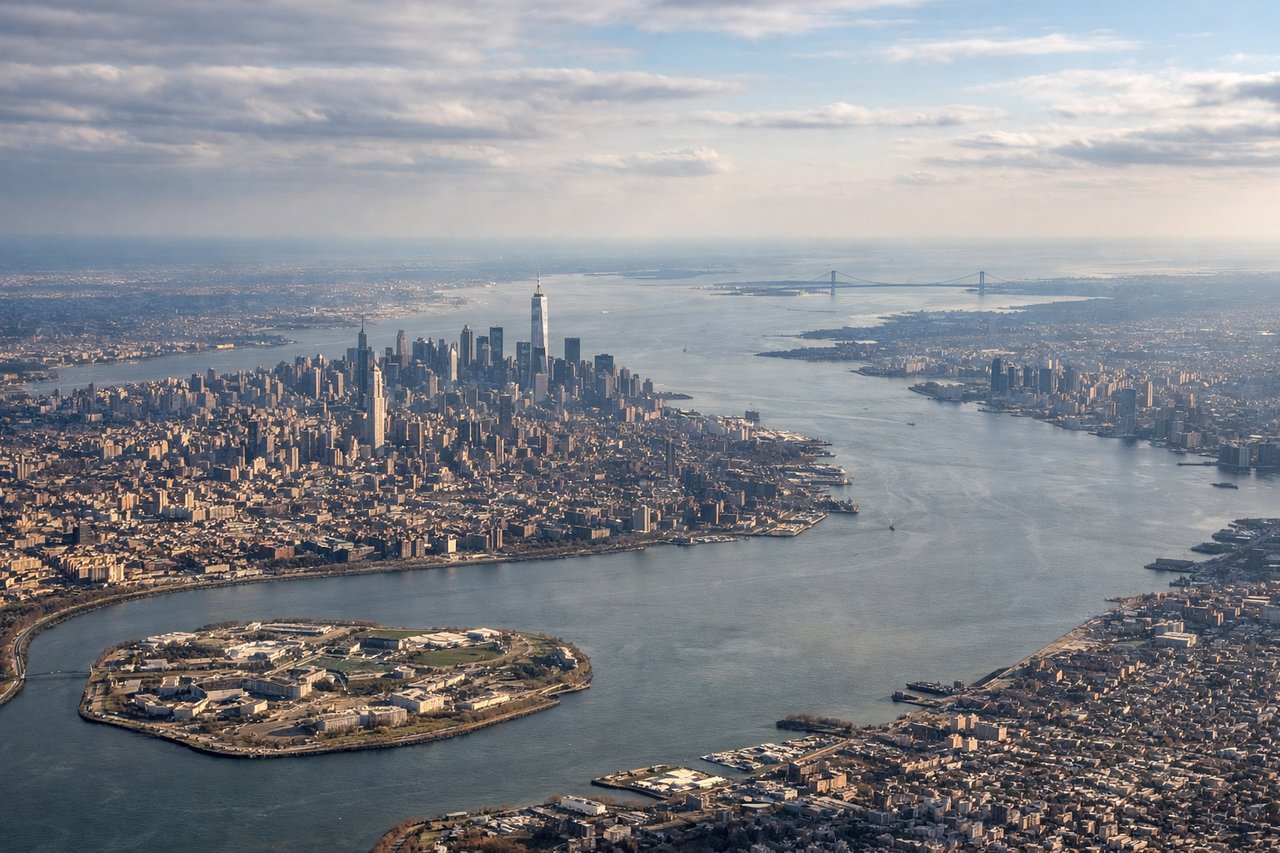
LEFTLGA typically departs runway 4 or 13 heading south/southwest. Left seats face toward Manhattan and the East River, capturing the dense urban grid and waterfront. Right seats look toward Queens and less distinctive terrain.
Landing at JAX
RIGHTJAX uses runways 8/26 or 9/27 depending on wind. Approaching from the north typically means descending on a southerly heading. Right seats face west toward the St. Johns River and downtown Jacksonville, while left seats see the Atlantic Ocean and less distinctive coastal features.
Landmarks on this routeAll landmarks →
Will your flight be in sunlight?
Pick a date and time in the Sun Map to watch the sun move across your whole flight.
About This Route
Which side of the plane should I sit on flying from La Guardia (LGA) to Jacksonville International (JAX)?
Sit on the Left side of the plane for the best views on flights from New York to Jacksonville. Left seats capture the dramatic Manhattan departure and the scenic St. Johns River meanders during approach. While the landing view favors right seats, the takeoff experience from LGA—one of the world's most visually striking airport departures—outweighs the landing advantage.
What can I see during takeoff from La Guardia in New York?
During takeoff from La Guardia (LGA), sit on the Left side for the best views. LGA typically departs runway 4 or 13 heading south/southwest. Left seats face toward Manhattan and the East River, capturing the dense urban grid and waterfront. Right seats look toward Queens and less distinctive terrain. Notable sights include: Manhattan skyline (Empire State Building, One World Trade Center visible as points in the urban mass), East River, Upper New York Bay, Brooklyn waterfront.
What can I see when landing at Jacksonville International in Jacksonville?
When landing at Jacksonville International (JAX), sit on the Right side for the best views. JAX uses runways 8/26 or 9/27 depending on wind. Approaching from the north typically means descending on a southerly heading. Right seats face west toward the St. Johns River and downtown Jacksonville, while left seats see the Atlantic Ocean and less distinctive coastal features. Notable sights include: St. Johns River (distinctive meandering waterway), downtown Jacksonville skyline, Ortega River, Atlantic Ocean coastline.
How long is the flight from New York to Jacksonville?
The flight from La Guardia (LGA) to Jacksonville International (JAX) takes about 3 hours. The shortest flight path between them is 834 miles (1,343 km); winds and air traffic control usually add a few percent.
What does the New York to Jacksonville flight path pass over?
The flight path heads south-southwest from New York, crossing the Appalachian foothills of Pennsylvania and West Virginia (visible as rolling terrain with ridge lines during cruise), then transitions to the Piedmont region of North Carolina and South Carolina. The Outer Banks of North Carolina appear as a thin barrier island chain along the Atlantic coast. Coastal South Carolina and Georgia show the distinctive tidal marsh systems of the Low Country. The flight descends into Florida's northern peninsula, crossing the flat coastal plain with scattered lakes and wetlands before reaching Jacksonville.