Right seats capture the Alps during descent into Milan, the most visually distinctive feature of this transatlantic route. Takeoff views are comparable between sides, but landing views heavily favor the right.
Flight Path
The flight path crosses the Atlantic at roughly 35,000-37,000 feet, passing south of Greenland and Iceland. Over the Atlantic, no significant landmarks are visible except occasional cloud formations. Upon approaching Europe, the flight passes over the British Isles (Ireland and UK visible as landmasses), then crosses the English Channel and continental Europe. The Pyrenees may be visible on the southern horizon during the approach to France. The Alps become increasingly prominent as the aircraft descends toward Milan, with the highest peaks visible from 15,000-25,000 feet during the final descent phase.
Great circle distance and headings ›.jpeg?width=600)
.jpg?width=600)


_Panoramica_del_centro_della_citt%C3%A0_dal_lago.jpg?width=600)


.jpg?width=600)
.jpg?width=600)
Phase by phase
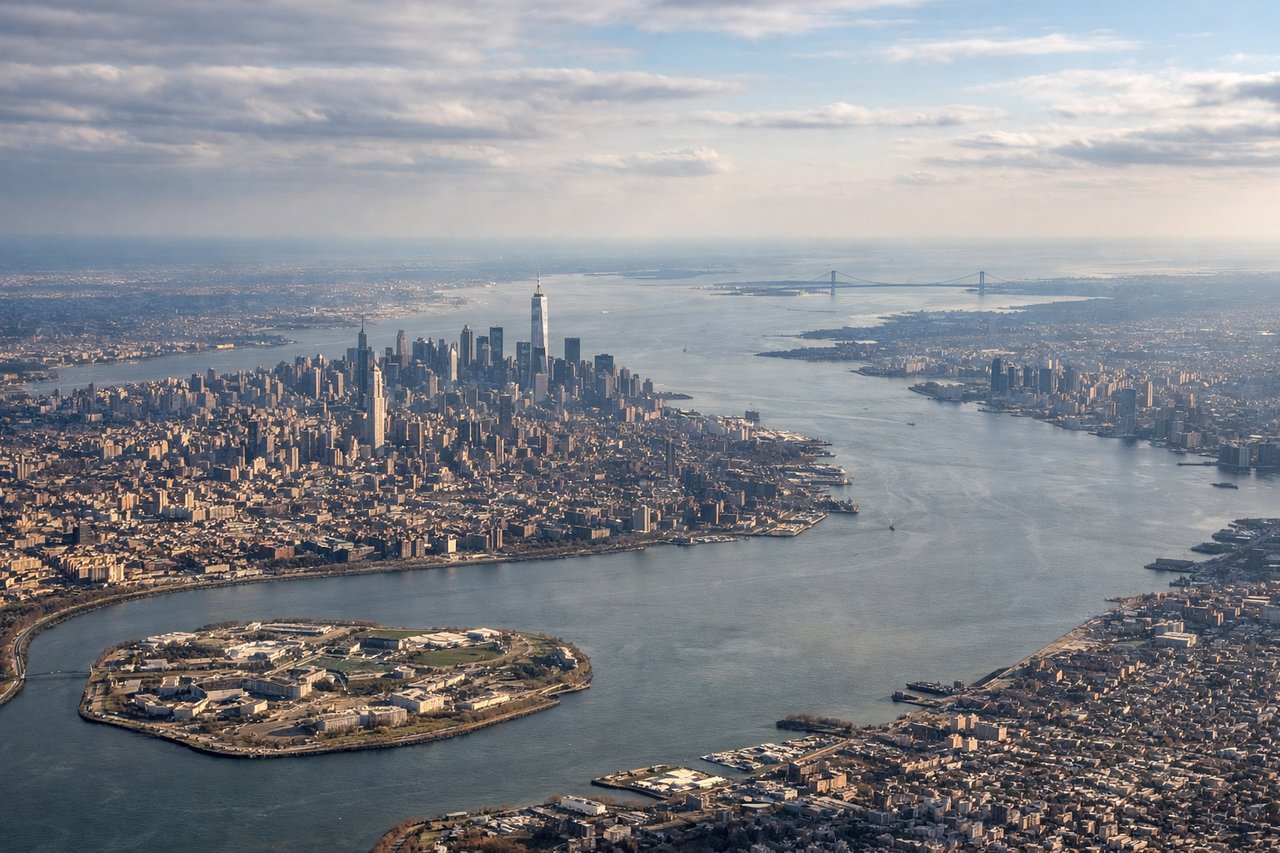
Takeoff from LGA
LEFTLGA typically departs runway 04 or 22 depending on wind. Left seats offer views of Manhattan's East Side, the East River, and Queens during initial climb. Right seats face industrial areas and less distinctive terrain.
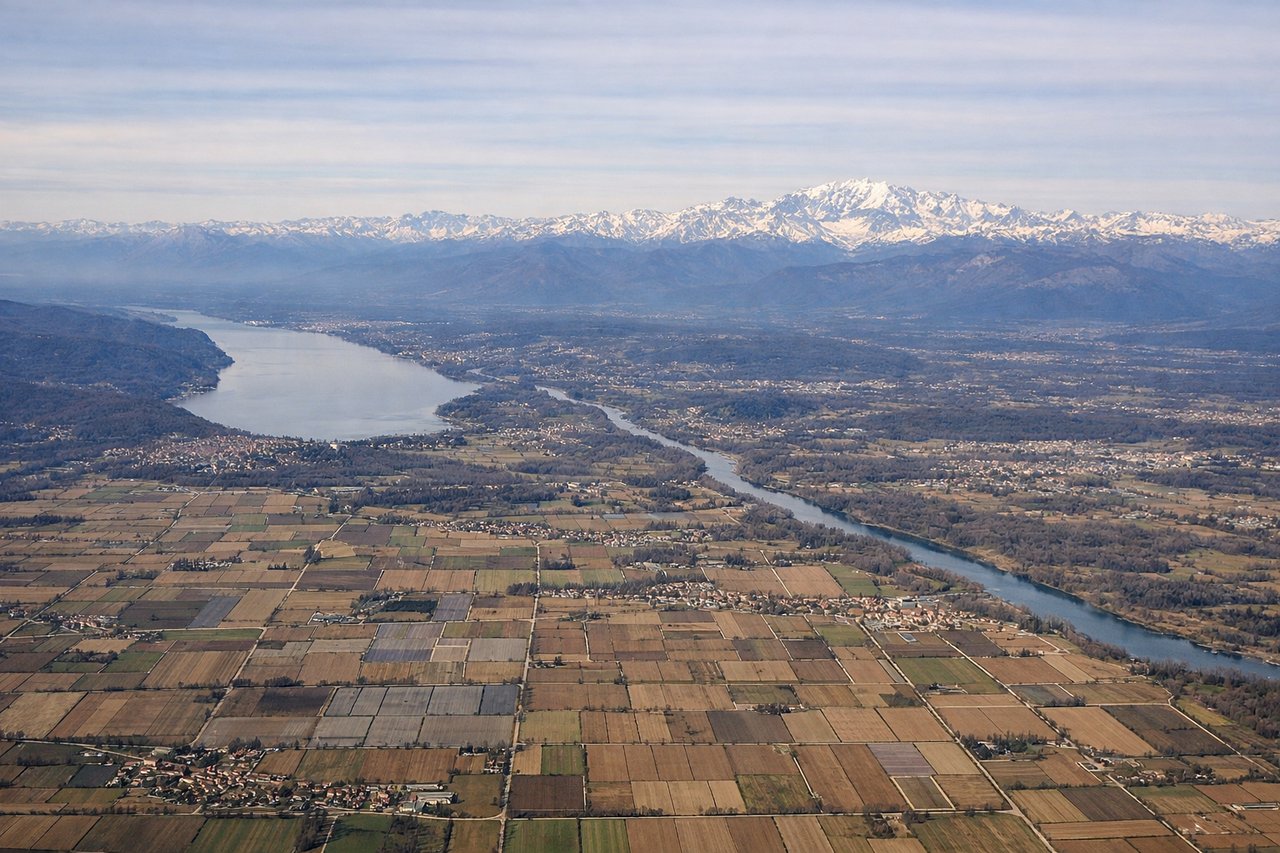
Landing at MXP
RIGHTMalpensa (MXP) typically uses runways 35L/35R for landing. Right seats provide views of the Alps during descent into northern Italy, particularly the Monte Rosa and Gran Paradiso massifs. Left seats face the Po River valley and industrial Lombardy.
Landmarks on this routeAll landmarks →
Will your flight be in sunlight?
See exactly which side of the plane gets sun and shade at your departure time.
About This Route
Which side of the plane should I sit on flying from La Guardia (LGA) to Malpensa (MXP)?
Sit on the Right side of the plane for the best views on flights from New York to Milano. Right seats capture the Alps during descent into Milan, the most visually distinctive feature of this transatlantic route. Takeoff views are comparable between sides, but landing views heavily favor the right.
What can I see during takeoff from La Guardia in New York?
During takeoff from La Guardia (LGA), sit on the Left side for the best views. LGA typically departs runway 04 or 22 depending on wind. Left seats offer views of Manhattan's East Side, the East River, and Queens during initial climb. Right seats face industrial areas and less distinctive terrain. Notable sights include: Manhattan skyline (Empire State Building, Chrysler Building visible as distant points), East River, Astoria Queens, Upper New York Bay.
What can I see when landing at Malpensa in Milano?
When landing at Malpensa (MXP), sit on the Right side for the best views. Malpensa (MXP) typically uses runways 35L/35R for landing. Right seats provide views of the Alps during descent into northern Italy, particularly the Monte Rosa and Gran Paradiso massifs. Left seats face the Po River valley and industrial Lombardy. Notable sights include: Alps (Monte Rosa, Gran Paradiso ranges), Lake Maggiore, Po River valley, Ticino River.
How long is the flight from New York to Milano?
The flight from La Guardia (LGA) to Malpensa (MXP) takes Approximately 9.5 to 10.5 hours.
What does the New York to Milano flight path pass over?
The flight path crosses the Atlantic at roughly 35,000-37,000 feet, passing south of Greenland and Iceland. Over the Atlantic, no significant landmarks are visible except occasional cloud formations. Upon approaching Europe, the flight passes over the British Isles (Ireland and UK visible as landmasses), then crosses the English Channel and continental Europe. The Pyrenees may be visible on the southern horizon during the approach to France. The Alps become increasingly prominent as the aircraft descends toward Milan, with the highest peaks visible from 15,000-25,000 feet during the final descent phase.