While takeoff from La Guardia favors the left side with Manhattan's iconic skyline, the landing approach to San Juan on the right side is significantly more scenic. The approach reveals El Yunque's dramatic green mountains, Puerto Rico's intricate coastline, and the visual transition from open Atlantic to tropical island terrain. The landing experience outweighs the takeoff advantage, making right-side seats the better overall choice for this 3h 45m flight.
Flown LGA to SJU? Did we get it right?
Flight Path
New York to San Juan is 1,612 miles (2,595 km), a flight of about 3 hours 45 minutes.
The flight path crosses the Atlantic Ocean for approximately 3 hours with no significant landmarks visible. The route passes over open water southeast of the Outer Banks of North Carolina, then continues over the Atlantic with no islands or notable terrain until approaching Puerto Rico. Bermuda lies south of the typical flight corridor and is not visible. The entire cruise segment is open ocean with no scenic features.
Great circle distance and headings ›Phase by phase
Takeoff from LGA
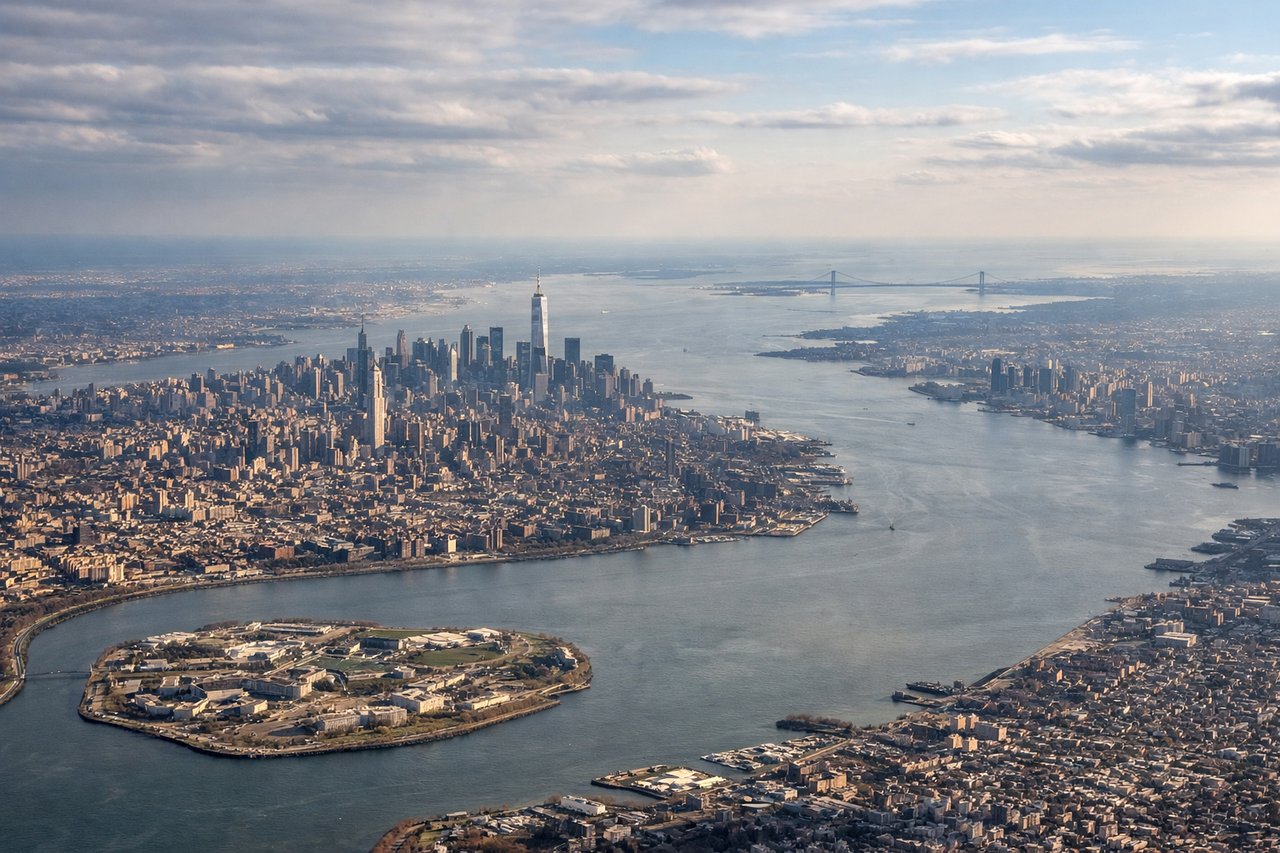
LEFTLa Guardia departure offers immediate urban scenery with Manhattan's skyline, East River, and the Harlem River visible during climb-out. Right side sees only Queens residential areas and open Atlantic.
Landing at SJU
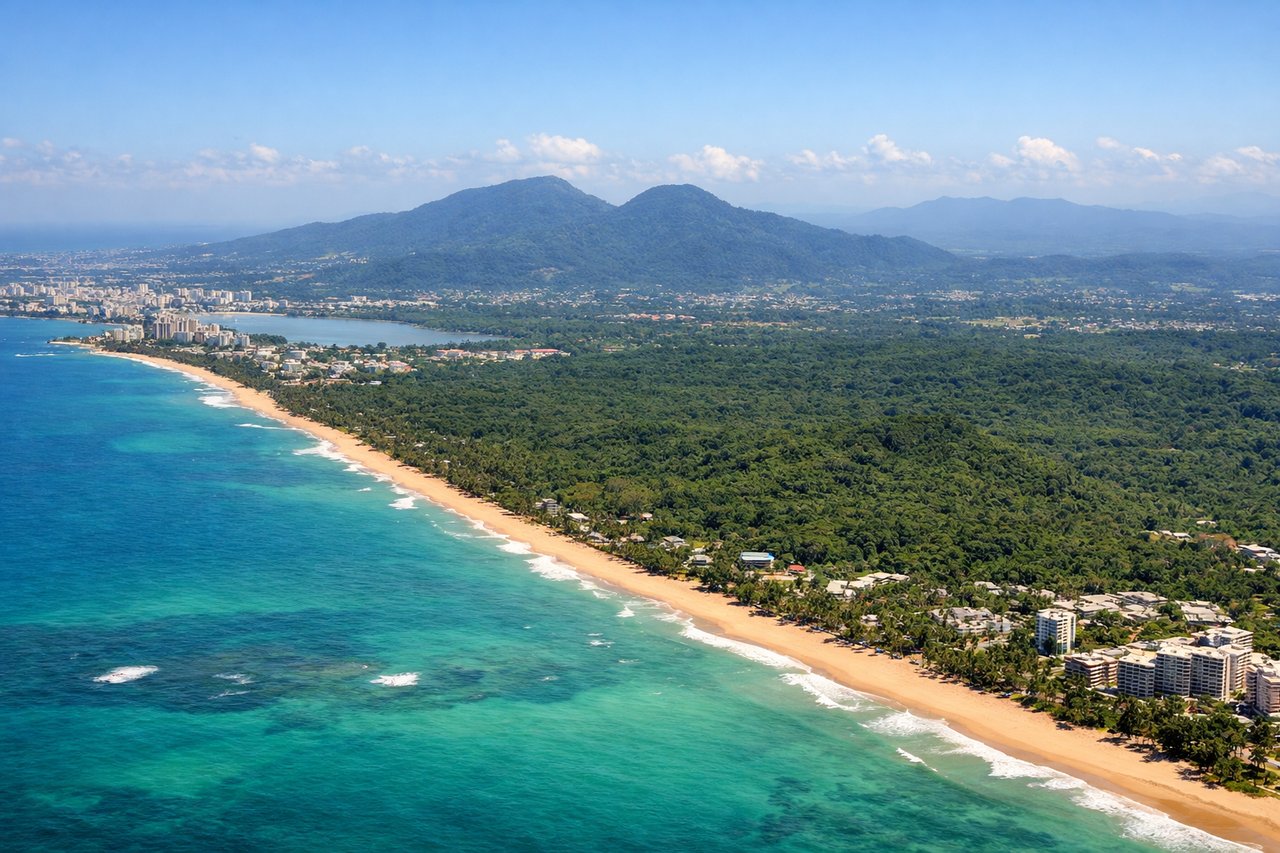
RIGHTSan Juan approach from the east reveals Puerto Rico's northern coastline, El Yunque National Forest's green mountains, and the Atlantic meeting the island's dramatic terrain. Left side shows only open Atlantic Ocean for the final 30+ minutes.
Will your flight be in sunlight?
Pick a date and time in the Sun Map to watch the sun move across your whole flight.
About This Route
Which side of the plane should I sit on flying from La Guardia (LGA) to Luis Munoz Marin International (SJU)?
Sit on the Right side of the plane for the best views on flights from New York to San Juan. While takeoff from La Guardia favors the left side with Manhattan's iconic skyline, the landing approach to San Juan on the right side is significantly more scenic. The approach reveals El Yunque's dramatic green mountains, Puerto Rico's intricate coastline, and the visual transition from open Atlantic to tropical island terrain. The landing experience outweighs the takeoff advantage, making right-side seats the better overall choice for this 3h 45m flight.
What can I see during takeoff from La Guardia in New York?
During takeoff from La Guardia (LGA), sit on the Left side for the best views. La Guardia departure offers immediate urban scenery with Manhattan's skyline, East River, and the Harlem River visible during climb-out. Right side sees only Queens residential areas and open Atlantic. Notable sights include: Manhattan skyline with Empire State Building and Chrysler Building, East River, Harlem River, Queens neighborhoods.
What can I see when landing at Luis Munoz Marin International in San Juan?
When landing at Luis Munoz Marin International (SJU), sit on the Right side for the best views. San Juan approach from the east reveals Puerto Rico's northern coastline, El Yunque National Forest's green mountains, and the Atlantic meeting the island's dramatic terrain. Left side shows only open Atlantic Ocean for the final 30+ minutes. Notable sights include: El Yunque National Forest (lush green mountains), Puerto Rico's northern coastline with bays and inlets, San Juan harbor and urban area, Atlantic Ocean meeting the island.
How long is the flight from New York to San Juan?
The flight from La Guardia (LGA) to Luis Munoz Marin International (SJU) takes about 3 hours 45 minutes. The shortest flight path between them is 1,612 miles (2,595 km); winds and air traffic control usually add a few percent.
What does the New York to San Juan flight path pass over?
The flight path crosses the Atlantic Ocean for approximately 3 hours with no significant landmarks visible. The route passes over open water southeast of the Outer Banks of North Carolina, then continues over the Atlantic with no islands or notable terrain until approaching Puerto Rico. Bermuda lies south of the typical flight corridor and is not visible. The entire cruise segment is open ocean with no scenic features.