Milan to New York is 4,014 miles (6,460 km), a flight of about 10 hours.
While takeoff offers Alpine scenery, the landing approach provides more dramatic and sustained visual interest with the Hudson River, Manhattan skyline, and New York harbor—iconic urban geography that most passengers find compelling. The approach to JFK is longer and more visually rewarding than the Milan departure.
Flight Path
The flight path crosses the Atlantic Ocean. Notable waypoints include: the Irish coast and Celtic Sea (if routed south of Ireland), the North Atlantic with occasional visibility of the Mid-Atlantic Ridge features in clear conditions, and Newfoundland's eastern coastline as the aircraft approaches North American airspace. The flight typically follows a great-circle route, passing south of Greenland and Iceland. No major landmasses are visible during the majority of the transatlantic crossing—the view is predominantly open ocean for 6-7 hours of the flight.
Great circle distance and headings ›.jpg?width=600)

.jpg?width=600)

_Panoramica_del_centro_della_citt%C3%A0_dal_lago.jpg?width=600)


.jpg?width=600)
Phase by phase
Takeoff from LIN
RIGHTRight side offers views of the Alps as the aircraft climbs northwestward from Milan. The mountain range becomes increasingly visible during the initial climb, providing dramatic relief against the Lombardy plain.
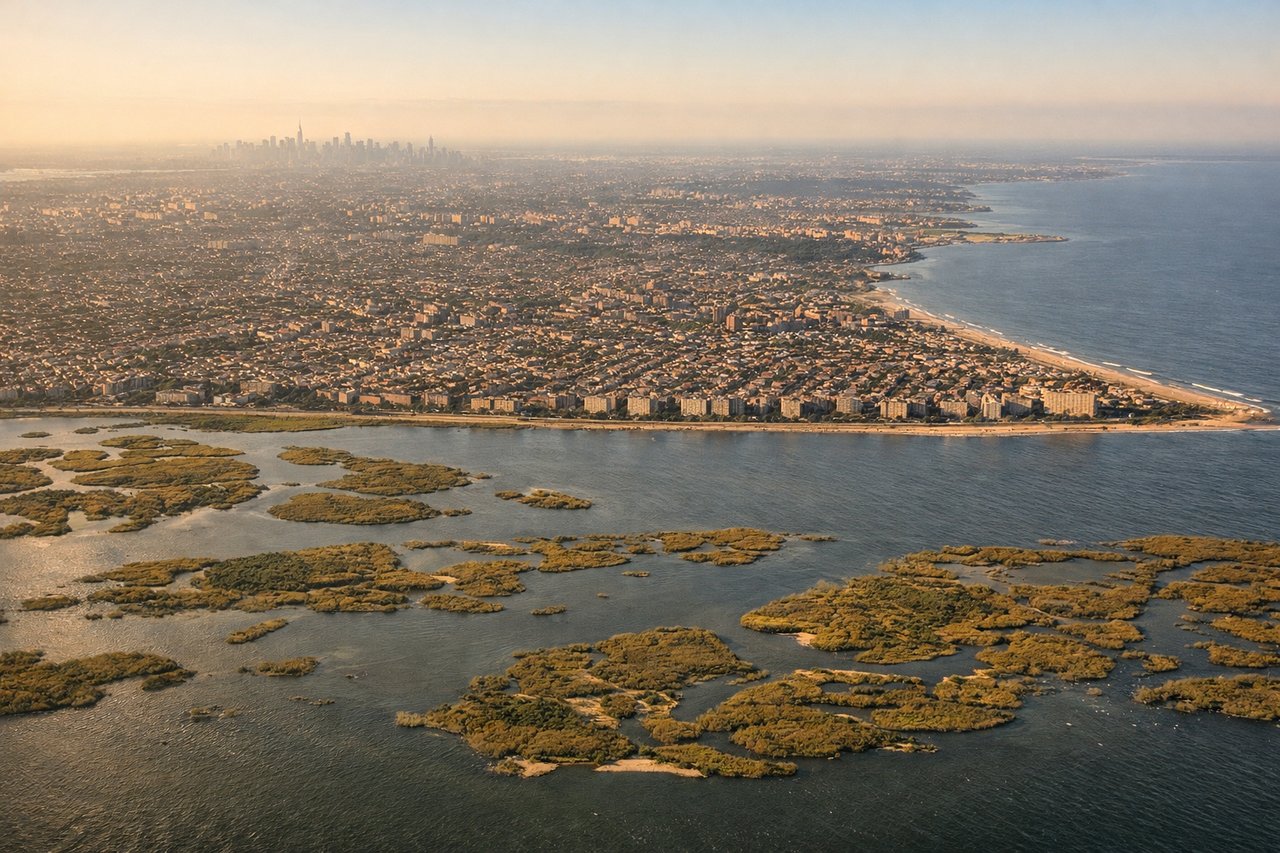
Landing at JFK
LEFTLeft side provides views of the Hudson River, Manhattan skyline, and the New Jersey coastline during the standard westward approach to JFK. The urban density and water features create striking visual contrast.
Landmarks on this routeAll landmarks →
Will your flight be in sunlight?
Pick a date and time in the Sun Map to watch the sun move across your whole flight.
About This Route
Which side of the plane should I sit on flying from Linate (LIN) to John F Kennedy International (JFK)?
Sit on the Left side of the plane for the best views on flights from Milan to New York. While takeoff offers Alpine scenery, the landing approach provides more dramatic and sustained visual interest with the Hudson River, Manhattan skyline, and New York harbor—iconic urban geography that most passengers find compelling. The approach to JFK is longer and more visually rewarding than the Milan departure.
What can I see during takeoff from Linate in Milan?
During takeoff from Linate (LIN), sit on the Right side for the best views. Right side offers views of the Alps as the aircraft climbs northwestward from Milan. The mountain range becomes increasingly visible during the initial climb, providing dramatic relief against the Lombardy plain. Notable sights include: Alps (Monte Rosa and Gran Paradiso peaks), Lake Como, Ticino River valley, Lombardy plains.
What can I see when landing at John F Kennedy International in New York?
When landing at John F Kennedy International (JFK), sit on the Left side for the best views. Left side provides views of the Hudson River, Manhattan skyline, and the New Jersey coastline during the standard westward approach to JFK. The urban density and water features create striking visual contrast. Notable sights include: Hudson River, Manhattan skyline, East River, New Jersey industrial waterfront.
How long is the flight from Milan to New York?
The flight from Linate (LIN) to John F Kennedy International (JFK) takes about 10 hours. The shortest flight path between them is 4,014 miles (6,460 km); winds and air traffic control usually add a few percent.
What does the Milan to New York flight path pass over?
The flight path crosses the Atlantic Ocean. Notable waypoints include: the Irish coast and Celtic Sea (if routed south of Ireland), the North Atlantic with occasional visibility of the Mid-Atlantic Ridge features in clear conditions, and Newfoundland's eastern coastline as the aircraft approaches North American airspace. The flight typically follows a great-circle route, passing south of Greenland and Iceland. No major landmasses are visible during the majority of the transatlantic crossing—the view is predominantly open ocean for 6-7 hours of the flight.